


Mass Production of High-Precision Parts via CNC Machining
The modern manufacturing world depends heavily on Mass Production of High - Precision Parts via CNC Machining. From automotive engines to aerospace systems and electronic devices, industries rely on precision components that must perform reliably, fit perfectly, and remain consistent across thousands or even millions of units. CNC (Computer Numerical Control) machining has become one of the most trusted technologies for achieving this level of accuracy at scale.
The Significance of High - Precision Mass Production
High - precision mass production is essential in industries where even the smallest deviation can lead to system failure or performance loss. CNC machining ensures that every part meets strict tolerance requirements, often within microns.
In the automotive industry, engine components such as pistons, shafts, and fuel system parts must maintain exact dimensions to ensure fuel efficiency and smooth operation. In aerospace, turbine blades and structural components require extreme precision to guarantee safety under high stress and temperature conditions. In electronics, micro components must fit into compact assemblies without error.
Without precision manufacturing, modern products would not achieve the reliability and performance that users expect today.
The CNC Machining Process for Mass Production
Part Design and Programming
The foundation of any successful production run begins with design. Engineers use CAD (Computer - Aided Design) software to create a detailed 3D model of the part. During this stage, manufacturability is a key consideration. A well-designed part reduces machining time and improves consistency.
To optimize for mass production, designers should:
Simplify complex geometries without affecting functionality
Use standard tolerances whenever possible
Ensure proper draft angles for easier machining and part removal
Avoid unnecessary deep cavities or sharp internal corners
After design, CAM (Computer - Aided Manufacturing) software converts the model into machine instructions. This CNC program defines toolpaths, cutting speeds, and machining sequences. For efficient CNC machining process for high - precision mass production, programmers focus on reducing idle time, optimizing tool changes, and ensuring smooth continuous cutting paths.
Material Selection and Preparation
Material selection plays a major role in both precision and production efficiency. Common materials include aluminum, stainless steel, titanium, plastics, and engineered composites. Each material behaves differently during machining.
For example, aluminum is widely used because it is lightweight and easy to machine, while titanium is chosen for its strength and corrosion resistance but requires slower cutting speeds.
Key selection guidelines include:
Match material properties to product function and environment
Choose materials with stable and consistent composition
Consider machining difficulty and tool wear rate
Balance cost with performance requirements
Material preparation is equally important. Processes such as heat treatment can improve machinability and reduce internal stress, helping maintain dimensional stability during machining.
Machine and Tool Selection
For mass production of high - precision parts, selecting the right CNC machine is critical. Machines must provide high rigidity, excellent thermal stability, and precise positioning systems.
Multi-axis CNC machines are often preferred because they reduce setup time and allow complex geometries to be machined in a single operation. High-speed spindles improve efficiency while maintaining accuracy.
Tool selection also impacts performance. Common tools include carbide end mills, drills, and inserts. These tools are chosen based on:
Material hardness
Required surface finish
Tolerance levels
Cutting speed requirements
A structured tool management system helps reduce downtime and ensures consistent tool performance throughout long production runs.
Challenges in Mass Production of High - Precision Parts
Maintaining Precision
One of the biggest challenges in high - precision part mass production by CNC is maintaining accuracy over long production cycles. Tool wear gradually changes cutting dimensions, while heat generation can cause thermal expansion in both tools and machines.
To control these issues, manufacturers use:
Tool wear monitoring systems
Coolant systems to manage temperature
Real-time measurement feedback
Automatic tool offset compensation
These systems ensure that even after thousands of parts, dimensional consistency is maintained.
Production Efficiency
Mass production requires balancing speed and precision. Increasing cutting speed may reduce cycle time but can also affect accuracy if not properly controlled.
Efficiency improvement strategies include:
Optimized toolpaths to reduce unnecessary movement
High-speed machining techniques where suitable
Automated loading and unloading systems
Parallel machining using multiple machines
These methods help manufacturers achieve higher output without sacrificing quality.
Quality Control
Strict quality control is essential in CNC mass production. Both in-process and final inspections ensure that every part meets design requirements.
Common inspection tools include:
Coordinate Measuring Machines (CMM)
Micrometers and calipers
Surface profilometers
Manufacturers often implement Statistical Process Control (SPC) to monitor trends and detect variations early. Non-conforming parts are either reworked or rejected depending on severity.
Benefits of Mass Production of High - Precision Parts via CNC Machining
Consistent Quality
One of the greatest advantages is repeatability. Once a CNC program is validated, every part produced will follow the same parameters. This ensures uniform quality and full interchangeability between components.
Cost - Effectiveness
Although setup costs for CNC machining can be high, mass production reduces the cost per unit significantly. Over time, automation reduces labor costs and improves material utilization.
This makes CNC machining highly cost-effective for medium to large production volumes, especially when precision is critical.
Flexibility in Design
CNC machining provides excellent design flexibility. Even in mass production, design updates can be implemented quickly by modifying the program. This allows manufacturers to adapt to customer requirements without major production delays.
Case Studies of High - Precision CNC Mass Production
Case Study 1: Automotive Engine Components
An automotive supplier needed to produce large volumes of high-precision engine components such as crankshafts and valve bodies. The main challenge was maintaining tight tolerances during continuous 24/7 production.
The company implemented automated tool wear monitoring and advanced coolant systems to stabilize temperature. They also optimized toolpaths to reduce cycle time by an estimated 15%.
As a result, production consistency improved significantly, scrap rates decreased, and overall efficiency increased. This demonstrates how benefits of CNC in high - precision mass manufacturing can directly improve productivity and reduce cost.
Case Study 2: Aerospace Structural Components
An aerospace manufacturer produced complex structural brackets requiring extremely tight tolerances and high strength. The parts had intricate geometries and were made from titanium alloys.
The company used multi-axis CNC machines and specialized carbide tooling designed for hard metals. Strict inspection procedures using CMM ensured every part met aerospace standards.
Through advanced process control and optimized machining strategies, the company achieved high precision while reducing material waste and improving production stability. This shows the importance of advanced CNC technology in demanding industries.
Conclusion
Mass Production of High - Precision Parts via CNC Machining is a cornerstone of modern manufacturing. It enables industries to produce reliable, accurate, and cost-effective components at scale. While challenges such as tool wear, thermal control, and quality assurance exist, they can be managed through advanced technology and careful process planning.
As industries continue to demand higher precision and efficiency, CNC machining will remain one of the most important solutions for delivering consistent, high-quality parts across global supply chains.
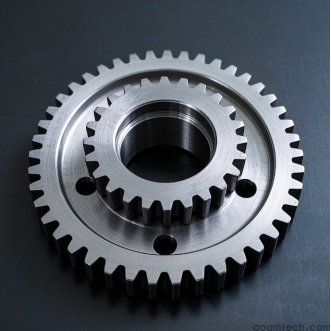 Process of Custom High-Precisi
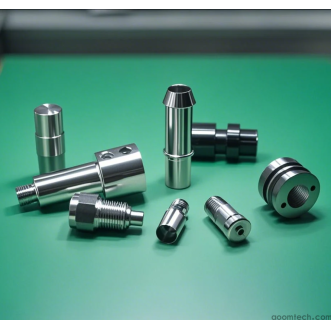 CNC Machining Parameter Settin
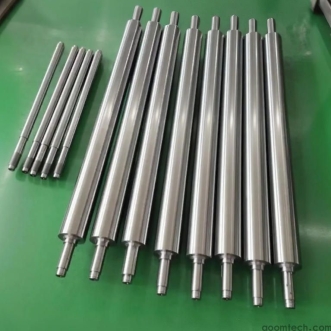 5 Key Tips for CNC Machining o
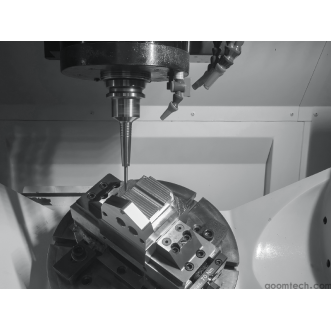 Small-batch Precision Parts 5-