


Precision CNC Aluminum Machining
Introduction to Precision CNC Aluminum Machining
The Significance of Precision CNC Aluminum Machining
In modern manufacturing, Precision CNC Aluminum Machining plays an important role in producing high-quality and reliable parts. Aluminum is widely used because it is lightweight, corrosion-resistant, and cost-effective. When combined with CNC (Computer Numerical Control) technology, it becomes possible to create highly accurate parts with consistent quality.
These precision-made aluminum parts are used in many industries such as aerospace, automotive, electronics, and medical devices. They help improve product performance, safety, and long-term durability. This makes precision CNC machining a key process in advanced manufacturing.
Importance of Precision in CNC Aluminum Machining
Meeting High-performance Industry Requirements
The importance of precision in CNC aluminum machining is especially clear in industries with strict quality demands. In aerospace and automotive engineering, even a small error in part size can affect safety and performance.
For example, aircraft structural components such as aluminum wing ribs or support frames must fit perfectly within tight tolerances. Precision CNC machining ensures each part meets exact design specifications, improving aircraft efficiency and safety. In high-performance engines, aluminum components must also be precisely manufactured to maintain smooth operation under extreme conditions.
Enabling Complex Design Realization
Modern products often require complex shapes that cannot be made using traditional methods. Precision CNC aluminum machining allows manufacturers to turn digital designs into real, functional parts with high accuracy.
In the electronics industry, for example, compact devices require aluminum enclosures with internal structures designed for cooling and protection. A custom aluminum heat sink for a gaming computer is a good example. Its complex fins and precise structure help control temperature and improve performance. CNC machining ensures every detail of the design is accurately reproduced.
Process of Precision CNC Aluminum Machining
Design and Programming
The process of precision CNC aluminum machining starts with digital design. Engineers use CAD (Computer-Aided Design) software to create a 3D model of the part. This model includes all dimensions, shapes, and functional requirements.
Next, CAM (Computer-Aided Manufacturing) software converts the design into machine instructions. These instructions define toolpaths, cutting speeds, feed rates, and depth of cut. For aluminum parts used in automotive systems, careful programming is required to manage aluminum’s softness and prevent deformation during high-speed cutting.
Material Selection and Preparation
Choosing the right aluminum alloy is very important. Different alloys offer different strength, corrosion resistance, and machinability. For example, aerospace parts often use high-strength aluminum alloys, while electronic housings may use more easily machinable grades.
Before machining, the material is cut to size, cleaned, and sometimes pre-treated. Proper preparation ensures stable machining performance and helps prevent tool wear or surface defects.
Machining Operations
Milling
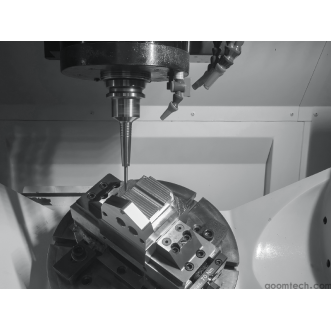
Milling is used to create flat surfaces, grooves, and complex 3D shapes. Carbide cutting tools are commonly used due to aluminum’s soft nature. Adjusting speed and feed rate is important to avoid chip buildup and achieve a smooth surface finish.
Turning
Turning is used for cylindrical aluminum parts. The material rotates while a cutting tool shapes it. Proper control of speed and tool geometry helps achieve high accuracy and reduce vibration or chatter.
Drilling
Drilling creates precise holes in aluminum components. Techniques like peck drilling help remove chips and prevent overheating. This improves accuracy and reduces tool breakage.
Quality Control and Inspection
Quality control ensures that every part meets strict standards. Tools such as Coordinate Measuring Machines (CMM), optical systems, and surface testers are used for inspection.
For example, if a deviation is detected in an aluminum aerospace bracket, engineers can adjust the CNC program immediately. This reduces waste and improves production efficiency. In-process inspection is also used to catch errors early in production.
Benefits of Precision CNC Aluminum Machining
High Precision and Consistency
The benefits of precision-machined aluminum parts by CNC include extremely high accuracy and repeatable quality. CNC machines can produce thousands of identical parts with minimal variation.
Cost-effectiveness for Medium to Large Batches
Once the CNC program is created, production becomes efficient and stable. This reduces labor costs and improves production speed, making it cost-effective for medium and large production runs.
Enhanced Product Performance
Precision aluminum parts improve product performance by reducing weight and increasing strength. In automotive engines, for example, lightweight aluminum components help improve fuel efficiency and overall power output.
Challenges in Precision CNC Aluminum Machining
Chip Control
One of the main challenges in precision CNC aluminum machining is chip formation. Aluminum chips can become long and sticky, which may block tools and reduce surface quality. High-pressure coolant or chip-breaking tools are often used to solve this problem.
Tool Wear
Even though aluminum is soft, high-speed machining can still wear out cutting tools. Using coated carbide tools and replacing them regularly helps maintain accuracy and surface quality.
Thermal Effects
Heat generated during machining can slightly change the size of aluminum parts. Cooling systems and optimized cutting speeds are used to control temperature and maintain dimensional accuracy.
Applications of Precision CNC Machined Aluminum Parts
Aerospace Industry
The applications of precision CNC-machined aluminum parts in aerospace include structural components like wing supports, frames, and fuselage parts. These components must be both lightweight and extremely strong to ensure safe flight operations.
Automotive Industry
In the automotive sector, aluminum parts are used in engines, transmissions, and suspension systems. For example, precision-machined aluminum control arms improve vehicle stability and handling performance.
Electronics Industry
In electronics, aluminum is widely used for heat sinks, enclosures, and support structures. A precisely machined aluminum heat sink helps remove heat from processors, improving device performance and lifespan.
Conclusion: Harnessing the Power of Precision CNC Aluminum Machining
Precision CNC Aluminum Machining is a key technology in modern manufacturing. It combines material advantages with advanced computer-controlled machining to produce high-quality, reliable, and complex parts.
From aerospace to automotive and electronics, its impact is seen across many industries. Understanding the importance, process, benefits, challenges, and applications helps manufacturers make better decisions in product design and production.
As industries continue to develop, precision CNC machining will remain essential for achieving higher performance, better efficiency, and improved product quality in aluminum component manufacturing.
 Process of Custom High-Precisi
 CNC Machining Parameter Settin
 5 Key Tips for CNC Machining o
 Small-batch Precision Parts 5-