


Precision CNC Machining Manufacturing
Precision CNC Machining Manufacturing: A Complete Guide to High-Accuracy Production
Precision CNC Machining Manufacturing is a modern production method that uses computer-controlled machines to create parts with extremely tight tolerances and consistent quality. In today’s advanced industries, even a small error in a component can cause system failure. That is why precision machining plays a key role in aerospace, medical, electronics, automotive, and many other fields.
Introduction to Precision CNC Machining Manufacturing
Concept and Significance
Precision CNC machining manufacturing refers to the process of using Computer Numerical Control (CNC) machines to produce parts with very high accuracy, often measured in microns (±0.01 mm or tighter). These machines follow digital instructions to cut, drill, mill, and shape materials such as aluminum, stainless steel, titanium, and engineering plastics.
The importance of precision cannot be overstated. In the aerospace industry, precision-machined components ensure aircraft safety and fuel efficiency. In the medical industry, implants and surgical tools must meet strict accuracy requirements to ensure patient safety. In electronics, tiny components must fit perfectly into compact assemblies without failure.
Factors Affecting Precision in CNC Machining Manufacturing
Machine Quality and Maintenance
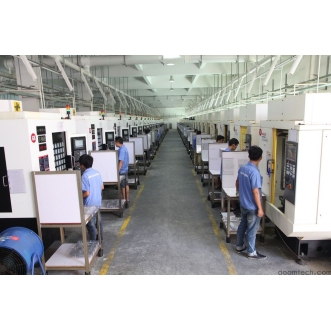
One of the most important factors affecting precision in CNC machining manufacturing is the quality of the machine itself. High-end CNC machines are built with rigid frames, advanced motion control systems, and high-precision spindle units. These features help reduce vibration and improve accuracy during cutting.
Regular maintenance is equally important. Machines must be calibrated frequently to ensure all axes move correctly. Lubrication reduces wear on moving parts, and timely replacement of components prevents mechanical errors.
For example, if a spindle becomes misaligned due to poor maintenance, it may cause off-axis drilling, resulting in rejected parts and production loss.
Tooling Selection and Management
Cutting tools play a direct role in machining precision. Tools made from carbide are commonly used because they offer excellent hardness and wear resistance. However, tool geometry also matters. A properly designed end mill or drill bit ensures accurate cutting paths and smooth surfaces.
Tool management is essential for maintaining stability in production. Worn or damaged tools can lead to poor surface finishes, dimensional errors, and even tool breakage. Proper storage, regular inspection, sharpening, and replacement are necessary practices in professional CNC workshops.
Machining Parameters
Another critical element in precision CNC machining manufacturing is the selection of machining parameters such as cutting speed, feed rate, and depth of cut.
Cutting speed: Too high can generate excessive heat and cause thermal expansion of the workpiece.
Feed rate: Too low may cause tool rubbing, while too high can reduce accuracy.
Depth of cut: Must be balanced to avoid tool overload and vibration.
For example, aluminum typically allows higher cutting speeds, while stainless steel and titanium require slower speeds and stronger cutting tools to maintain accuracy. Optimizing these parameters is essential for achieving stable and repeatable results.
Precision CNC Machining Processes
Milling
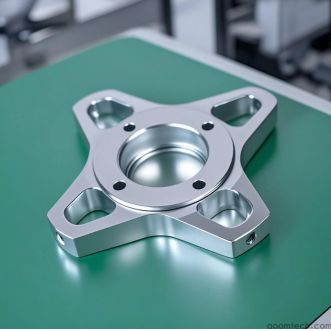
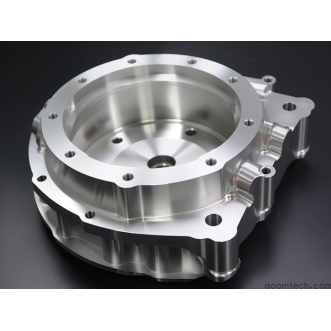
Milling is one of the most common precision CNC machining processes. It uses rotating cutting tools to remove material and create flat surfaces, grooves, and complex 3D shapes.
Face milling is used for large flat surfaces, while end milling is used for detailed features. Advanced 5-axis milling machines allow multi-directional cutting, enabling the production of highly complex parts in a single setup.
For example, engine brackets in aerospace and automotive systems are often produced using CNC milling due to their complex geometry and tight tolerance requirements.
Turning
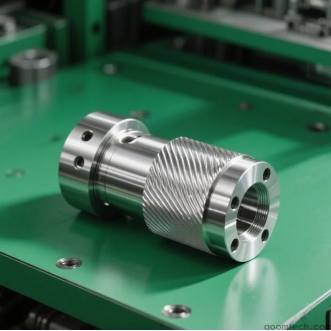
Turning is used for producing cylindrical parts. In this process, the workpiece rotates while a stationary cutting tool shapes it into the desired form. CNC lathes control both rotation speed and tool movement with high precision.
Proper chucking and tool alignment are critical. Even slight misalignment can affect diameter accuracy and surface finish.
Common turned parts include shafts, bushings, and threaded components used in mechanical systems.
Drilling and Boring
Drilling is used to create holes, while boring is used to refine and enlarge them to precise dimensions. In precision applications, even hole position and depth must be extremely accurate.
Drill wear, machine vibration, and workpiece stability can all affect accuracy. Boring is often used in high-precision industries to achieve smoother internal surfaces and tighter tolerances.
For example, printed circuit boards (PCBs) in electronics rely on highly accurate drilling for component assembly and electrical connections.
Quality Assurance in Precision CNC Machining
In-Process Inspection
Quality assurance in precision CNC machining begins during production. In-process inspection ensures that errors are detected early before they affect the entire batch.
Operators use tools such as calipers, micrometers, height gauges, and coordinate measuring machines (CMMs) to verify dimensions at different stages of machining.
For example, if a dimension starts to drift out of tolerance during production, adjustments can be made immediately, preventing scrap and saving cost.
Final Inspection and Testing
After machining is completed, a full inspection process ensures that all requirements are met. This includes checking dimensions, surface finish, hardness, and structural integrity.
Non-destructive testing (NDT) methods such as ultrasonic testing, X-ray inspection, and magnetic particle testing are often used to detect internal defects that are not visible on the surface.
This step ensures that every part meets strict industry standards such as ISO 9001 or AS9100, depending on the application.
Applications of Precision CNC Machining Manufacturing
Aerospace Industry
In aerospace, Precision CNC Machining Manufacturing is essential for producing high-performance parts such as turbine blades, engine housings, and landing gear components. These parts must withstand extreme temperatures, pressure, and vibration.
Even the smallest defect can affect aircraft safety, so precision and reliability are non-negotiable in this industry.
Medical Industry
The medical field depends heavily on precision machining for surgical instruments, orthopedic implants, dental components, and diagnostic equipment.
These parts must meet strict regulatory standards and ensure patient safety. Titanium and stainless steel are commonly used materials due to their biocompatibility and strength.
For example, artificial joint implants require extremely tight tolerances to ensure proper movement and long-term durability inside the human body.
Electronics Industry
In electronics, miniaturization demands extremely precise components such as heat sinks, connectors, and device enclosures. Precision CNC machining allows manufacturers to produce small, complex parts with consistent accuracy.
For example, smartphone housings and laptop heat sinks require precise machining to ensure proper assembly, heat dissipation, and aesthetic quality.
Conclusion
Precision CNC Machining Manufacturing is a critical foundation of modern industrial production. It combines advanced machinery, skilled engineering, and strict quality control to produce high-accuracy components used in some of the most demanding industries in the world.
Understanding the factors affecting precision in CNC machining manufacturing, mastering precision CNC machining processes, and implementing strong quality assurance in precision CNC machining are essential for achieving reliable, high-performance results.
As technology continues to advance, precision machining will play an even greater role in shaping aerospace innovation, medical breakthroughs, and next-generation electronics.
 How to Ensure Precision in CNC
 Small Batch Precision CNC Mach
 What surface finish can CNC ma
 CNC Machining Tolerance Settin