


Precision CNC Machining Services for High-Quality Custom Parts
In modern manufacturing, Precision CNC Machining Services for High-Quality Custom Parts play an essential role in turning ideas into real, functional products. CNC (Computer Numerical Control) machining uses computer-controlled tools to produce parts with high accuracy, consistency, and repeatability.
This technology helps industries such as aerospace, medical, automotive, and electronics create parts that meet strict performance and safety standards. Whether it is a prototype or mass production, precision is the key factor that determines product quality and reliability.
Introduction to Precision CNC Machining Services for High-Quality Custom Parts
The main goal of precision CNC machining is to produce custom parts that match exact design requirements. These parts are not only measured by size accuracy but also by how well they perform in real-world applications.
The importance of precision in CNC machining for custom parts lies in ensuring that every detail—from shape to surface finish—meets engineering expectations. Even a small error can affect performance, safety, or assembly quality.
High-precision machining adds value by improving durability, functionality, and product consistency across industries.
Importance of Precision in CNC Machining for Custom Parts
Enhanced Functionality
Precision machining ensures that custom parts perform exactly as designed. For example, in aerospace engineering, turbine blades must be produced with extremely tight tolerances. Even a minor deviation can reduce engine efficiency or increase fuel consumption.
In the medical industry, surgical tools and implants rely on precise dimensions to ensure patient safety and proper operation. A small error in an implant can affect comfort and healing outcomes.
Optimal Fit and Assembly
Another key advantage is the perfect fit between components. In complex mechanical systems, all parts must align correctly to function smoothly.
For example, in automotive manufacturing, engine components such as pistons and cylinders must fit precisely to prevent leaks and reduce wear. Precision CNC machining helps reduce assembly time, minimize errors, and improve production efficiency.
Process of Precision CNC Machining for High-Quality Custom Parts
Design and Consultation
The process begins with understanding customer requirements. Clients may provide sketches, CAD files, or simple ideas. Engineers then review the design to improve manufacturability, reduce cost, and ensure accuracy.
For example, a complex bracket design may be adjusted to reduce unnecessary machining steps while maintaining strength and function.
CAD/CAM Design and Programming
Once finalized, the design is converted into a 3D model using CAD software. CAM software then generates machine instructions for CNC equipment.
This step includes setting toolpaths, cutting speed, and feed rates. Complex geometries may require advanced programming to maintain smooth surfaces and tight tolerances.
Material Selection and Procurement
Choosing the right material is critical in the machining process. Common materials include aluminum, stainless steel, titanium, and engineering plastics.
Material hardness directly affects tool selection and machining speed. For example, titanium requires slower cutting speeds and stronger tools compared to aluminum.
Machining and Quality Control
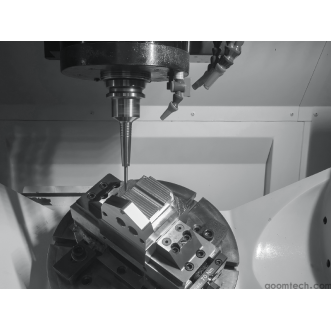
Machining Operations: CNC machines perform processes such as milling, turning, drilling, and grinding. Each operation follows programmed instructions to achieve precise shapes and finishes.
Quality Control: Finished parts are inspected using measuring tools like calipers, micrometers, and coordinate measuring machines (CMM). If deviations are found, adjustments are made to improve future production accuracy.
For example, a CMM inspection may detect a 0.02 mm deviation in a hole position, leading engineers to refine tool calibration.
Benefits of Using Precision CNC Machining Services for Custom Parts
High-Quality Output
The computer-controlled process ensures consistent and reliable results. This reduces human error and guarantees that each part meets strict specifications. Many industries rely on this consistency to maintain product performance and brand reputation.
Customization Flexibility
CNC machining allows for full customization, from single prototypes to large production runs. This makes it ideal for industries that require unique or specialized components.
For example, a startup developing a new robotic device can quickly produce custom parts without needing expensive tooling.
Cost-Effectiveness for Small-Batch Production
Unlike traditional manufacturing methods, CNC machining does not require expensive molds or dies. This makes it cost-effective for small and medium production volumes.
A small business producing custom machine parts can significantly reduce production costs while maintaining high quality.
Challenges in Providing Precision CNC Machining Services for High-Quality Custom Parts
Complex Design Interpretation
One of the biggest challenges is correctly understanding complex designs. Misinterpretation of technical drawings can lead to incorrect parts.
For example, a misunderstanding of tolerance requirements may result in parts that do not fit during assembly. Clear communication between clients and engineers is essential.
Meeting Tight Deadlines
Custom part production often involves urgent timelines. Precision machining requires careful planning, which can make fast delivery challenging.
Manufacturers must optimize workflows and machine scheduling to meet customer deadlines without sacrificing quality.
Maintaining Cost-Quality Balance
Balancing cost and quality is another major challenge. High precision often requires advanced equipment and skilled operators, which increases production costs.
Successful manufacturers optimize tool usage, reduce waste, and improve process efficiency to maintain affordability without lowering quality standards.
Applications of Precision-Machined High-Quality Custom Parts
Aerospace Industry
In aerospace, precision-machined parts are used in engines, landing gear, and structural components. These parts must withstand extreme conditions while maintaining perfect accuracy.
For example, turbine components rely on precise geometry to ensure stable airflow and efficient engine performance.
Medical Industry
Medical devices such as implants, surgical tools, and diagnostic equipment require extremely high precision. These parts must be safe, reliable, and biocompatible.
For instance, a hip implant must be machined with exact dimensions to ensure proper fit and long-term comfort for patients.
Automotive Industry
In automotive manufacturing, precision CNC machining is used for engine parts, transmission systems, and suspension components.
High-performance vehicles depend on these parts for better speed, durability, and fuel efficiency. Even small improvements in precision can significantly enhance vehicle performance.
Conclusion: Unleashing the Potential of Precision CNC Machining
Precision CNC Machining Services for High-Quality Custom Parts are essential for modern manufacturing industries that demand accuracy, reliability, and customization. From design and programming to machining and inspection, every step plays a critical role in ensuring final product quality.
The process of precision CNC machining for high-quality custom parts delivers consistent results, while the benefits of using precision CNC machining services for custom parts include flexibility, cost efficiency, and superior product performance.
Although challenges exist—such as complex design interpretation and tight deadlines—advanced technology and skilled engineering teams continue to improve outcomes across industries.
For manufacturers, engineers, and product designers, understanding these processes helps in making better decisions when sourcing custom components. Exploring professional CNC machining services can be a strong step toward improving product quality and competitiveness.
 Process of Custom High-Precisi
 CNC Machining Parameter Settin
 5 Key Tips for CNC Machining o
 Small-batch Precision Parts 5-