


CNC Machining Service for Precision Iron Parts
CNC Machining Service for Precision Iron Parts
Choosing the right CNC Machining Service for Precision Iron Parts is essential for industries that rely on strong, accurate, and durable metal components. Iron parts are widely used in automotive, machinery, construction, and industrial equipment. Their performance depends heavily on machining accuracy, material quality, and manufacturing consistency.
This article explains how precision iron parts are made, what affects their quality, and how to choose a reliable CNC machining provider. It is written in simple English to help global buyers and engineers make better decisions.
Introduction to Precision Iron Parts Machining
Importance of Precision in Iron Parts
Precision is critical when manufacturing iron parts because these components often work together with other mechanical systems. Even a small dimensional error can lead to poor assembly, vibration, or complete failure.
In the automotive industry, for example, precision-machined iron components such as engine blocks, pistons, and shafts must fit perfectly to ensure smooth operation. High precision improves fuel efficiency, reduces wear, and increases safety.
On the other hand, poor machining accuracy can cause serious problems such as misalignment, excessive friction, noise, and early breakdown of machinery. This is why industries depend on reliable CNC machining services.
Characteristics of Iron for CNC Machining
Material Properties
Iron is strong and durable, but it is also relatively hard to machine compared to softer metals like aluminum. This hardness requires strong cutting tools and stable machining conditions.
Iron also has high density, which increases cutting resistance during machining. This means CNC machines must provide stable torque and rigidity to maintain accuracy.
Another important factor is thermal conductivity. During machining, heat is generated at the cutting zone. If not controlled properly, heat can cause expansion, tool wear, and reduced dimensional accuracy. Therefore, coolant systems and optimized cutting parameters are very important.
Common Iron Alloys and Their Machining
Different iron alloys behave differently during CNC machining:
Carbon Steel: Widely used and relatively easy to machine, but tool wear still needs to be managed carefully.
Alloy Steel: Contains elements like chromium, nickel, or molybdenum. These improve strength and wear resistance but make machining more difficult.
Cast Iron: Good machinability in many cases, but can be brittle and produce dust-like chips.
The type of alloy directly affects tool selection, cutting speed, and heat treatment requirements. A professional CNC service will adjust machining strategies based on material type.
Key Considerations in Choosing a CNC Machining Service
Machining Capabilities for Precision Iron Parts CNC Service
A reliable CNC machining provider must have strong machining capabilities for precision iron parts CNC service. This includes a wide range of equipment and technical skills.
Common machine types include:
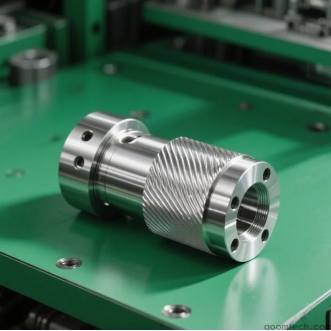
CNC Lathes: Used for cylindrical parts like shafts, bushings, and pins.
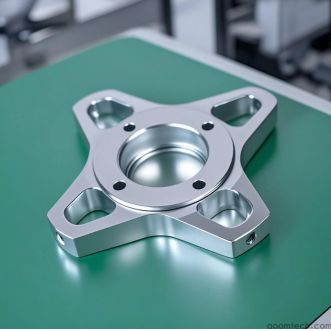
CNC Milling Machines: Used for flat surfaces, slots, holes, and complex shapes.
Multi-axis CNC Machines: Suitable for complex geometries requiring high precision and fewer setups.
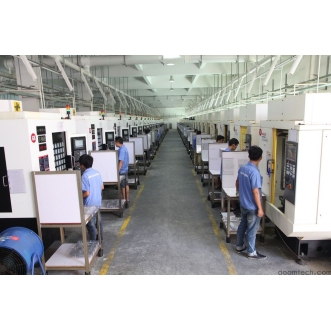
A well-equipped factory can reduce setup errors and improve production efficiency while maintaining tight tolerances.
Tooling and Tool Management
Tool quality is one of the most important factors in machining iron parts. Carbide tools are commonly used because they are hard and wear-resistant.
A professional CNC machining service should also have a strict tool management system, including:
Regular tool inspection
Scheduled tool replacement
Proper tool sharpening and calibration
Worn tools can cause poor surface finish, incorrect dimensions, and even damage to the workpiece. Good tool management ensures stable and consistent production quality.
Precision-Related Aspects in Machining
Precision-Related Aspects in CNC Machining of Iron Parts
Achieving high accuracy is a core requirement in precision-related aspects in CNC machining of iron parts. Several key factors contribute to this:
Advanced CNC control systems for precise motion control
Proper machine calibration and maintenance
Skilled and experienced operators
Stable machining environment (temperature and vibration control)
High-precision measuring tools such as Coordinate Measuring Machines (CMM) are used to verify dimensions during and after machining. In many industries, tolerances can be as tight as ±0.05 mm or even smaller.
Dealing with Heat and Deformation
Heat is a major challenge when machining iron. Cutting generates high temperatures, which can cause expansion and deformation of the part.
A good CNC machining service manages this problem using several methods:
Using effective coolant systems to reduce heat
Optimizing cutting speed and feed rate
Using sharp, high-quality cutting tools
Allowing cooling time between machining steps when necessary
These methods help maintain dimensional stability and ensure consistent quality throughout the process.
Quality Assurance in CNC Machining of Precision Iron Parts Service
In-Process Quality Control
Quality assurance in CNC machining of precision iron parts service begins during production, not after it.
In-process inspection includes checking:
Dimensional accuracy at each stage
Surface finish quality
Tool wear conditions
Early detection of errors prevents waste and reduces production costs. For example, if a dimensional deviation is found early, the operator can adjust the machine before completing the batch.
Final Inspection and Testing
Final inspection ensures that all parts meet required specifications before delivery. This may include:
Dimensional measurement using CMM
Hardness testing for strength verification
Tensile strength testing for mechanical performance
Ultrasonic testing for internal defect detection
A trustworthy CNC service provides detailed inspection reports so customers can verify quality and compliance with standards.
Cost-Effectiveness and Delivery
Price Competitiveness
When selecting a CNC machining provider, price is important but should not be the only factor. The lowest price may sometimes indicate lower quality materials or less strict quality control.
It is better to compare multiple quotes based on:
Material type and grade
Machining complexity
Surface finish requirements
Inspection and testing services
Negotiating long-term cooperation or larger order volumes may help reduce costs while maintaining quality.
Delivery Time and Reliability
Reliable delivery is essential for supply chain stability. A professional CNC machining service should provide clear lead times and consistently meet deadlines.
Before choosing a supplier, it is useful to check:
Production capacity and equipment availability
Ability to handle urgent orders
Customer feedback on delivery performance
Consistent on-time delivery is a strong indicator of a well-organized manufacturing system.
Conclusion
Choosing a reliable CNC Machining Service for Precision Iron Parts requires careful evaluation of machining capabilities, tool management, precision control, quality assurance, and delivery performance. Iron parts are widely used in critical industries, so even small machining errors can lead to serious consequences.
By understanding material properties, machining processes, and quality control systems, buyers can make better decisions and ensure long-term performance of their products.
A professional CNC machining partner does not only produce parts—they ensure accuracy, consistency, and reliability in every component delivered.
 How to Ensure Precision in CNC
 Small Batch Precision CNC Mach
 What surface finish can CNC ma
 CNC Machining Tolerance Settin