


Process for Custom CNC Machining of Precision Stainless Steel Parts
The Process for Custom CNC Machining of Precision Stainless Steel Parts is a highly controlled manufacturing workflow used to produce accurate, durable, and high-performance components. Stainless steel parts are widely used in industries where strength, corrosion resistance, and hygiene are critical. This article explains each stage of the process in a simple and practical way, including design, machining, and quality control.
Introduction to Custom CNC Machining of Precision Stainless Steel Parts
Importance of Precision Stainless Steel Parts
Precision stainless steel parts are essential in many industries such as medical, aerospace, automotive, and food processing. Their popularity comes from key properties like corrosion resistance, mechanical strength, and hygienic surface quality.
For example, in the medical industry, stainless steel components are used in surgical instruments and implantable devices because they are biocompatible and easy to sterilize. In aerospace applications, stainless steel parts are used in engine systems and structural assemblies where high stress and extreme temperatures are common. In food processing equipment, stainless steel ensures clean, safe, and long-lasting performance.
Pre-Machining Stage
Part Design and Engineering
In the pre - machining steps for custom precision stainless - steel parts, the first and most important step is detailed part design. Engineers use CAD (Computer-Aided Design) software to create a 3D model of the part. This model defines all dimensions, tolerances, and functional requirements.
Designers must consider the properties of stainless steel, especially its toughness and tendency to work-harden. Sharp corners should be avoided because they create stress concentration and tool wear. Instead, fillets and smooth transitions are recommended. Proper clearances must also be included to ensure smooth tool movement during machining.
Material Selection
Selecting the correct stainless steel grade is critical for performance and cost control. Common grades include 304, 316, and 410.
304 stainless steel: General-purpose, good corrosion resistance, widely used in industrial applications.
316 stainless steel: Higher corrosion resistance, suitable for marine, chemical, and medical environments.
410 stainless steel: High hardness and wear resistance, often used for mechanical parts.
The selection depends on the part’s working environment, required strength, and budget. Material traceability and quality certification are also important to ensure consistent machining performance.
CNC Machine and Tool Selection
Choosing the right CNC machine and tools directly affects machining efficiency and precision. Stainless steel requires machines with high rigidity and high-torque spindles because of its hardness and cutting resistance.
For tools, carbide-tipped cutting tools are commonly used. Coated carbide tools (such as TiAlN-coated end mills) are preferred because they reduce heat buildup and extend tool life. Tool selection depends on the operation:
Milling: Solid carbide end mills for stability and precision
Turning: Carbide inserts for high-strength cutting
Drilling: High-performance drill bits designed for stainless steel
Machining Stage
Rough-Machining Operations
During machining operations in custom CNC stainless - steel part production, rough machining is the first cutting stage. Its goal is to remove excess material quickly while leaving a controlled amount for finishing.
Larger cutting tools are used with higher feed rates and deeper cuts. However, stainless steel generates significant heat due to its low thermal conductivity. Therefore, proper coolant application is essential to prevent tool damage and thermal deformation.
Key considerations include:
Optimized toolpath planning to reduce unnecessary cutting time
Controlled spindle speed to balance efficiency and tool life
Continuous coolant flow to reduce heat and friction
Finish-Machining Operations
Finish machining focuses on achieving final dimensions, tight tolerances, and high-quality surface finishes. Smaller tools and lighter cutting parameters are used to ensure accuracy.
In this stage, CNC operators often use in-process measurement tools to verify dimensions. Adjustments may be made directly in the program to compensate for tool wear or material variation.
Techniques for high precision include:
Shallow depth of cut for better surface control
Reduced feed rates for improved accuracy
Use of finishing toolpaths such as contouring and step-over optimization
Specialized Machining for Features
Some stainless steel parts require complex features such as internal threads, deep cavities, or intricate geometries. Specialized CNC techniques are used in these cases.
For example:
Thread milling: Produces precise internal and external threads with better control than tapping
EDM (Electrical Discharge Machining): Used for extremely complex shapes or hard-to-machine areas
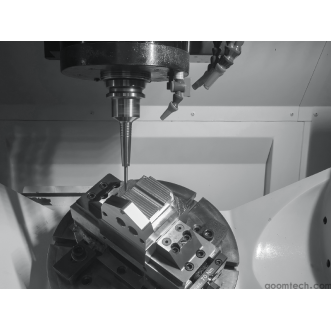
5-axis machining: Enables production of multi-angle and highly complex parts in a single setup
Quality Control During Machining
In-Process Inspection
Quality control in quality control in custom CNC machining of precision stainless steel begins during machining itself. Regular inspections ensure that the part remains within tolerance throughout production.
Common tools include calipers, micrometers, height gauges, and surface roughness testers. Operators typically check:
Diameter of shafts or holes
Width and depth of machined slots
Surface finish after each operation
If deviations are found, adjustments are made immediately by modifying cutting parameters or replacing worn tools.
Tool Wear Monitoring
Tool wear is a major challenge in stainless steel machining due to its hardness and abrasive nature. If not controlled, it can lead to poor accuracy and surface defects.
Monitoring methods include:
Visual inspection of cutting edges
Vibration analysis during machining
Acoustic emission monitoring systems
When tool wear exceeds acceptable limits, tools are replaced or compensated in the CNC program to maintain consistency.
Post-Machining Stage
Deburring and Edge Finishing
After machining, burrs and sharp edges are often present. These must be removed to ensure safety, functionality, and assembly quality.
Common deburring methods include manual finishing with abrasive tools, tumbling, and electrochemical deburring for high-precision applications. Edge finishing such as chamfering or rounding also improves fatigue resistance and part durability.
Surface Treatment
Surface treatment enhances both performance and appearance of stainless steel parts. One common method is passivation, which improves corrosion resistance by removing surface contaminants and enhancing the natural oxide layer.
Polishing is used when a smooth or mirror-like finish is required, especially in food processing or medical applications. Other treatments may include bead blasting or electropolishing depending on functional needs.
Conclusion
The Process for Custom CNC Machining of Precision Stainless Steel Parts involves a carefully structured workflow that includes design, material selection, machining, inspection, and finishing. Each stage plays a critical role in ensuring high accuracy, durability, and consistent quality.
By following proper engineering practices, selecting the right tools and materials, and applying strict quality control, manufacturers can produce stainless steel components that meet demanding industrial requirements. Understanding this process helps engineers, buyers, and manufacturers achieve better results in modern precision manufacturing.
 Process of Custom High-Precisi
 CNC Machining Parameter Settin
 5 Key Tips for CNC Machining o
 Small-batch Precision Parts 5-