


Qualified Supplier of High-Quality CNC Machined Metal Hardware Parts
Introduction to High-Quality CNC Machined Metal Hardware Parts Suppliers
The Significance of Quality in Metal Hardware Parts
High-quality CNC machined metal hardware parts are essential in many industries, including construction, automotive, electronics, aerospace, and furniture manufacturing. These parts directly affect product performance, durability, and safety.
For example, a poorly manufactured metal fastener in a building structure can lead to structural instability, while an inaccurate engine component in a car may cause system failure or reduced efficiency. Because of these risks, choosing a Qualified Supplier of High-Quality CNC Machined Metal Hardware Parts is critical for any engineering or manufacturing project.
Key Factors in Identifying a Qualified Supplier
Technical Expertise
A qualified supplier must have strong technical knowledge of CNC machining processes such as milling, turning, drilling, and threading. They should be experienced in working with metals like steel, aluminum, brass, and titanium.
One of the most important indicators of capability is the ability to maintain tight tolerances, often within a few tenths of a millimeter. When identifying qualified suppliers for CNC metal hardware parts, customers should request case studies, examine sample parts, and review technician qualifications to verify machining expertise.
Quality Assurance System
A reliable supplier must operate a complete quality management system. Certifications such as ISO 9001 demonstrate standardized production and process control.
Advanced inspection tools like Coordinate Measuring Machines (CMM), optical comparators, and surface profilometers are essential for ensuring accuracy. In a strong system, inspection is performed at multiple stages, including in-process checks and final product validation.
Non-conforming parts should be clearly documented, isolated, and either reworked or rejected based on strict procedures.
Advanced Equipment and Technology
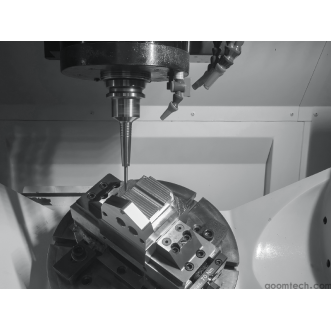
Modern CNC equipment significantly improves precision, speed, and surface quality. Multi-axis CNC machines can produce complex geometries in a single setup, reducing errors and improving consistency.
Advanced CAD/CAM software also plays a key role in optimizing toolpaths and improving machining efficiency. This combination of hardware and software ensures stable production of high-precision components.
Production Capacity and Flexibility
A qualified supplier must support both prototype production and mass manufacturing. Flexibility is important when handling design changes, urgent orders, or variable production volumes.
Key evaluation points include monthly production capacity, lead times, and responsiveness to engineering modifications.
Cost-Effectiveness
Cost should always be evaluated together with quality, not in isolation. A low price may indicate reduced material quality or insufficient process control.
A professional supplier provides transparent quotations that include material cost, machining time, finishing, and inspection. Long-term partnerships and bulk orders often improve cost efficiency without sacrificing quality.
Customer Service and Communication
Clear communication is essential for successful CNC projects. A qualified supplier responds quickly, understands technical drawings, and provides production updates.
Strong communication reduces misunderstandings in tolerance requirements, delivery schedules, and surface finishing expectations. Reviews, responsiveness, and engineering collaboration ability are key evaluation methods.
The Manufacturing Process of High-Quality CNC Machined Metal Hardware Parts
Design and Engineering
The process begins with CAD modeling and engineering analysis. Engineers evaluate part geometry, tolerances, and material behavior.
Good design practices include avoiding sharp internal corners, ensuring proper tool access, and selecting appropriate tolerances based on functional requirements. This stage is essential in the manufacturing process of high-quality CNC metal hardware parts.
Material Procurement
Material selection directly affects strength, corrosion resistance, and machinability. Reliable suppliers source certified metals to ensure consistency.
For example, aluminum is often used for lightweight applications, stainless steel for corrosion resistance, and brass for electrical conductivity. Choosing the correct material is essential for product performance and cost control.
CNC Machining Operations
CNC machining typically includes rough machining and finish machining. Rough machining removes excess material quickly, while finish machining achieves final accuracy and surface quality.
Operators carefully adjust spindle speed, feed rate, and cutting depth depending on material type. For example, aluminum allows higher cutting speeds, while stainless steel requires slower speeds and stronger cutting tools.
Quality Control Measures in High-Quality Suppliers
In-Process Inspection
Quality control in high-quality CNC metal hardware manufacturing begins during production. Operators regularly check dimensions using calipers, micrometers, and surface roughness testers.
Typical inspection points include shaft diameters, hole positions, and slot widths. If deviations are found, machining parameters are adjusted immediately to prevent batch defects.
Final Inspection and Testing
After machining, all parts undergo final inspection to confirm compliance with design specifications. This includes dimensional accuracy checks, surface finish evaluation, and sometimes functional testing.
Defective parts may be reworked, repaired, or scrapped depending on severity. A strict final inspection system ensures only compliant products are delivered to customers.
Case Studies of Qualified Suppliers
Case Study 1: Precision Construction Fasteners
A supplier specializing in construction hardware produced high-strength CNC machined fasteners for a large infrastructure project. The parts required extremely tight tolerances to ensure structural safety.
Through advanced machining centers and strict inspection procedures, the supplier achieved a 99.8% qualification rate. The project improved assembly efficiency and reduced on-site installation issues significantly.
Case Study 2: Electronics Metal Connectors
Another supplier focused on precision connectors for electronic devices. The challenge was maintaining conductivity while achieving micro-level dimensional accuracy.
By using multi-axis CNC machines and advanced quality inspection systems, the supplier successfully delivered stable, high-precision connectors. This improved device reliability and reduced failure rates in end-use products.
Conclusion
Choosing a Qualified Supplier of High-Quality CNC Machined Metal Hardware Parts requires careful evaluation of technical expertise, quality systems, equipment, production capability, cost structure, and communication skills.
By understanding these factors and applying structured evaluation methods, businesses can reduce risks, improve product reliability, and ensure long-term manufacturing success.
 Process of Custom High-Precisi
 CNC Machining Parameter Settin
 5 Key Tips for CNC Machining o
 Small-batch Precision Parts 5-