


What tolerances can be achieved with CNC machining of brass parts
Understanding What tolerances can be achieved with CNC machining of brass parts is essential for engineers, product designers, and buyers who need accurate and reliable components. Brass is widely used in plumbing fittings, electrical connectors, musical instruments, and precision mechanical parts. In all these applications, dimensional accuracy directly affects performance, safety, and product life.
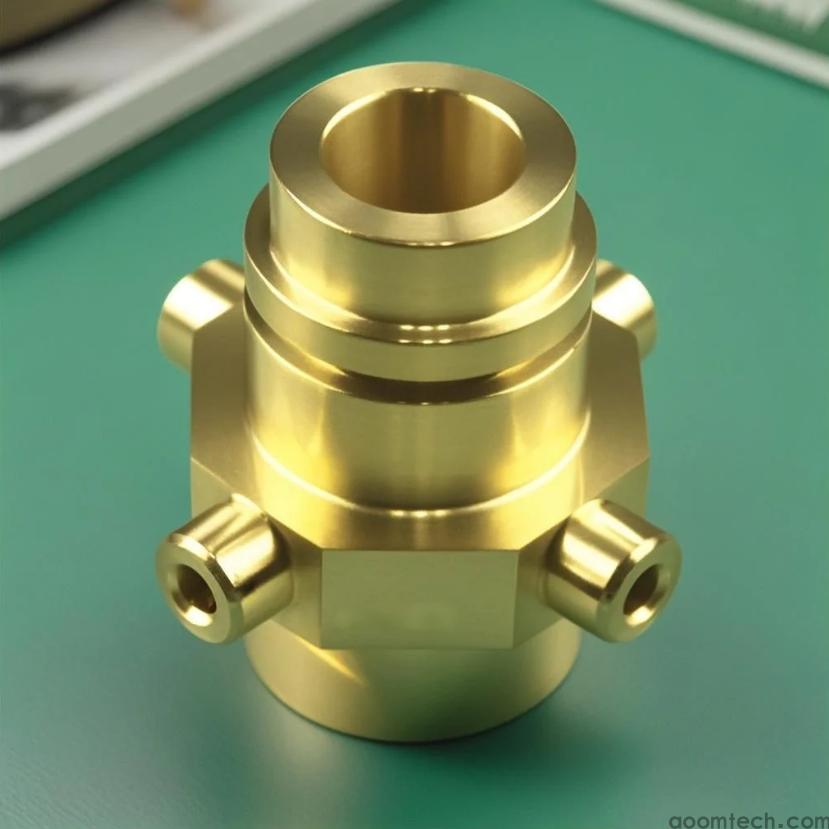
Importance of Tolerance in Brass CNC Machining
Tolerance refers to the allowed variation between the designed dimension and the actual manufactured part. In brass CNC machining, even small deviations can change how a part fits or functions.
For example, in a brass musical instrument, a slight difference in bore diameter can change airflow and sound quality. In electrical connectors, poor tolerances may lead to weak contact or system failure. That is why tight and controlled tolerances are critical for functionality, interchangeability, and product reliability.
Factors Affecting Tolerances in Brass CNC Machining
Machine Precision
The accuracy of the CNC machine is one of the most important factors affecting tolerances in brass CNC machining. High-end CNC machines equipped with precision linear guides, rigid machine frames, and high-quality ball screws can achieve much tighter tolerances.
Modern CNC systems can typically reach positioning accuracy around ±0.01mm under controlled conditions. However, machine calibration, wear, and maintenance also strongly influence real machining results. A well-maintained machine consistently produces more stable and accurate brass parts.
Cutting Tools and Tooling
Tool quality directly affects dimensional accuracy. Sharp and high-quality carbide tools are commonly used for brass because they provide clean cutting edges and long tool life.
Tool wear is a major risk factor. As tools wear, cutting dimensions gradually drift, causing tolerance deviations. Proper tool holding, stable fixtures, and regular tool replacement are essential to maintain accuracy in brass CNC machining.
Material Properties of Brass
Different brass alloys behave differently during machining. Some alloys are softer and easier to cut, while others may generate more heat or chip irregularly.
Thermal expansion is also important. If heat builds up during machining, brass may expand slightly, affecting final dimensions. Understanding the material composition helps optimize machining settings and improve dimensional stability.
Machining Parameters
Cutting speed, feed rate, and depth of cut all influence accuracy and surface stability.
Cutting speed: Brass is typically machined at high speeds (e.g., 150–300 m/min in turning with carbide tools), which helps achieve smooth finishes.
Feed rate: Too high feed can cause vibration and reduce accuracy.
Depth of cut: Must be balanced to avoid excessive cutting force and heat generation.
Proper parameter optimization ensures both efficiency and stable tolerances.
Typical Tolerances in Brass Part CNC Machining
Dimensional Tolerances
In standard production environments, typical tolerances in brass part CNC machining are usually:
±0.05mm to ±0.1mm for general turned or milled parts
±0.02mm to ±0.05mm for higher precision components
±0.01mm to ±0.02mm for high-precision applications with advanced CNC systems
For example, plumbing fittings may use moderate tolerances, while precision electronic connectors require much tighter control.
Form and Position Tolerances
Form and position tolerances describe shape accuracy and feature alignment.
In brass CNC machining, common achievable values include:
Roundness: around ±0.01mm for precision cylindrical parts
Hole position accuracy: around ±0.03mm to ±0.05mm
Flatness: within ±0.02mm under controlled machining conditions
These values depend heavily on machine capability, fixturing stability, and inspection methods.
Achieving Tight Tolerances in Brass CNC Machining
Quality Control and Inspection
Strong inspection processes are essential for achieving tight tolerances in brass CNC machining. Common tools include calipers, micrometers, height gauges, and coordinate measuring machines (CMM).
In-process inspection helps detect deviations early, while final inspection ensures every finished part meets specifications. Many manufacturers use inspection checkpoints after rough machining and before final finishing to reduce risk.
Process Optimization
Process optimization improves both consistency and precision. Key methods include:
Fine-tuning cutting parameters based on part geometry
Using advanced CNC toolpath programming for smooth motion control
Applying proper cooling and lubrication to reduce heat distortion
Minimizing tool overhang to improve rigidity and stability
These practices reduce variation and improve repeatability in mass production and prototype machining.
Conclusion
So, What tolerances can be achieved with CNC machining of brass parts? In general, standard brass CNC machining can achieve ±0.05mm to ±0.1mm, while high-precision setups can reach ±0.01mm or better under controlled conditions.
The final tolerance depends on multiple factors, including machine accuracy, tooling quality, material behavior, machining parameters, and inspection methods. By carefully controlling these variables, manufacturers can produce highly accurate and reliable brass components for a wide range of industries.
 Process of Custom High-Precisi
 CNC Machining Parameter Settin
 5 Key Tips for CNC Machining o
 Small-batch Precision Parts 5-