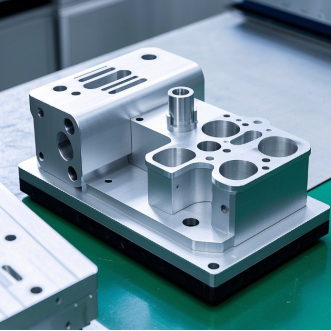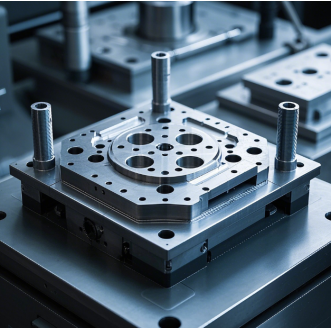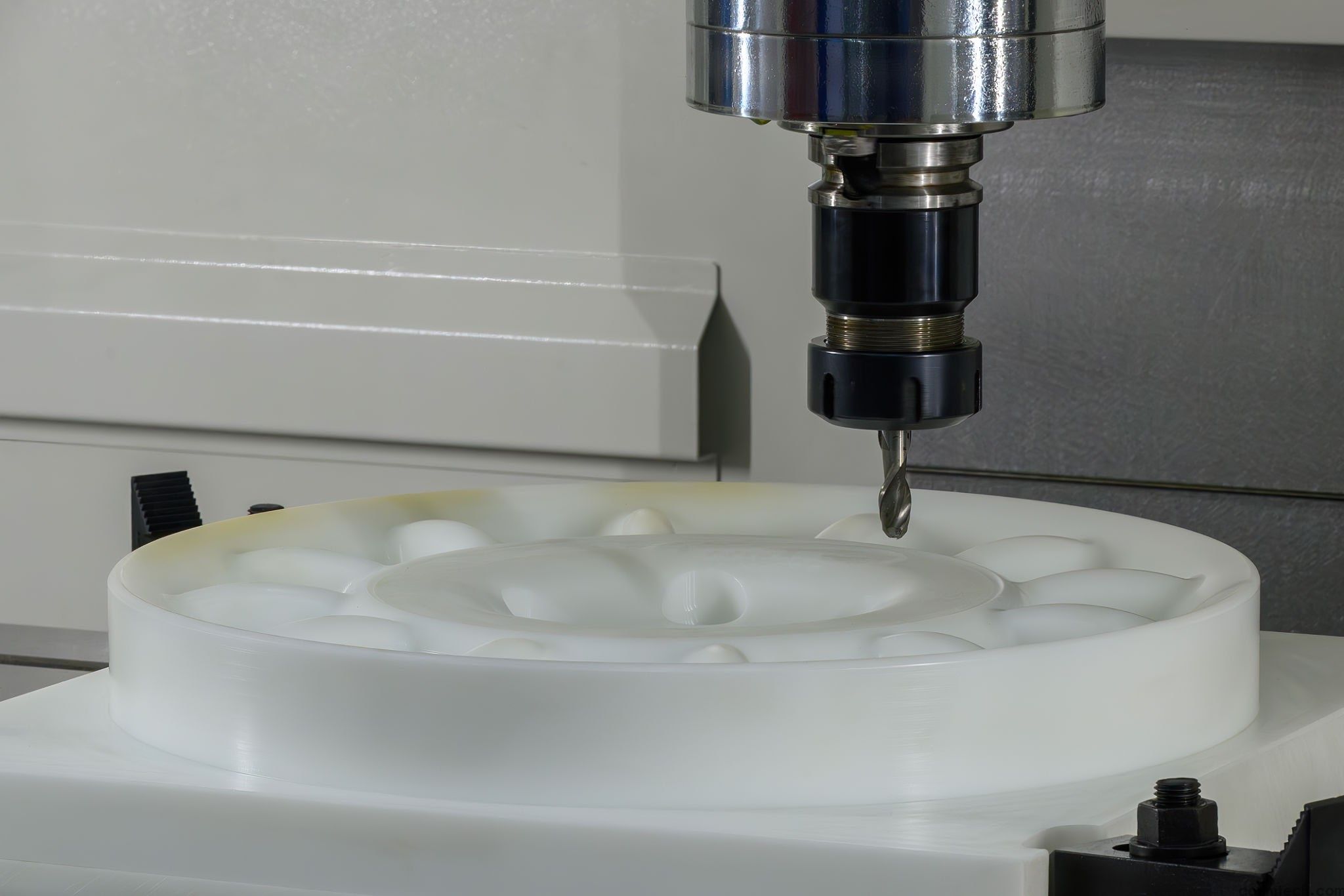
Precision CNC Machining PEEK Services
Precision CNC Machining PEEK Services: How We Eliminate Distortion & Control ±0.01mm Tolerances
If you have ever machined pure Polyetheretherketone (Virgin PEEK 450G) or 30% Glass-Filled PEEK (GF30), you know this high-performance polymer is a double-edged sword. It offers metal-like mechanical strength, exceptional chemical resistance, and withstands continuous operating temperatures up to 260°C.
However, sourcing reliable CNC machining PEEK services can be a nightmare for engineering teams. Put a raw PEEK billet onto a standard 5-axis machining vise, and things often go wrong during or after the run:
Dimensional drift two hours after unpinching the workpiece.
Micro-cracking and thread chipping around deep tapped NPT or metric holes.
Gummy, stubborn burrs that ruin critical sealing faces and require risky hand-deburring.
As a shop supervisor managing precision polymer machining for over 12 years, I’ve seen thousands of dollars of premium Victrex PEEK stock scrapped simply because operators treated it like regular aluminum or basic Delrin.
Here is how our specialized CNC machining PEEK services handle thermal control, internal stress relief, and custom tooling to deliver zero-defect, flight-ready, and semiconductor-grade components.
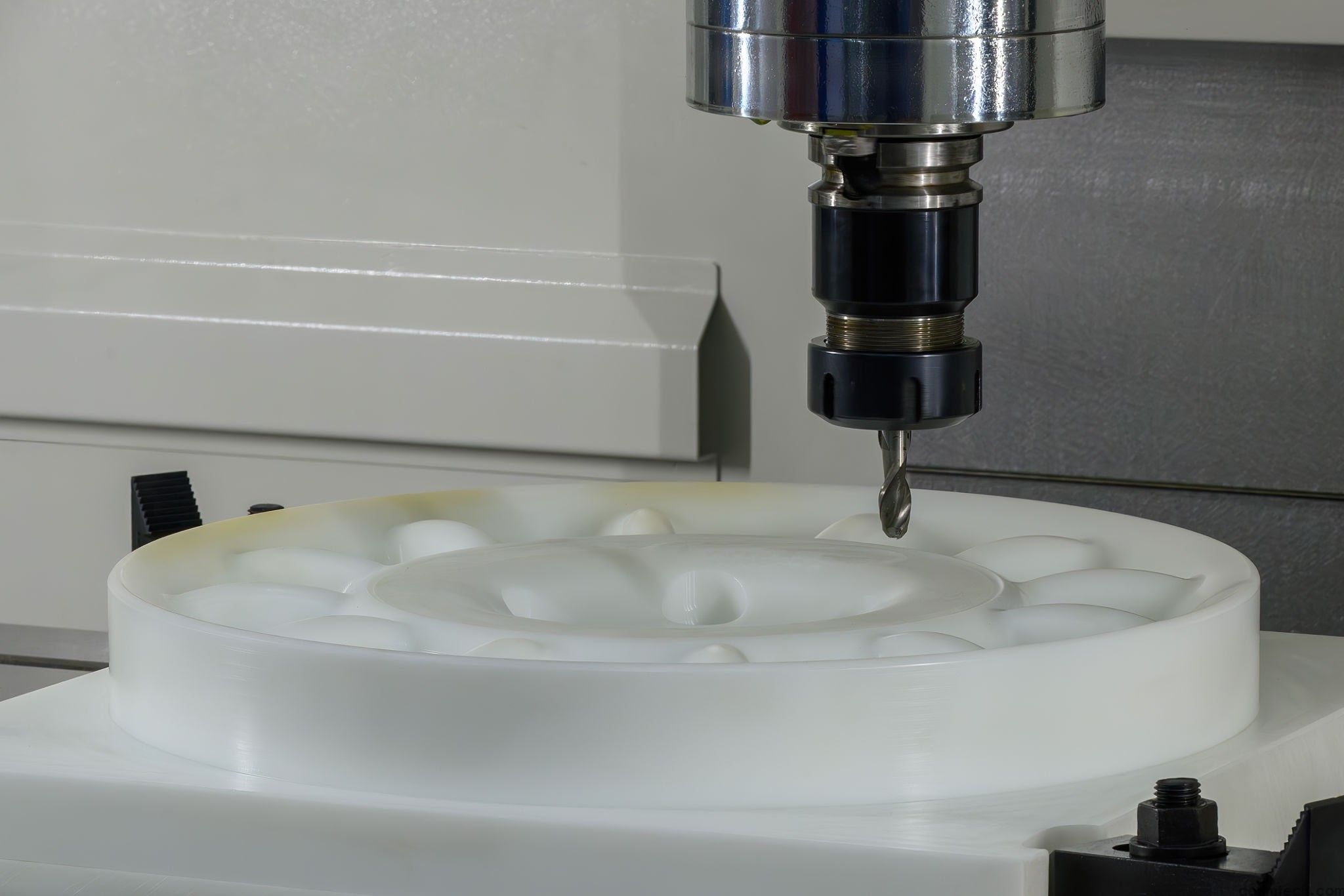
The Hidden Challenge: Internal Thermal Stress and Dimensional Drift
PEEK has a remarkably low thermal conductivity ($0.25\text{ W/m}\cdot\text{K}$). When a high-speed cutter shears through PEEK stock, friction heat builds up directly at the cutting zone. Unlike steel, titanium, or brass—which quickly transfer heat into the chip—PEEK traps thermal energy inside the substrate.
If your machine shop pushes feeds and speeds too aggressively, the workpiece expands dynamically while machining. The moment the finished part cools down to room temperature on the CMM table, your dimensions shrink out of tolerance.
[Raw PEEK Stock] ➔ [Pre-Bake Annealing] ➔ [Rough CNC Milling] ➔ [Secondary Stress Relief] ➔ [PCD Finish Cut] ➔ [100% CMM Inspection]
Our 3-Step PEEK Stress Relief Annealing Process
To guarantee that your tight-tolerance housings and semiconductor manifolds maintain long-term dimensional stability, we implement a strict PEEK stress relief annealing process:
Pre-Machining Stock Annealing: We slowly ramp up temperatures in nitrogen-purged ovens to neutralize extruded mill stresses before striking the stock with a tool.
Intermediate Roughing & Bake: We leave $0.5\text{ mm}$ machining allowance on functional surfaces, unclamp the workpiece, and perform a secondary thermal relief cycle to bleed off stress induced by aggressive chip removal.
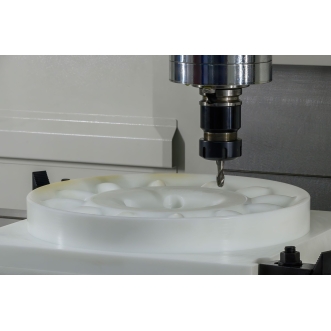
PCD Finish Milling: We finish parts using single-crystal diamond (PCD) tools or razor-sharp, uncoated polished-flute carbide end mills. High rake angles cut down friction heat, allowing chips to curl and evacuate smoothly without tool gumming.
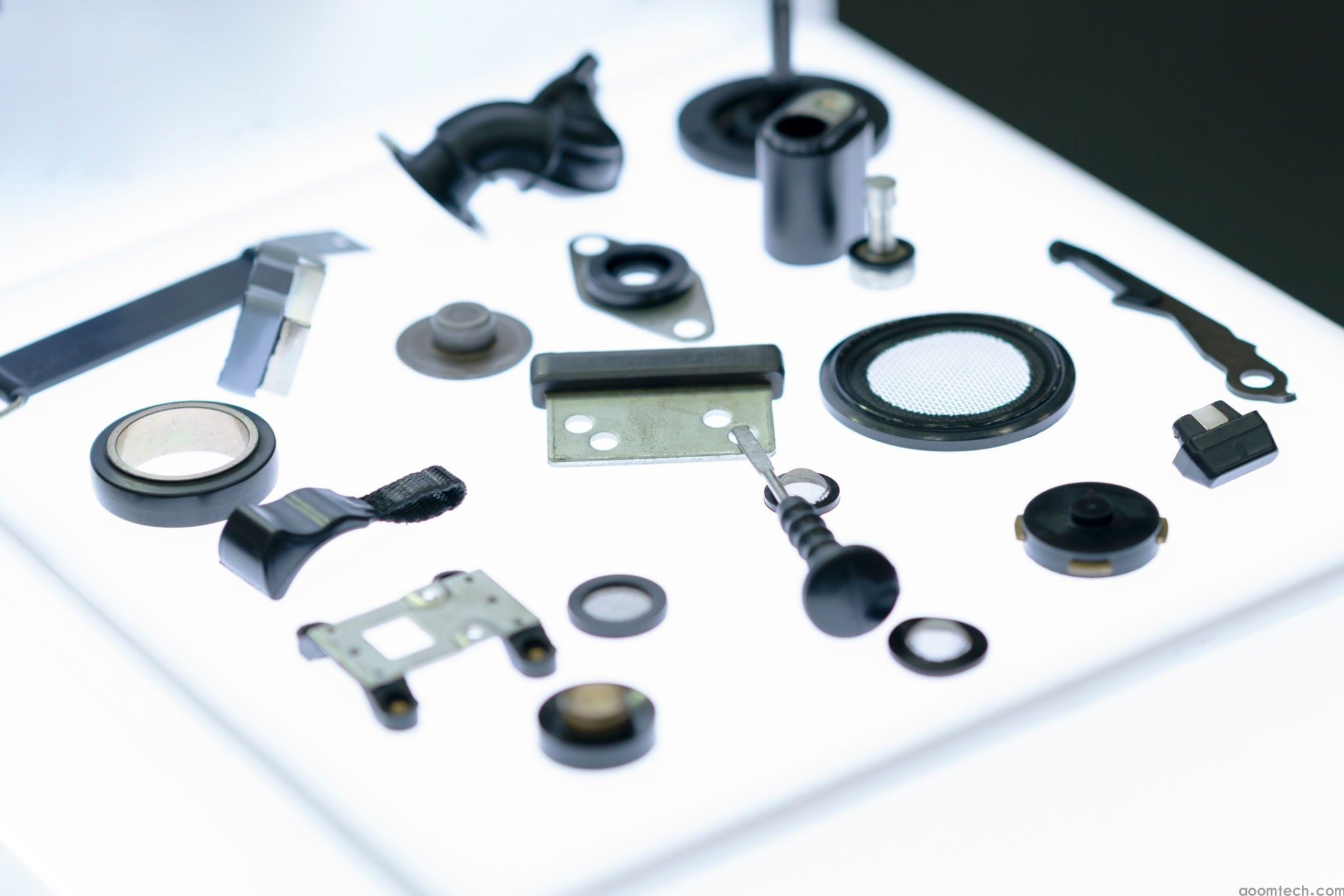
Grade Selection: Virgin vs. Filled PEEK Machining Behaviors
Matching the right grade of raw stock to your application prevents unnecessary tool wear and cuts overall runtime.
| PEEK Grade | Primary Applications | Machining Behavior & Shop Floor Notes |
| Virgin PEEK (Unfilled 450G) | Medical implants, fluid manifolds, food-contact seals | Highly ductile. Tends to create continuous stringy burrs. Requires crystal-sharp edges and chilled air blast. |
| 30% Glass-Filled (PEEK GF30) | Electrical insulators, high-load structural brackets | Greatly increased rigidity. Extremely abrasive on standard carbide cutters; PCD tooling is required. |
| 30% Carbon-Filled (PEEK CF30) | Aerospace wear rings, high-speed pump vanes | High strength and thermal dissipation. Low CTE, but directional fiber orientation requires precise stock alignment. |
5 Axis PEEK Machining Tolerances: Shop Capabilities & Quality Control
Providing expert custom PEEK prototype machining and volume production requires dedicated temperature-controlled facilities and modern inspection equipment.
Machining Hardware: 5-axis Hermle milling centers, Fanuc Swiss-type automatic lathes, and high-rpm ultra-precision spindles.
Achievable Tolerances: Standard linear tolerances of $\pm0.01\text{ mm}$ ($\pm0.0004"$), with hole position repeatability held to $\pm0.005\text{ mm}$.
Quality Assurance & Traceability: Zeiss CMM inspection, Keyence optical comparators, ISO 9001:2015 certified workflows, and full material Certificate of Conformance (COC / MTR) with every order.
Real Shop Case Study: Semiconductor PEEK Test Sockets & Manifolds
A semiconductor equipment manufacturer approached us after their previous vendor failed three consecutive batches of fluidic manifolds due to micro-cracking inside internal threads during thermal testing ($180^\circ\text{C}$).
Our Engineering Solution:
Thread Milling over Tapping: Tapping PEEK directly concentrated stress at thread roots, causing premature micro-fractures. We switched to single-point thread milling with a light $0.02\text{ mm}$ radial step-over pass.
Coolant Management: Standard water-soluble cutting fluids can cause trace chemical contamination. We utilized high-pressure, oil-free chilled air streams to maintain ambient cut zones without contaminating the plastic.
Outcome: All 200 units passed helium leak testing at $10^{-9}\text{ mbar}$, achieving zero field rejections.
Frequently Asked Questions About CNC Machining PEEK Services
Q1: Why is PEEK so expensive to CNC machine?
A: PEEK resin is a high-performance thermoplastic with high raw material costs. Beyond stock price, PEEK requires slower cutting feeds, specialized PCD or diamond-coated tooling, and controlled stress-relief annealing cycles to prevent warping, which adds machine time.
Q2: Can you maintain tight tolerances on thin-walled PEEK components?
A: Yes. By combining intermediate stress-relief annealing with soft jaws, vacuum chucking, and micro-stepped finish cuts, our CNC machining PEEK services regularly maintain tight wall tolerances down to $\pm0.01\text{ mm}$ without part distortion.
Q3: What is the lead time for custom PEEK prototype machining?
A: Standard prototype turnarounds take 3 to 5 business days after drawing sign-off. Expedited 24-hour to 48-hour prototype delivery is available depending on stock availability and part complexity.
Stop Scrapping Expensive PEEK Stock: Get a Free Engineering DFM Review
PEEK material is too expensive for trial-and-error prototyping. Whether you are dealing with thin-wall warping, thread cracking under pressure, or burr control on sealing faces, our technical team is ready to assist.
What you get when submitting your CAD files:
Free DFM Analysis: We analyze your 3D models for thermal expansion hazards, wall thickness consistency, and tool access limits.
Cost Optimization: We point out minor design edits that cut up to 30% off high-speed milling runtime without sacrificing mechanical performance.
Full Quality Assurance: Every batch ships with material certs, heat-treat logs, and 100% CMM inspection reports.
👉 Ready to review your drawings with our lead engineer?
Email your STEP files and specs to [chen@aoomtech.com] or submit your RFQ below. We deliver actionable manufacturing quotes within 24 hours.
[ Request a Precision CNC Machining PEEK Quote ]
RELATED PRODUCTS
-
Medical Brass CNC Machining Parts
-
Precision CNC Machining PEEK Services
-
Precision Custom CNC Machined Car Parts
-
cnc machining optical housings
-
Precision CNC Casting Machining Services
-
Precision Gear CNC Machining Services
-
Precision Stainless Steel Parts CNC Mach
-
CNC Machining of Precision Aluminum Tube
-
CNC Machining of Large Precision Aluminu
-
CNC Machining & Manufacturing of Pre