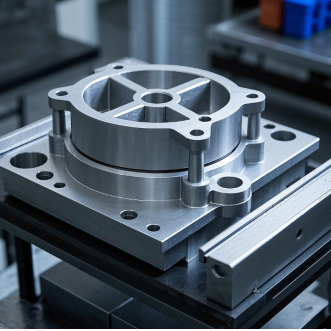
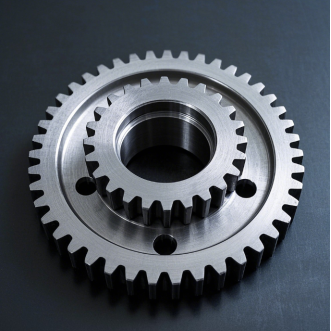
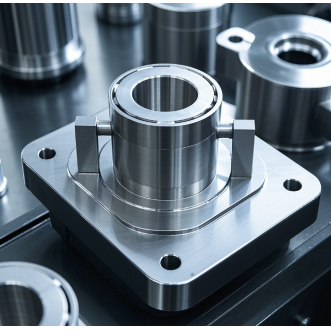
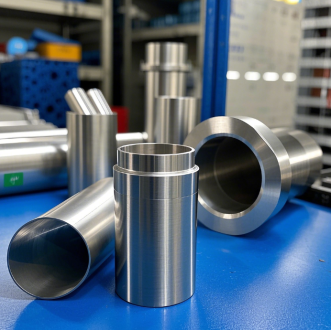
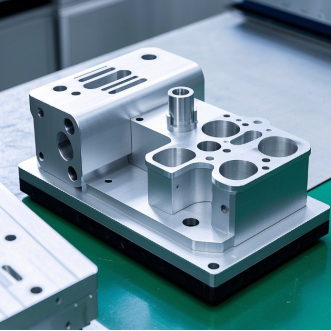
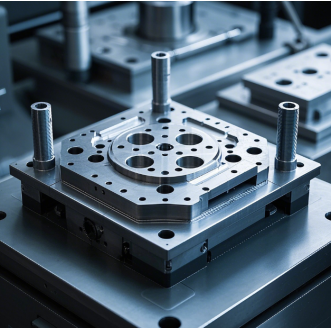
Precision Custom CNC Machined Car Parts
Custom CNC Machined Car Parts Outperform Castings in High-Performance Automotive Manufacturing
If you have ever dealt with blown head gaskets at 25 psi of boost or tracked down an elusive driveline vibration at 7,000 RPM, you know the structural limits of OEM cast components. Castings inherently harbor micro-porosity, air pockets, and uneven wall thicknesses that crack under thermal fatigue and high torsional stress.
That is why Tier-1 powertrain developers, aftermarket motorsport teams, and EV manufacturers rely heavily on high-precision cnc machined car parts. Cutting components from solid forged blocks of 6061-T6 or 7075-T6 billet aluminum guarantees uniform grain alignment, eliminating hidden stress risers and ensuring structural integrity under extreme load cycles.
Here is what automotive engineers look for when sourcing custom precision components.
1. Tight Tolerances: Eliminating Chatter and Thermal Drift
In high-rpm powertrain engineering, "close enough" turns into metal shavings inside the oil pan. Manufacturing high-stress components—such as custom connecting rods or dry-sump oil pans—demands tolerances tight down to ±0.005mm.
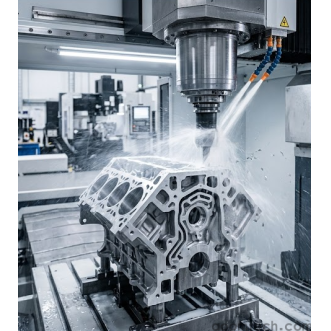
Maintaining this level of accuracy across batch production requires more than a standard 3-axis mill. It requires dynamic thermal compensation on the shop floor to neutralize spindle thermal growth during 12-hour milling cycles.
Shop Floor Insights — Controlling Tool Chatter on Thin Walls:
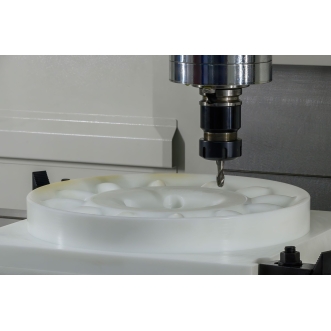
When milling thin-walled aluminum housings for EV battery liquid cooling plates, tool chatter often ruins surface finish and warps the mating face. By combining high-helix 3-flute carbide end mills with 70-bar high-pressure through-spindle coolant, we flush chips instantaneously, maintaining a surface roughness below Ra 0.4µm and preventing heat-induced deformation.
2. Billet Aluminum vs. Castings: Mechanical Performance Comparison
To evaluate why high-tier auto engineering favors billet cnc machined car parts over conventional castings, review the mechanical property benchmarks below:
| Engineering Property | A356-T6 Cast Aluminum | 6061-T6 Billet Aluminum | 7075-T6 Billet Aluminum |
| Tensile Strength (MPa) | 220 - 250 | 310 | 570 |
| Yield Strength (MPa) | 160 - 180 | 276 | 503 |
| Porosity Risk | High (Internal Void Risk) | Zero (Solid Grain Flow) | Zero (Solid Grain Flow) |
| Machining Tolerance | ±0.050 mm | ±0.005 mm | ±0.005 mm |
| Primary Application | Low-stress mass production | Intake manifolds, brackets | Suspension uprights, hubs |
3. Application Focus: Lightweighting Suspension & EV Thermal Modules
The rapid growth of electric platforms hasn't reduced the demand for precision machining; it has elevated the technical requirements for thermal management and structural weight reduction.
Suspension Uprights & Un-sprung Mass Reduction
Using 5-axis CNC machines to sculpt suspension knuckles out of 7075-T6 billet aluminum reduces un-sprung mass by up to 35% compared to OEM cast iron hubs. Lower un-sprung weight keeps the tires firmly planted over track kerbs, directly improving turn-in crispness and damping response.
EV Battery Cooling Enclosures & Motor Mounts
EV traction motors output instantaneous torque. Cast engine mounts frequently crack under repeated launches. Billet motor brackets absorb these torsional shock loads easily. Furthermore, our 5-axis CNC machining services allow intricate internal coolant channels to be milled into battery cold plates before friction-stir welding, optimizing thermal dissipation for high-C-rate fast charging.

💡 Ready to Scale Your Custom Automotive Components?
Get a comprehensive DFM (Design for Manufacturability) analysis and competitive quote within 24 hours. Our engineers review your CAD models for tool clearance, stress risks, and cost optimization before spindle time begins.
👉 [Upload STEP Files for Instant RFQ & DFM Report]
Frequently Asked Questions (FAQ)
Q: What is the standard turnaround time for custom CNC machined car parts?
A: Rapid prototype orders typically ship within 5–7 business days after CAD freeze. Production runs (100–5,000 units) average 2–3 weeks depending on surface treatment requirements like hard-coat anodizing.
Q: Why choose 7075-T6 aluminum over 6061-T6 for motorsport components?
A: 7075-T6 delivers nearly double the tensile strength of 6061-T6, making it ideal for high-stress suspension uprights, control arms, and wheel hubs where saving weight without compromising yield strength is critical.
Q: How do you verify tolerance compliance for complex auto components?
A: Every batch of cnc machined car parts undergoes 100% CMM (Coordinate Measuring Machine) dimensional inspection, thread gauge checks, and full optical surface roughness testing, accompanied by full material test reports (MTR).
RELATED PRODUCTS
-
Medical Brass CNC Machining Parts
-
Precision CNC Machining PEEK Services
-
Precision Custom CNC Machined Car Parts
-
cnc machining optical housings
-
Precision CNC Casting Machining Services
-
Precision Gear CNC Machining Services
-
Precision Stainless Steel Parts CNC Mach
-
CNC Machining of Precision Aluminum Tube
-
CNC Machining of Large Precision Aluminu
-
CNC Machining & Manufacturing of Pre