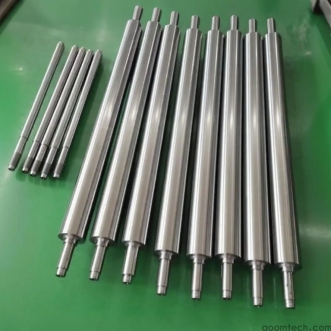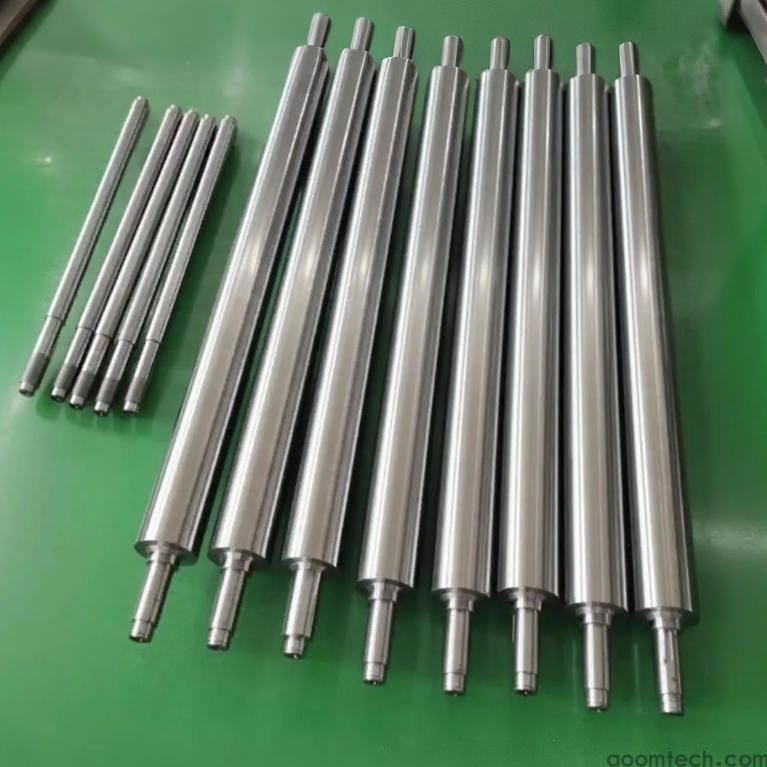
Roller CNC Machining Services
Roller CNC Machining Services: Precision Solutions for Industrial Roller Manufacturing
Choosing the right Roller CNC Machining Services can be challenging. Many manufacturers struggle with roller accuracy, surface finish quality, material selection, production costs, and delivery schedules. Even a small dimensional error in a roller can cause vibration, uneven wear, product defects, or machine downtime. Long lead times and inconsistent quality can also disrupt production plans and increase operating costs.
Professional CNC machining helps solve these issues by producing rollers with tight tolerances, excellent surface finishes, and consistent repeatability. Whether you need conveyor rollers, printing rollers, guide rollers, drive rollers, or custom industrial rollers, CNC machining provides reliable and efficient manufacturing solutions.
What Are Roller CNC Machining Services?
Roller CNC Machining Services involve the manufacturing of cylindrical roller components using advanced computer-controlled machines. CNC lathes, CNC turning centers, milling machines, and grinding equipment are used to create rollers with precise dimensions and smooth surfaces.
These services are suitable for industries such as:
Material handling and conveyor systems
Printing and packaging equipment
Textile machinery
Food processing equipment
Mining and heavy industry
Automation systems
Paper manufacturing
Steel and metal processing
Modern high-precision roller CNC machining ensures that every roller meets strict performance requirements and operates smoothly under demanding conditions.
How the Roller CNC Machining Process Works
1. Engineering Review and Design Analysis
The process begins with a detailed review of drawings, CAD files, tolerance requirements, surface finish specifications, and operating conditions. Engineers evaluate critical dimensions, bearing locations, shaft interfaces, and load requirements before production starts.
2. Material Preparation
The selected raw material is cut to the required size. Material certification is often verified to ensure compliance with customer specifications and industry standards.
3. CNC Turning Operations
CNC turning is the primary process used to machine roller diameters, shoulders, grooves, and shaft sections. Advanced CNC lathes provide excellent concentricity and dimensional accuracy throughout the roller body.
4. CNC Milling and Secondary Machining
Additional features such as keyways, slots, mounting holes, threaded sections, and special profiles can be machined using CNC milling equipment.
5. Surface Finishing
Depending on the application, rollers may undergo grinding, polishing, hard chrome plating, coating, anodizing, or other finishing processes to improve wear resistance and surface performance.
6. Inspection and Testing
Each roller is inspected according to customer specifications before shipment. This ensures consistent quality and reliable performance in real-world applications.
Materials Commonly Used for Roller CNC Machining
Material selection directly affects roller durability, wear resistance, corrosion resistance, and overall service life. The most suitable material depends on the operating environment and load conditions.
Carbon Steel
Carbon steel is a popular choice for general industrial rollers. It offers good strength, affordability, and machinability, making it ideal for many conveyor and handling applications.
Alloy Steel
Alloy steels provide improved hardness and wear resistance. They are commonly used for heavy-duty rollers operating under high loads and demanding environments.
Stainless Steel
Stainless steel rollers offer excellent corrosion resistance and are widely used in food processing, pharmaceutical, marine, and chemical industries.
Aluminum
Aluminum rollers are lightweight and corrosion resistant. They are often selected for applications where reducing equipment weight is important.
Engineering Plastics
Materials such as POM, Nylon, UHMW-PE, and PTFE are suitable for lightweight, low-noise, and corrosion-resistant roller applications.
Benefits of Roller CNC Machining Services
Superior Accuracy
Advanced CNC equipment can achieve tight dimensional tolerances, helping rollers maintain smooth rotation and proper alignment during operation.
Excellent Surface Finish
A high-quality surface finish reduces friction, minimizes wear, and improves overall machine efficiency.
Consistent Production Quality
CNC machining eliminates many manual variations, ensuring every roller is manufactured to the same specifications.
Flexible Customization
Custom-designed roller CNC machining for industrial rollers allows manufacturers to produce unique designs, special diameters, custom grooves, and application-specific features.
Faster Production Cycles
Modern CNC systems increase production efficiency while maintaining precision, helping customers meet project deadlines more effectively.
Lower Long-Term Costs
Although precision manufacturing requires investment, high-quality rollers often last longer and reduce maintenance costs. This makes cost-effective roller CNC machining services a practical solution for many businesses.
Quality Control Measures for High-Performance Rollers
Reliable roller performance depends on strict quality control throughout the manufacturing process.
Incoming material verification
In-process dimensional inspections
Concentricity and runout measurement
Surface roughness testing
Coordinate Measuring Machine (CMM) inspection
Final visual and dimensional verification
Documentation and traceability records
These procedures help ensure that every roller meets customer requirements and performs reliably in demanding industrial environments.
Applications of High-Precision Roller CNC Machining
Many industries depend on high-precision roller CNC machining to achieve consistent production quality and equipment reliability.
Conveyor system rollers
Printing press rollers
Laminating rollers
Textile machine rollers
Guide rollers
Drive rollers
Packaging equipment rollers
Food processing rollers
Industrial automation rollers
Steel mill rollers
How to Choose the Right Roller CNC Machining Partner
Selecting a qualified supplier is essential for achieving consistent quality and on-time delivery.
Experience with industrial roller manufacturing
Advanced CNC turning and milling capabilities
Comprehensive inspection equipment
Material sourcing and certification support
Custom engineering assistance
Scalable production capacity
Strong quality management systems
Reliable communication and project management
A trusted machining partner can help optimize roller design, reduce manufacturing risks, and improve overall project success.
Conclusion
High-quality Roller CNC Machining Services play a critical role in ensuring smooth equipment operation, long service life, and consistent production performance. By combining advanced CNC technology, proper material selection, strict quality control, and experienced engineering support, manufacturers can obtain rollers that meet demanding industrial requirements.
If you are evaluating roller solutions, explore the relevant sections of our website for detailed roller product catalogs, custom machining service information, material options, manufacturing capabilities, and case studies that demonstrate successful roller machining projects. These resources can help you identify the most suitable solution for your specific application and performance requirements.
RELATED PRODUCTS
-
Metal Parts CNC Machining
-
CNC Machining Services for Flashlight Ho
-
Metal Parts CNC Machining Services
-
Brass Parts CNC Machining Services
-
Roller CNC Machining Services
-
CNC machining of high-precision parts
-
CNC Machining for Sprockets
-
CNC Machining for Turbine Parts
-
CNC Machining Service for Crankshafts
-
CNC Machining Service for Copper Blocks