CNC Aluminum Profile Mold Processing Services
Introduction to CNC Aluminum Profile Mold Processing Services
CNC Aluminum Profile Mold Processing Services play an essential role in modern manufacturing industries that rely on high-precision aluminum profiles. These services focus on designing and producing molds that are used to shape raw aluminum into complex and functional profiles for industrial and commercial use.
Aluminum profiles are widely used because they are lightweight, corrosion-resistant, and easy to machine. However, their quality and accuracy depend heavily on the mold used in the extrusion process. High-quality molds ensure consistent dimensions, smooth surfaces, and stable production efficiency.
Industries such as construction, automotive, electronics, industrial automation, and consumer goods rely on aluminum profiles. For example, building curtain wall frames, automotive structural supports, and electronic device housings all depend on precise aluminum extrusion. This is where CNC Aluminum Profile Mold Processing Services become critical in ensuring product reliability and performance.
Details of CNC Aluminum Profile Mold Processing Services
Mold Design in CNC Aluminum Profile Processing Services
Mold design is the foundation of the entire manufacturing process. Professional providers use advanced CAD/CAM/CAE integrated systems to design molds with high accuracy and efficiency.
During the design stage, engineers analyze the cross-sectional complexity of the aluminum profile, including hollow structures, thin walls, and special-shaped geometries. Multi-cavity mold structures may also be considered to improve production efficiency.
A key part of mold design in CNC aluminum profile processing services is simulation optimization. Through CAE analysis, engineers can simulate material flow, stress distribution, and temperature effects. This helps identify potential problems such as uneven extrusion, deformation, or poor material filling before any physical machining begins.
Accurate design ensures that the final mold meets strict dimensional tolerances, surface finish requirements, and production stability standards.
CNC Machining Operations
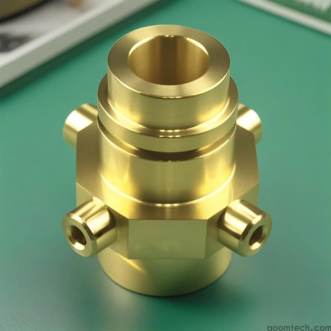
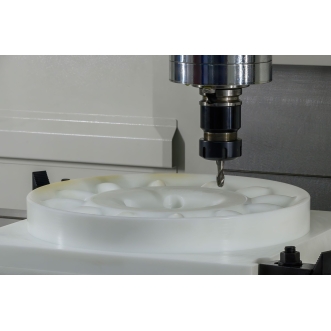
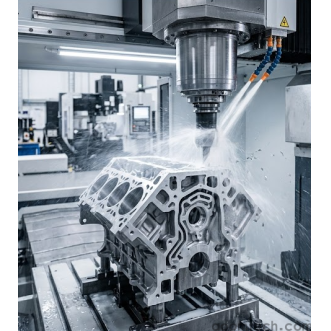
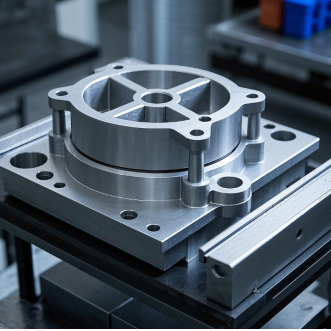
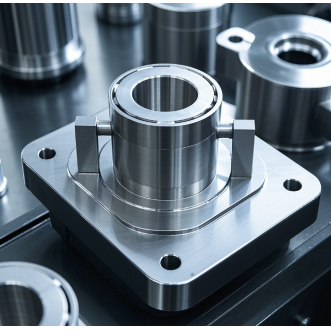
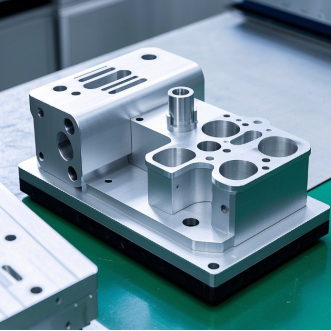
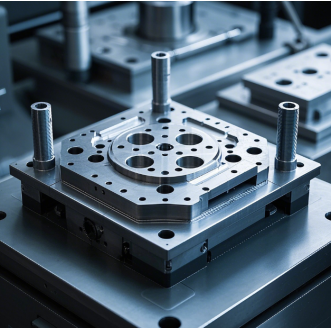
After the design phase, CNC machining is used to manufacture the mold with high precision. Common operations include turning, milling, drilling, tapping, and boring.
Milling: Used for shaping complex 3D surfaces, grooves, and cavities.
Turning: Used for cylindrical components and symmetrical parts.
Drilling and boring: Used to create precise holes, including deep or micro holes.
Tapping: Used for internal threading features.
Modern CNC systems can achieve extremely high precision, typically up to ±0.01mm. This level of accuracy is essential to ensure the mold produces aluminum profiles that meet strict industrial standards.
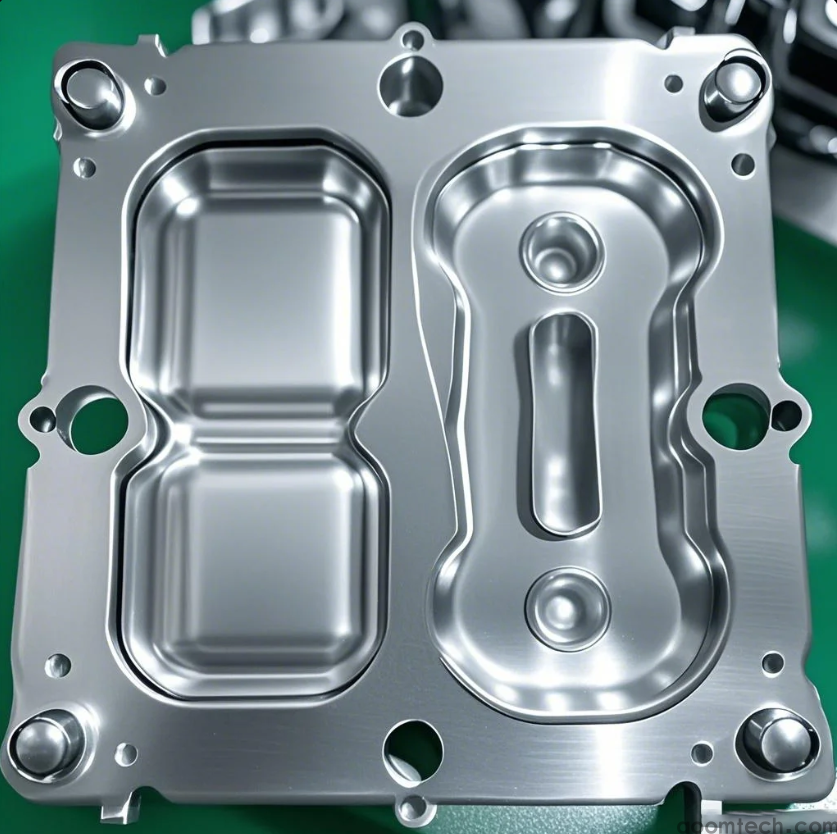
Advanced CNC Aluminum Profile Mold Processing Services are also capable of handling challenging structures such as long deep cavities, thin-walled channels, and high-gloss surface requirements.
Surface Treatment
Surface treatment is an important step to improve mold performance, durability, and appearance. Different treatment methods are used depending on the application requirements.
Anodizing: Improves corrosion resistance and surface hardness.
Sandblasting: Enhances surface texture and prepares the surface for further processing.
Wire drawing: Creates a decorative linear texture for aesthetic purposes.
Electro-conductive anodizing: Used in electronic applications requiring electrical conductivity.
These processes ensure the mold performs reliably under long production cycles and meets industry-specific demands such as automotive durability or electronic conductivity.
Materials Used in CNC Aluminum Profile Mold Processing
Aluminum Alloys
Different aluminum alloys are used depending on performance and application needs. The most commonly used materials in materials for CNC aluminum profile mold processing include 6061, 6063, and 7075 alloys.
6061 aluminum: Offers a balanced combination of strength, corrosion resistance, and machinability. It is widely used for general mold applications.
6063 aluminum: Provides excellent surface finish and extrusion performance, suitable for decorative and architectural profiles.
7075 aluminum: Known for high strength and load-bearing capacity, suitable for demanding industrial molds.
The selection of alloy directly affects machining performance, tool wear, and final mold durability.
Mold Steels
In many high-performance applications, mold steels are used for enhanced durability and thermal resistance. Common choices include H13 and SKD61.
These steels offer excellent wear resistance, thermal fatigue resistance, and structural stability. For high-volume production environments, mold steel ensures long service life and consistent performance even under high-temperature extrusion conditions.
Application Scenarios of CNC Aluminum Profile Mold Products
Industrial Automation
In industrial automation systems, aluminum profiles are widely used in robotic frames, conveyor structures, and machine enclosures. Precision molds ensure these profiles have accurate dimensions and strong mechanical performance, supporting stable and efficient operation.
New Energy Industry
The new energy sector uses aluminum profiles in battery trays, solar panel frames, and energy storage systems. Lightweight and corrosion-resistant profiles help reduce system weight while maintaining strength and thermal stability.
In electric vehicles, for example, aluminum battery trays produced using high-precision molds help improve safety, heat dissipation, and energy efficiency.
3C Electronics
In the 3C (computer, communication, consumer electronics) industry, aluminum profiles are used for smartphone frames, laptop housings, and electronic device casings.
Surface treatments such as anodizing and wire drawing enhance both aesthetics and durability. High precision is essential to ensure tight assembly tolerances and smooth integration of components.
Medical Equipment and Rail Transit
Medical equipment requires lightweight, corrosion-resistant, and highly precise aluminum structures for diagnostic devices and support frames.
In rail transit, aluminum profiles are used in carriage connectors and structural components. These applications demand high strength, fatigue resistance, and long-term reliability under heavy loads and vibration conditions.
How to Choose a CNC Aluminum Profile Mold Processing Service Provider
Experience and Technical Expertise
When selecting a provider, experience is one of the most important factors. A company with a long history in CNC Aluminum Profile Mold Processing Services is more likely to handle complex projects successfully.
It is recommended to review case studies, past projects, and industry experience in sectors such as automotive, construction, or electronics. A strong engineering team with expertise in mold design, CNC programming, and surface treatment is essential for reliable results.
Quality Assurance System
A strong quality control system ensures that every mold meets strict technical requirements. Leading providers use advanced inspection tools such as coordinate measuring machines (CMM), hardness testers, and surface profilometers.
A complete quality process should include:
Incoming material inspection
In-process dimensional checks
Final product inspection
Documentation and traceability reports
This ensures stability, accuracy, and long-term performance of the molds.
Cost-Effectiveness and Lead Time
While cost is important, it should be evaluated alongside quality and reliability. The most cost-effective solution is not always the cheapest, but the one that delivers stable performance and reduces long-term production risks.
When evaluating providers, compare quotations, production capacity, and delivery timelines. Reliable choosing a provider for CNC aluminum profile mold processing services requires balancing price, quality, and delivery efficiency.
Conclusion
CNC Aluminum Profile Mold Processing Services are a core part of modern manufacturing systems. They combine advanced engineering design, precision CNC machining, and surface treatment technologies to produce high-performance molds for aluminum extrusion.
From industrial automation to electronics and new energy applications, these services support a wide range of industries that rely on precision aluminum profiles. Choosing the right provider, understanding material selection, and ensuring strong quality control are key to achieving long-term success in production.
By applying advanced technologies and professional expertise, CNC Aluminum Profile Mold Processing Services continue to improve manufacturing efficiency, product quality, and industrial innovation worldwide.
RELATED PRODUCTS
-
Medical Brass CNC Machining Parts
-
Precision CNC Machining PEEK Services
-
Precision Custom CNC Machined Car Parts
-
cnc machining optical housings
-
Precision CNC Casting Machining Services
-
Precision Gear CNC Machining Services
-
Precision Stainless Steel Parts CNC Mach
-
CNC Machining of Precision Aluminum Tube
-
CNC Machining of Large Precision Aluminu
-
CNC Machining & Manufacturing of Pre