CNC Automotive Parts Manufacturing Services
Introduction to CNC Automotive Parts Manufacturing Services
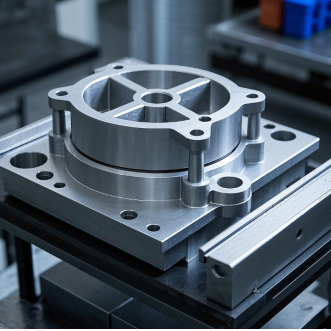
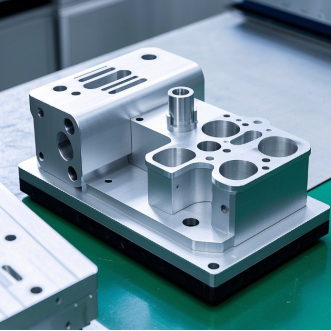
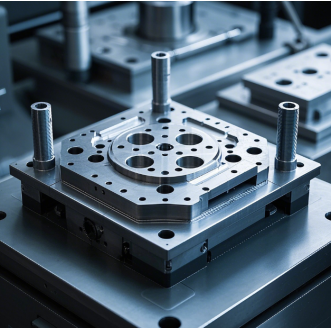
CNC Automotive Parts Manufacturing Services play an important role in modern vehicle production. CNC (Computer Numerical Control) technology uses automated machines controlled by computer programs to produce highly precise automotive components.
The role of CNC in automotive parts manufacturing is critical because it ensures high accuracy, repeatability, and efficiency. These factors directly affect vehicle performance, safety, and reliability. With CNC machining, manufacturers can produce complex designs that were difficult or impossible with traditional methods.
Today’s automotive industry depends heavily on CNC-machined parts. From engine systems to braking components, CNC technology has improved production speed and part quality while supporting innovation in vehicle design.
Types of Automotive Parts Manufactured by CNC
Engine Components
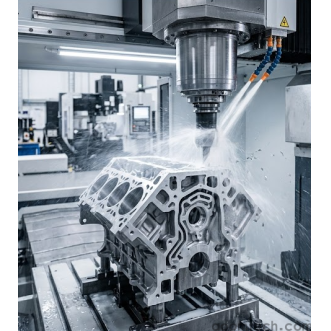
CNC machining is widely used in producing engine components such as cylinder heads, pistons, and crankshafts. These parts require extremely tight tolerances to ensure smooth engine operation.
For example, cylinder heads contain complex internal channels for fuel-air mixture and cooling. CNC machining allows manufacturers to create these intricate passages with high precision. Pistons must fit perfectly inside cylinders, while crankshafts require accurate balancing to ensure smooth power transfer and reduce vibration.
Transmission Parts
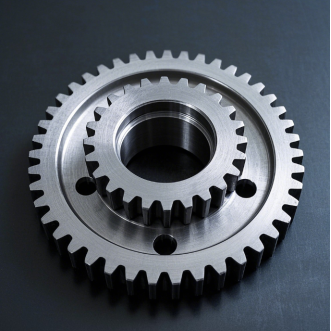
Transmission systems rely on CNC-machined gears, shafts, and clutch components. Gears require precise tooth profiles to ensure smooth power transmission and reduce wear.
Shafts must be perfectly aligned for stable rotation, while clutch components such as hubs and plates require accurate machining to ensure reliable engagement. These parts improve the durability and efficiency of vehicle transmission systems.
Chassis and Suspension Parts
CNC machining is also used for chassis and suspension components such as cross-members, sub-frames, control arms, and steering knuckles.
These parts must be strong and dimensionally accurate to support vehicle weight and ensure stability. CNC manufacturing ensures correct hole placement, mounting accuracy, and structural strength for safe and comfortable driving performance.
Brake System Parts
Brake components such as calipers, rotors, and drums are also manufactured using CNC technology.
Brake calipers require precise machining to generate proper clamping force, while rotors and drums need smooth surfaces and accurate dimensions for effective braking. CNC machining ensures safety and reliability in braking systems.
The CNC Manufacturing Process for Automotive Parts
Design and Programming
The process begins with CAD (Computer-Aided Design) software, where engineers create a 3D model of the automotive part. The design considers strength, function, and operating conditions.
Next, CAM (Computer-Aided Manufacturing) software converts the design into CNC machine instructions. Parameters such as toolpaths, cutting speed, and feed rate are optimized for accuracy and efficiency.
Machine Setup and Tooling
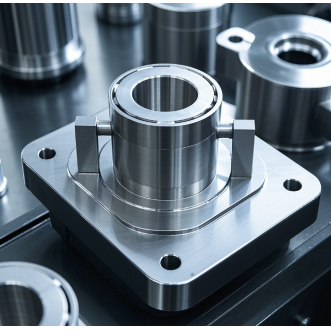
CNC machines are prepared with fixtures that hold the workpiece securely. Proper fixturing is essential to prevent movement during machining.
Tool selection depends on the material and machining process. Common tools include carbide end mills, drills, and turning inserts. Machine settings such as spindle speed and depth of cut are adjusted based on material properties and design requirements.
Machining Operations
Milling
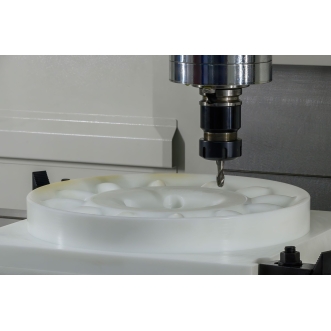
Milling is used to create flat surfaces, slots, and complex shapes. Different end mills are used depending on the geometry required. Ball-nose tools are ideal for curved surfaces, while flat end mills are used for precise edges and slots.
Turning
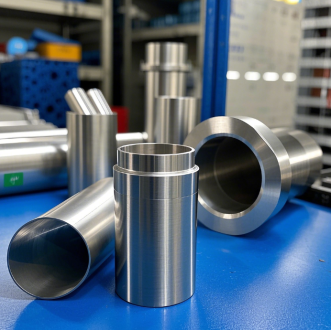
Turning is used for cylindrical parts such as shafts and pistons. The workpiece rotates while the cutting tool removes material. Proper feed rate and tool alignment ensure smooth surfaces and accurate dimensions.
Drilling
Drilling creates holes in automotive parts. The correct drill type and cutting speed are essential to avoid tool damage and ensure accuracy, especially in deep-hole applications.
Material Selection for CNC Automotive Parts
Metals
Common metals include aluminum, steel, and titanium.
Aluminum: Lightweight and heat-resistant, ideal for engine components and wheels.
Steel: High strength, used for gears, shafts, and chassis parts.
Titanium: Strong and lightweight, used in high-performance applications but more expensive.
Each metal requires different machining conditions, such as cutting speed and coolant usage.
Alloys
Alloys are widely used because they improve strength, durability, and corrosion resistance. For example, alloy steels with chromium or molybdenum offer enhanced performance for heavy-duty automotive parts.
Aluminum alloys are commonly used for suspension systems due to their fatigue resistance and lightweight properties.
Quality Control in CNC Automotive Parts Manufacturing
In-process Inspection
During production, parts are continuously measured using tools like calipers and micrometers. This ensures that any deviation from specifications is detected early.
If errors occur, adjustments are made immediately to maintain accuracy and reduce waste.
Final Inspection
After machining, parts undergo final inspection using Coordinate Measuring Machines (CMMs). These machines verify dimensional accuracy and surface quality.
Non-conforming parts are either reworked or rejected. This ensures that only high-quality components enter the automotive supply chain.
Quality control in CNC automotive parts production is essential for maintaining safety and performance standards in the automotive industry.
Benefits of CNC-Manufactured Automotive Parts for the Automotive Industry
Enhanced Precision and Performance
CNC machining provides extremely high precision, improving engine efficiency, transmission smoothness, and braking performance. Accurate parts reduce vibration and increase vehicle reliability.
Cost-effectiveness in Mass Production
Once programmed, CNC machines can produce large quantities of identical parts with consistent quality. This reduces labor costs and lowers per-unit production expenses.
This makes CNC ideal for mass production in the automotive industry.
Customization and Innovation
CNC technology allows manufacturers to design custom components for specific vehicle models. This supports innovation in electric vehicles, high-performance engines, and safety systems.
Manufacturers can quickly adapt designs, making CNC a key technology for modern automotive development.
Conclusion: The Future of CNC Automotive Parts Manufacturing Services
CNC technology continues to transform the automotive industry by improving precision, efficiency, and design flexibility. From engine components to brake systems, CNC Automotive Parts Manufacturing Services ensure high-quality production standards.
Key takeaways: CNC machining supports complex part production, improves vehicle safety, and reduces manufacturing costs. Understanding the CNC manufacturing process for automotive components helps businesses improve efficiency and product quality.
Looking ahead, manufacturers should stay updated with advanced CNC technologies, automation systems, and strong quality control practices to remain competitive in a fast-evolving industry.
RELATED PRODUCTS
-
Medical Brass CNC Machining Parts
-
Precision CNC Machining PEEK Services
-
Precision Custom CNC Machined Car Parts
-
cnc machining optical housings
-
Precision CNC Casting Machining Services
-
Precision Gear CNC Machining Services
-
Precision Stainless Steel Parts CNC Mach
-
CNC Machining of Precision Aluminum Tube
-
CNC Machining of Large Precision Aluminu
-
CNC Machining & Manufacturing of Pre