

CNC Machined Pulleys Services
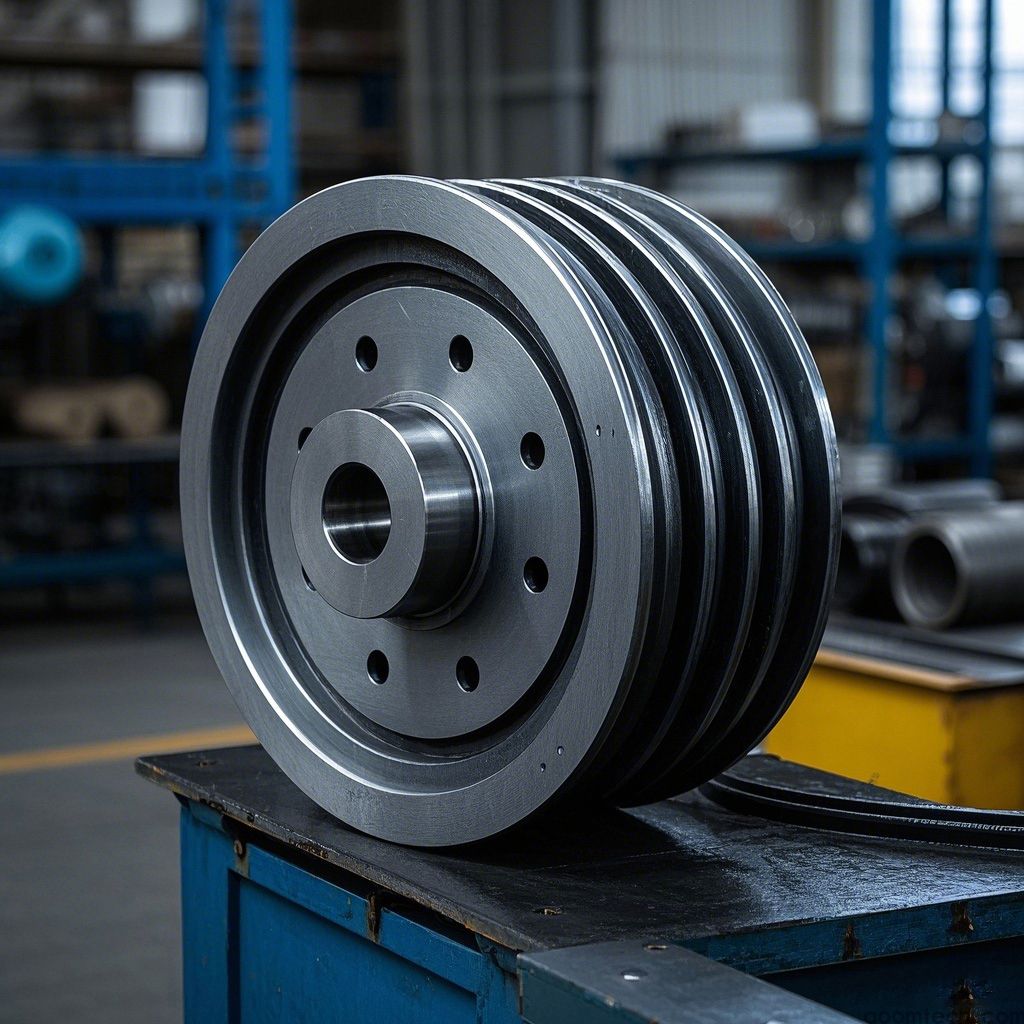
CNC Machined Pulleys Services play an important role in modern manufacturing by producing high-quality pulleys used in many mechanical systems. Pulleys are simple but essential components that help transmit power, change force direction, and control speed in machines. With CNC (Computer Numerical Control) technology, pulleys can be manufactured with high precision, consistency, and efficiency for a wide range of industries.
Introduction to CNC Machined Pulleys Services
The Significance of Pulleys
Pulleys are widely used in mechanical systems across many industries. They are essential for moving belts, cables, or ropes to transfer power between rotating shafts. Without pulleys, many machines would not operate smoothly or efficiently.
Examples of pulley applications include:
Conveyor belt systems in factories and warehouses
Automotive engines and accessory drive systems
Fitness and exercise equipment such as treadmills and weight machines
Industrial lifting systems and hoists
In all these systems, pulleys help maintain smooth motion, reduce mechanical load, and improve overall performance. This is why high-quality manufacturing is essential.
Importance of CNC Machining for Pulleys
Precision Manufacturing
CNC machining enables the production of pulleys with extremely accurate dimensions. Key features such as pulley diameter, groove shape, alignment, and tooth profile (for timing pulleys) must be precise to ensure smooth operation.
High precision is important because it helps:
Reduce belt slippage and vibration
Minimize wear and tear on belts and shafts
Improve energy efficiency in mechanical systems
Extend the service life of equipment
Imprecise pulleys can cause uneven belt movement, noise, overheating, and reduced machine efficiency. CNC machining solves these issues by ensuring consistent accuracy.
Customization for Specific Applications
One of the biggest advantages of CNC machining is flexibility. Different industries require different pulley designs based on load capacity, size, speed, and environment.
Examples of custom pulleys include:
Large heavy-duty pulleys for mining conveyor systems
Lightweight, high-speed pulleys for automotive applications
Small precision pulleys used in medical or laboratory devices
This adaptability makes CNC Machined Pulleys Services suitable for both standard and highly specialized applications.
Cost-Effectiveness for Batch Production
Once a CNC program is created, it can be used to produce large quantities of identical pulleys with consistent quality. This reduces production time and lowers cost per unit.
This is especially beneficial for industries such as automotive manufacturing and consumer equipment production, where large batches of pulleys are required.
CNC Machining Processes for Pulleys
Turning
CNC turning for pulleys is one of the main machining methods. In this process, the workpiece rotates while a cutting tool removes material to form the pulley’s cylindrical shape.
Important factors in turning include:
Selection of cutting tools based on material type
Spindle speed adjustment for smooth cutting
Proper feed rate to control surface finish
Depth of cut to balance speed and precision
For example, aluminum pulleys require higher speeds and lighter cuts, while steel pulleys require slower speeds and stronger tooling.
Milling
Milling is used to create grooves, teeth, and complex pulley profiles. It is especially important for timing pulleys where tooth accuracy is critical.
To ensure accuracy, manufacturers carefully control:
Groove depth and spacing
Tooth profile geometry
Tool path programming
Specialized milling cutters are selected depending on the material and design requirements.
Drilling and Boring
Drilling is used to create mounting holes in pulleys, while boring ensures these holes are accurately sized and aligned.
Accurate hole placement is important because it affects installation and balance. Poorly machined holes can lead to vibration and uneven rotation.
Careful tool selection and machining control help avoid issues such as misalignment or tool breakage.
Materials Used in CNC Machining of Pulleys
Metals
Materials for CNC-machined pulleys often include steel, aluminum, and stainless steel.
Steel: High strength and durability, ideal for heavy-load applications such as industrial conveyors.
Aluminum: Lightweight and corrosion-resistant, commonly used in automotive and high-speed systems.
Stainless Steel: Excellent corrosion resistance, suitable for humid or chemical environments.
Each metal requires different machining parameters to achieve the best performance and surface quality.
Plastics
Plastics such as nylon, polycarbonate, and acetal are also widely used in pulley manufacturing.
Nylon: Good wear resistance and noise reduction, suitable for home appliances
Polycarbonate: High impact resistance for demanding environments
Acetal: Excellent dimensional stability and low friction properties
When machining plastics, careful control of speed and temperature is required to avoid melting, deformation, or poor surface finish.
Choosing a CNC Machining Service Provider for Pulleys
Technical Expertise
When selecting a provider for CNC pulley manufacturing, technical knowledge is essential. A reliable manufacturer should understand pulley design, material behavior, and CNC machining processes.
To evaluate expertise, consider:
Case studies of previous pulley projects
Engineering and machining qualifications
Sample product quality and precision
Experienced providers are better able to handle complex requirements and ensure consistent results.
Quality Assurance
A strong quality control system is critical in CNC Machined Pulleys Services. Manufacturers should use precise measuring tools such as calipers, micrometers, and surface roughness testers.
A good quality system includes:
In-process inspections during machining
Final product inspection before delivery
Clear documentation of inspection results
Proper handling of non-conforming parts
These steps ensure that every pulley meets required performance and safety standards.
Cost-Effectiveness and Lead Times
Cost is important, but it should be balanced with quality and reliability. A good supplier provides transparent pricing and realistic delivery schedules.
When evaluating providers, it is helpful to:
Compare multiple quotations
Check production capacity and scalability
Review on-time delivery performance
Reliable lead times ensure that your production schedule remains stable and efficient.
Conclusion
CNC Machined Pulleys Services are essential for producing accurate, durable, and high-performance pulleys used in many industries. Through advanced CNC turning for pulleys, milling, and precision drilling processes, manufacturers can meet strict technical requirements while ensuring consistent quality.
By understanding materials for CNC-machined pulleys and carefully applying choosing a provider for CNC pulley machining principles, businesses can improve efficiency, reduce maintenance issues, and extend equipment life.
As modern industries continue to demand higher precision and reliability, CNC machining remains one of the most effective solutions for pulley manufacturing.
RELATED PRODUCTS
-
Medical Brass CNC Machining Parts
-
Precision CNC Machining PEEK Services
-
Precision Custom CNC Machined Car Parts
-
cnc machining optical housings
-
Precision CNC Casting Machining Services
-
Precision Gear CNC Machining Services
-
Precision Stainless Steel Parts CNC Mach
-
CNC Machining of Precision Aluminum Tube
-
CNC Machining of Large Precision Aluminu
-
CNC Machining & Manufacturing of Pre