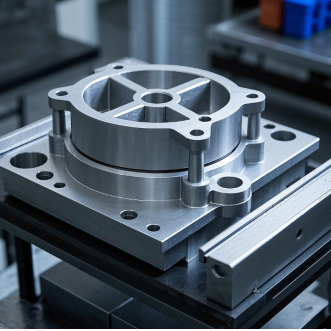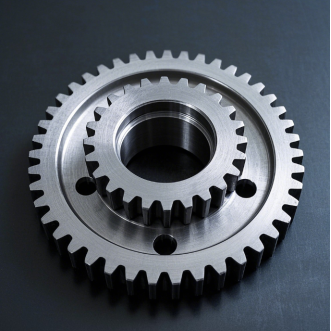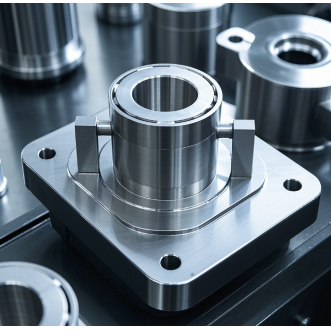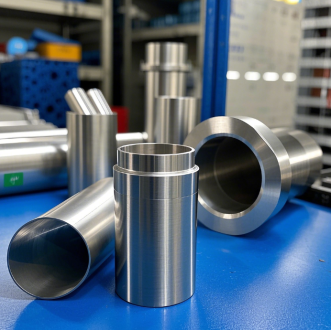
CNC Machining Aluminum Plate Services
Introduction to CNC Machining Aluminum Plate Services
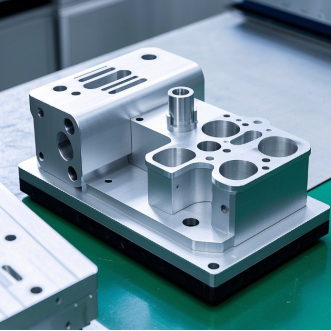
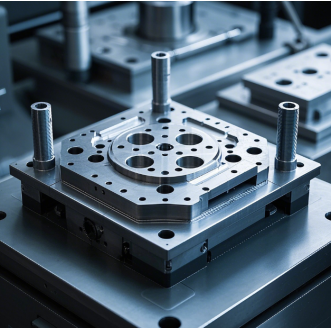
CNC Machining Aluminum Plate Services play an important role in modern manufacturing. CNC (Computer Numerical Control) machining is a process where computers control cutting tools to shape materials with high precision. Aluminum plates are widely used because they are lightweight, strong, and easy to machine.
These services are highly demanded in industries such as automotive, aerospace, electronics, robotics, and industrial equipment. Manufacturers rely on CNC machining to produce accurate, repeatable, and customized aluminum parts that meet strict performance requirements.
In today’s competitive production environment, CNC machining aluminum plates helps companies reduce costs, improve product quality, and speed up development cycles.
Advantages of Using Aluminum Plates in CNC Machining
Lightweight and High Strength-to-Weight Ratio
One of the key advantages of CNC machining aluminum plates is their excellent strength-to-weight ratio. Aluminum is significantly lighter than steel while still providing good mechanical strength.
This makes it ideal for aerospace and automotive applications where reducing weight is critical. For example, lighter vehicle parts improve fuel efficiency, while lighter aircraft components help reduce overall energy consumption and increase payload capacity.
CNC machining allows engineers to design optimized structures that remove unnecessary material while maintaining strength, further improving performance efficiency.
Good Machinability
Aluminum plates are known for their excellent machinability. They can be cut at high speeds with less tool wear compared to harder metals. This results in faster production times and lower manufacturing costs.
Different aluminum alloys may have different machining characteristics. For example, softer alloys are easier to cut, while high-strength alloys require more careful tool selection and optimized cutting parameters.
With CNC machining, manufacturers can achieve smooth surface finishes and high dimensional accuracy, even for complex geometries.
Corrosion Resistance
Aluminum naturally forms a protective oxide layer that helps resist corrosion. This makes it suitable for parts exposed to moisture, air, or harsh environments.
In addition, CNC machined aluminum parts can undergo surface treatments such as anodizing or coating to further improve durability. This is especially useful in marine, outdoor, and industrial applications where long-term reliability is important.
The CNC Machining Process for Aluminum Plates
Design and Programming
The process begins with CAD (Computer-Aided Design) software, where engineers create a detailed 3D model of the part. This design includes all dimensions, tolerances, and functional requirements.
Next, CAM (Computer-Aided Manufacturing) software converts the design into a CNC program. This program defines toolpaths, cutting speeds, and machining strategies specifically optimized for aluminum plate processing.
Accurate programming is essential for achieving high precision and avoiding material waste or machining errors.
Machine Setup and Tooling
During setup, the aluminum plate is securely fixed using clamps or custom fixtures. Proper fixturing is important to prevent vibration or movement during machining.
Tool selection is also critical. Common tools include carbide end mills, drills, and routers designed specifically for aluminum. These tools allow efficient cutting while maintaining surface quality.
Machine parameters such as spindle speed, feed rate, and cutting depth are carefully adjusted based on material properties and part complexity.
Machining Operations
Milling
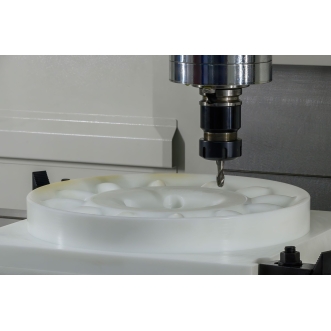
Milling is used to create flat surfaces, slots, and complex 3D shapes. Different cutting tools are used depending on the required geometry. Ball-end mills are suitable for curved surfaces, while flat-end mills are used for straight edges and slots.
Proper chip removal is important because aluminum can produce long chips that may affect machining efficiency.
Drilling
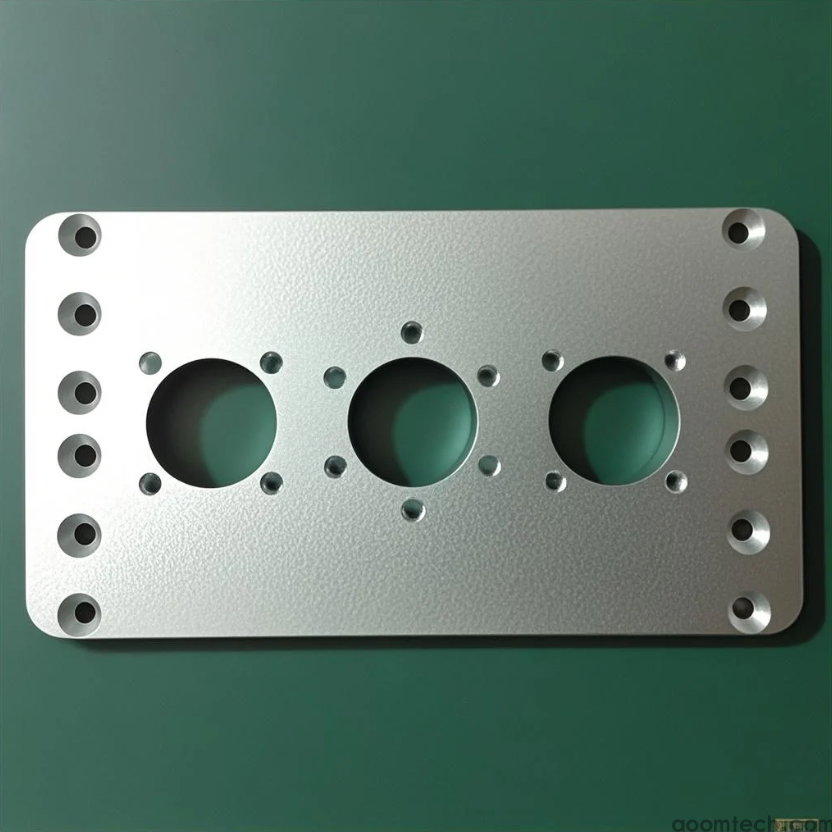
Drilling is used to create precise holes in aluminum plates. Selecting the correct drill bit size and geometry ensures accuracy and prevents tool damage.
Feed rate and spindle speed must be carefully controlled to avoid overheating or poor hole quality, especially in deep-hole drilling applications.
Routing
Routing is commonly used for cutting external shapes or complex outlines. It provides flexibility in producing custom-designed aluminum plate parts.
Optimized cutting parameters help prevent burr formation and ensure smooth edges.
Types of CNC Machining Aluminum Plate Services
Custom-Part Machining
Custom machining services allow customers to produce unique aluminum components based on their specific designs. These parts can range from industrial brackets to precision instrument components.
CNC machining makes it possible to turn digital designs into real-world parts with high accuracy and repeatability.
Prototyping
Prototyping services help companies test and validate product designs before full-scale production. CNC machining allows fast and cost-effective production of prototypes using aluminum plates.
This helps identify design issues early, reducing risks and development costs.
Mass Production
Once the machining program is finalized, CNC machines can produce large quantities of identical aluminum parts with consistent quality.
This is especially valuable for industries like automotive manufacturing, where high-volume production and tight tolerances are required.
Material Considerations for Aluminum Plate Machining
Aluminum Alloys
Different aluminum alloys offer different mechanical properties. For example, 6061 aluminum is widely used due to its balance of strength, machinability, and corrosion resistance.
In contrast, 7075 aluminum offers higher strength but is more difficult to machine. Choosing the right alloy depends on performance requirements, cost, and machining complexity.
Understanding alloy behavior is essential for optimizing cutting conditions and tool life.
Plate Thickness
The thickness of the aluminum plate directly affects machining strategy. Thicker plates may require stronger machines, more rigid tooling, and adjusted cutting parameters.
Proper planning helps avoid issues such as tool deflection, inaccurate cutting, or excessive heat buildup.
Quality Control in CNC Machining Aluminum Plate Services
In-Process Inspection
Quality control begins during machining. Operators use measuring tools such as calipers, micrometers, and surface roughness testers to check dimensions and surface quality.
If deviations are detected, adjustments are made immediately to ensure accuracy is maintained throughout production.
This step is essential for ensuring stable production quality and reducing material waste.
Final Inspection
After machining is completed, parts undergo final inspection. Coordinate Measuring Machines (CMM) are often used to verify dimensional accuracy.
Inspection criteria include tolerances, surface finish, and structural integrity. Any non-conforming parts are either reworked or rejected.
This ensures that only high-quality components are delivered to customers.
Applications of CNC Machined Aluminum Plates
Aerospace Industry
CNC machined aluminum plates are widely used in aerospace applications such as fuselage panels, wing structures, and internal components.
The combination of lightweight properties and high strength makes aluminum ideal for improving aircraft performance and fuel efficiency.
Automotive Industry
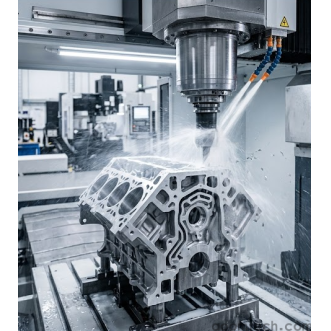
In the automotive industry, aluminum plate components are used in body panels, engine parts, and suspension systems.
These parts help reduce vehicle weight, improve fuel economy, and enhance driving performance.
Electronics Industry
Aluminum plates are commonly used in electronic enclosures, heat sinks, and mounting structures due to their excellent thermal conductivity.
CNC machining ensures precise dimensions, which is essential for proper assembly and heat dissipation performance.
Conclusion: Making the Most of CNC Machining Aluminum Plate Services
CNC Machining Aluminum Plate Services provide a reliable and efficient way to produce high-quality precision parts across multiple industries. From design and programming to machining and quality control, every step plays a key role in ensuring product success.
Key takeaways include understanding the CNC machining process for aluminum plates, selecting the right material, and applying strict quality control methods. The advantages of CNC machining aluminum plates such as lightweight strength, machinability, and corrosion resistance make them a preferred choice in modern manufacturing.
When choosing a service provider, it is important to consider experience, technical capability, and quality assurance systems. Clear communication of design requirements also helps achieve the best results in production.
RELATED PRODUCTS
-
Medical Brass CNC Machining Parts
-
Precision CNC Machining PEEK Services
-
Precision Custom CNC Machined Car Parts
-
cnc machining optical housings
-
Precision CNC Casting Machining Services
-
Precision Gear CNC Machining Services
-
Precision Stainless Steel Parts CNC Mach
-
CNC Machining of Precision Aluminum Tube
-
CNC Machining of Large Precision Aluminu
-
CNC Machining & Manufacturing of Pre