CNC Machining and Manufacturing Services for Parts
Introduction to CNC Machining and Manufacturing Services for Parts
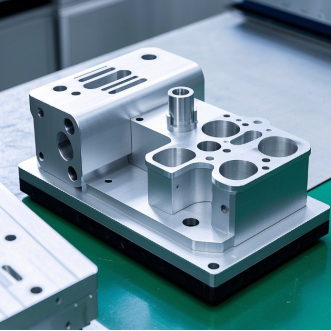
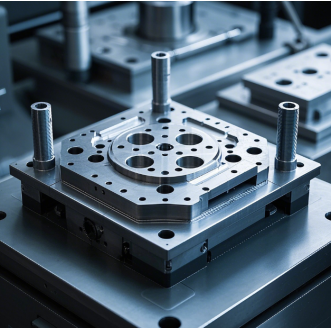
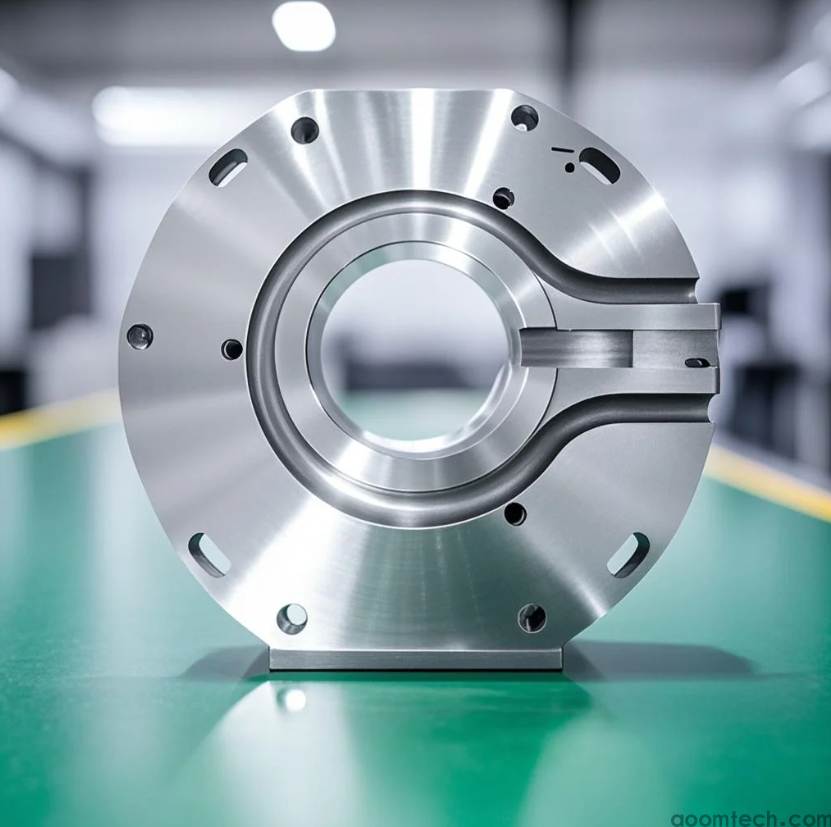
CNC (Computer Numerical Control) machining and manufacturing services for parts play an important role in modern industry. These services help create high-precision components with consistent quality. Many industries depend on CNC-machined parts because they are accurate, reliable, and suitable for complex designs.
Over the years, CNC technology has changed the way products are made. Instead of manual work, machines follow digital instructions to cut, shape, and finish materials. This allows manufacturers to produce parts faster, with fewer errors, and with better repeatability. From automotive systems to electronic devices, CNC-machined parts are used everywhere in daily life.
Services Offered in CNC Machining and Manufacturing for Parts
Custom Part Machining
Custom part machining is one of the most important services in CNC manufacturing. Customers can send their own drawings or 3D models, and the CNC process turns those ideas into real products.
This service is widely used for both prototypes and final products. Engineers work closely with clients to understand size, tolerance, function, and surface requirements. This ensures the final part matches the exact need of the project.
Prototyping Services
Prototyping is a key step in product development. CNC machining allows fast and accurate prototype creation, helping companies test ideas before full production.
With rapid prototyping, designers can check if a part fits, works properly, and meets performance needs. This reduces development time and helps avoid costly design mistakes. It is especially useful for startups and engineering teams developing new products.
Mass Production of Parts
CNC machining is also highly effective for mass production. Once a program is created, machines can produce thousands of identical parts with stable quality.
This is very useful in industries like automotive and consumer goods. As production volume increases, the cost per part becomes lower. Compared to manual manufacturing, CNC systems offer higher efficiency, speed, and consistency.
The CNC Machining Process for Parts
Design and Programming
The process starts with a digital design created using CAD (Computer-Aided Design) software. Engineers design the part in 3D, considering strength, function, and industry requirements.
After that, CAM (Computer-Aided Manufacturing) software converts the design into machine instructions. These instructions define toolpaths, cutting speed, feed rate, and depth of cut. Accurate programming is essential for high-quality results.
Machine Setup and Tooling
Before machining begins, the CNC machine is properly set up. The workpiece is fixed using special fixtures to prevent movement during cutting.
Different tools are selected depending on the operation. For example, milling tools are used for shaping surfaces, drills are used for holes, and turning tools are used for cylindrical parts. Correct setup ensures precision and safety during production.
Machining Operations
Milling
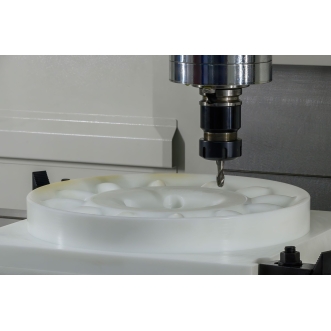
Milling is used to create flat surfaces, grooves, and complex 3D shapes. Different cutting tools are selected based on the shape required. Proper speed and feed settings help achieve smooth surface finishes and accurate dimensions.
Turning
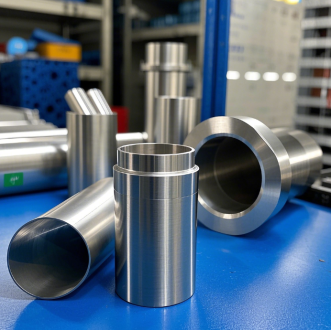
Turning is used for producing round or cylindrical parts. The material rotates while the cutting tool removes excess material. This process is commonly used for shafts, rods, and bushings.
Drilling
Drilling creates precise holes in parts. The correct drill size, speed, and feed rate must be selected to avoid tool damage and ensure accuracy, especially in deep-hole operations.
Types of Parts Produced by CNC Machining and Manufacturing
Mechanical Parts
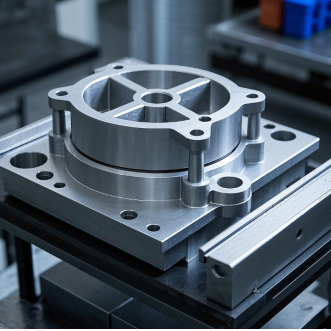
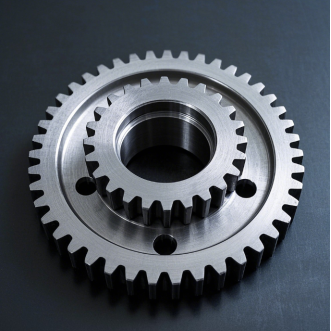
Mechanical parts include gears, shafts, and couplings. These parts require high precision to ensure smooth movement and power transfer. CNC machining can create accurate shapes and tight tolerances needed for mechanical systems.
Structural Parts
Structural parts such as brackets, frames, and enclosures support other components. They must be strong and accurately shaped. CNC machining helps produce reliable structures used in machines, buildings, and industrial systems.
Functional Parts
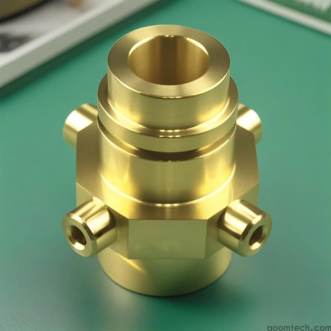
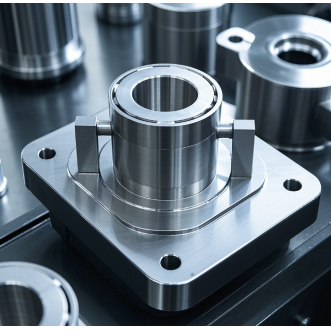
Functional parts include valves, pistons, and nozzles. These parts perform specific tasks in a system. Their performance depends on precise dimensions and smooth surface finishes, which CNC machining can achieve effectively.
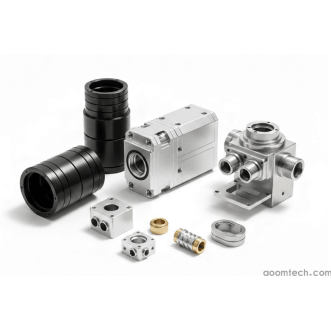
Types of parts in CNC machining and manufacturing include mechanical, structural, and functional components that serve different engineering purposes.
Materials Used in CNC Machining and Manufacturing for Parts
Metals
Common metals include aluminum, steel, and titanium. Aluminum is lightweight and easy to machine, making it ideal for aerospace and automotive parts. Steel offers high strength for heavy-duty applications. Titanium provides both strength and corrosion resistance, often used in medical and aerospace industries.
Plastics
Plastics such as ABS, POM, and PEEK are widely used. ABS is strong and easy to machine. POM is ideal for gears due to its low friction. PEEK is heat-resistant and used in demanding industrial and medical environments.
Composites
Composite materials like carbon-fiber-reinforced polymers offer high strength with low weight. These materials are commonly used in aerospace and high-performance automotive applications. Special tools and controlled cutting speeds are required to prevent damage.
Materials for CNC-machined parts must be selected based on strength, weight, temperature resistance, and application needs.
Quality Control in CNC Machining and Manufacturing for Parts
In-process Inspection
Quality control starts during production. Measurements are taken using tools like calipers and micrometers. If any deviation is found, machine settings are adjusted immediately to maintain accuracy.
Final Inspection
After machining, parts undergo final inspection using advanced tools such as Coordinate Measuring Machines (CMM). This ensures that every dimension matches design requirements. Parts that do not meet standards are reworked or rejected.
Quality control in CNC machining and manufacturing services is essential to ensure precision, safety, and reliability in every produced part.
Benefits of CNC Machining and Manufacturing Services for Different Industries
Aerospace Industry
CNC machining is essential in aerospace manufacturing. It produces high-precision parts such as engine components and structural elements. These parts must meet strict safety standards and perform under extreme conditions.
Automotive Industry
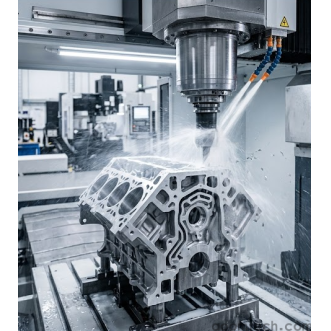
The automotive industry relies on CNC machining for engine parts, transmission systems, and suspension components. It supports both mass production and custom performance parts, improving vehicle efficiency and durability.
Medical Industry
In the medical field, CNC machining is used for surgical tools, implants, and medical devices. These parts require high precision and biocompatible materials. CNC technology also allows customization for individual patients.
Conclusion: Choosing the Right CNC Machining and Manufacturing Service for Parts
CNC machining and manufacturing services for parts are essential for modern production. They offer precision, flexibility, and efficiency across many industries. Understanding the services, machining process, types of parts, materials, and quality control helps businesses make better decisions.
When choosing a provider, consider experience, technical capability, material knowledge, and strong quality control systems. A reliable partner ensures better performance, lower costs, and consistent product quality.
By understanding key factors such as types of parts in CNC machining and manufacturing, materials for CNC-machined parts, and quality control in CNC machining and manufacturing services, businesses can improve product development and manufacturing success.
RELATED PRODUCTS
-
Medical Brass CNC Machining Parts
-
Precision CNC Machining PEEK Services
-
Precision Custom CNC Machined Car Parts
-
cnc machining optical housings
-
Precision CNC Casting Machining Services
-
Precision Gear CNC Machining Services
-
Precision Stainless Steel Parts CNC Mach
-
CNC Machining of Precision Aluminum Tube
-
CNC Machining of Large Precision Aluminu
-
CNC Machining & Manufacturing of Pre