CNC Machining for Aircraft Parts
CNC Machining for Aircraft Parts is one of the most important technologies in modern aerospace manufacturing. Aircraft parts must meet extremely strict requirements for safety, precision, and reliability. CNC (Computer Numerical Control) machining helps manufacturers produce complex components with consistent accuracy, making it a core process in the aviation industry.
From commercial airplanes built by companies such as and , to small aircraft engines and structural parts, CNC machining ensures that every component fits and functions correctly under extreme conditions.
The Vital Role of CNC Machining in Aircraft Manufacturing
Aircraft safety depends on precision. Even a tiny error in a part can affect performance or lead to serious risks. CNC machining allows manufacturers to produce parts with very tight tolerances and repeatable quality.
For example, in an aircraft engine, turbine blades, shafts, and housings must be machined with extreme accuracy. These parts rotate at very high speeds and face high temperatures. CNC machining ensures they maintain balance, strength, and reliability during flight.
Without CNC technology, producing such complex and safety-critical parts consistently would be extremely difficult.
The CNC Machining Process for Aircraft Parts
Design Phase
The process begins with a digital design using CAD (Computer-Aided Design) software. Engineers create a detailed 3D model of the aircraft part. This stage is part of the overall CNC machining process for aircraft parts.
The design considers airflow, stress loads, temperature, and how the part will fit into the aircraft system. A small design mistake can lead to serious performance or safety issues. For example, a poorly designed wing spar may fail under flight loads.
Material Selection
Material selection in aircraft part CNC machining is critical because aircraft components must be both lightweight and strong. Common materials include:
Aluminum alloys – Lightweight and corrosion-resistant, often used for non-structural parts.
Titanium – Very strong and heat-resistant, used in landing gear and engine parts.
Composites – Used for modern lightweight structures with high strength.
Each material affects machining speed, tool wear, and cost. For example, titanium is harder to machine and requires slower cutting speeds and stronger tools.
CNC Programming
In this stage, CAD data is converted into machine instructions using CAM (Computer-Aided Manufacturing) software. This is known as CNC programming for aircraft components.
The program defines tool paths, cutting speeds, feed rates, and depth of cut. Precision is extremely important because incorrect programming can cause defects, poor surface finish, or even part failure.
For example, incorrect tool paths when machining a turbine blade can reduce aerodynamic efficiency and increase vibration.
Machine Setup and Tooling
Before machining begins, the CNC machine is set up with the correct tools and fixtures. High-quality cutting tools are essential for aircraft parts due to strict accuracy requirements.
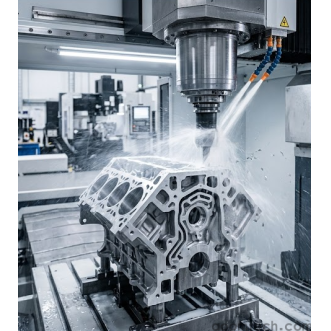
Spindle speed, coolant flow, and feed rates are carefully adjusted according to the material and design. Poor setup can lead to tool breakage, incorrect dimensions, or surface defects.
Machining Operations
Milling
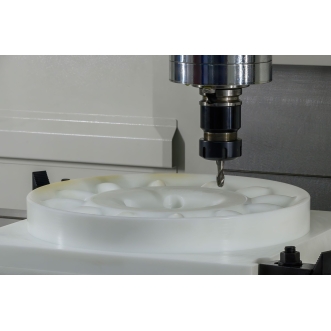
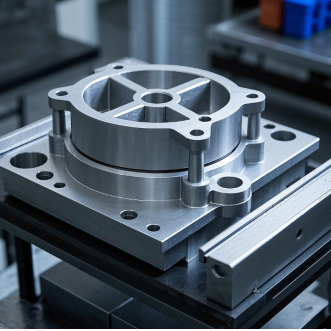
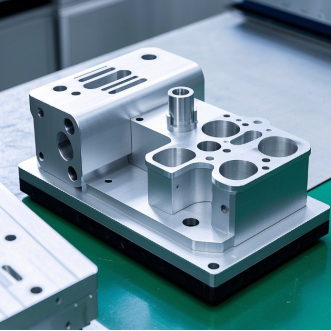
Milling uses a rotating cutting tool to remove material and create shapes such as slots, holes, and 3D surfaces. Carbide tools are often used for hard materials like titanium.
Operators adjust cutting speeds and feed rates carefully to maintain precision. Slower speeds are often used for complex aircraft components to ensure accuracy.
Turning
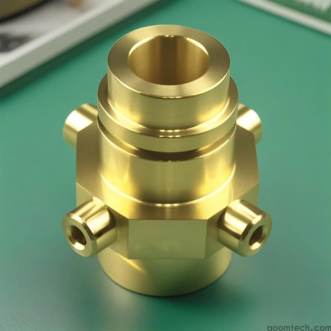
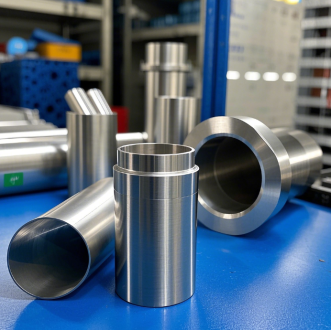
Turning is used to produce cylindrical parts such as shafts and bushings. The workpiece rotates while the cutting tool shapes it.
In aircraft engine shafts, precise turning is essential to ensure smooth rotation and reduce vibration during operation.
Drilling and Boring
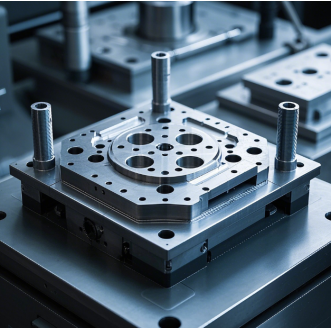
Drilling creates holes for bolts, fluid channels, and assembly connections. Boring is used to refine and enlarge holes with high precision.
Accurate hole placement is critical. Even small deviations can cause assembly problems or reduce part performance.
Quality Control in Aircraft CNC Machining
Quality control in aircraft CNC machining is extremely strict because aircraft parts are safety-critical. Every component must meet exact specifications.
Inspection methods include:
In-process measurement during machining
Surface finish testing
Dimensional checks using Coordinate Measuring Machines (CMM)
Optical and microscope inspections
If a part does not meet tolerance requirements, it is either reworked or rejected. There is no compromise in aircraft manufacturing quality standards.
Advantages of CNC Machining for Aircraft Parts
High Precision
Advantages of CNC for aircraft part production include extremely high precision. CNC machines can produce identical parts with very tight tolerances, which is essential for flight safety and performance.
Customization
CNC machining allows manufacturers to create custom-designed parts for specific aircraft models or upgrades. This flexibility supports innovation in aerospace design and performance improvement.
High-Volume Production Efficiency
Once a CNC program is created, it can be used repeatedly for mass production. This reduces production time and cost while maintaining consistent quality.
For example, standard components such as engine brackets or landing gear parts can be produced in large quantities with high repeatability.
Conclusion: The Impact of CNC Machining on Aircraft Manufacturing
CNC Machining for Aircraft Parts plays a key role in ensuring modern aircraft are safe, efficient, and reliable. From design and material selection to machining and inspection, every step requires precision and strict control.
To maintain high standards, manufacturers should continuously improve quality systems, adopt new materials and technologies, and ensure full traceability of every part produced.
As aerospace technology advances, CNC machining will continue to be a foundation of aircraft manufacturing, supporting safer and more efficient flight worldwide.
RELATED PRODUCTS
-
Medical Brass CNC Machining Parts
-
Precision CNC Machining PEEK Services
-
Precision Custom CNC Machined Car Parts
-
cnc machining optical housings
-
Precision CNC Casting Machining Services
-
Precision Gear CNC Machining Services
-
Precision Stainless Steel Parts CNC Mach
-
CNC Machining of Precision Aluminum Tube
-
CNC Machining of Large Precision Aluminu
-
CNC Machining & Manufacturing of Pre