CNC Machining for Nuts and Fastener Parts
CNC Machining for Nuts and Fastener Parts plays an important role in modern manufacturing. Nuts, bolts, screws, and other fasteners are small components, but they are essential for holding machines, structures, and products together. Without them, most industrial systems would not function safely or reliably.
With modern Computer Numerical Control (CNC) Machining, manufacturers can produce nuts and fasteners with very high precision, stable quality, and strong performance. This technology has greatly improved how fasteners are made in industries such as automotive, construction, aerospace, and electronics.
The Significance of CNC-Machined Nuts and Fasteners
Nuts and fasteners are basic but critical components in almost every product and structure. They are used to connect parts and ensure stability under pressure, vibration, and load.
Traditional manufacturing methods often cannot guarantee consistent precision, especially for threading and tight tolerances. CNC machining has changed this by allowing highly accurate and repeatable production.
As a result, modern industries rely on CNC machining to produce strong and reliable fasteners that improve safety, durability, and performance in real-world applications.
Advantages of CNC Machining for Nuts and Fasteners
High Precision Manufacturing
CNC machines can produce extremely accurate nuts and fasteners. Every thread pitch, diameter, and surface detail can be controlled by a programmed system.
For example, in the automotive industry, engine parts rely on precisely machined bolts and nuts to ensure proper torque and prevent loosening caused by vibration. This precision improves both safety and performance.
Advantages of CNC machining for nuts and fasteners include tight tolerance control, smooth thread quality, and reduced assembly errors.
Consistent Quality Output
Once a CNC program is created using Computer-Aided Design (CAD) and Computer-Aided Manufacturing (CAM), every produced part is identical. This ensures stable quality across large production batches.
In construction projects such as steel buildings, consistent fastener quality is essential. If one weak fastener fails, it may affect the entire structure. CNC machining reduces this risk by ensuring uniform strength and dimensions.
Customization Capability
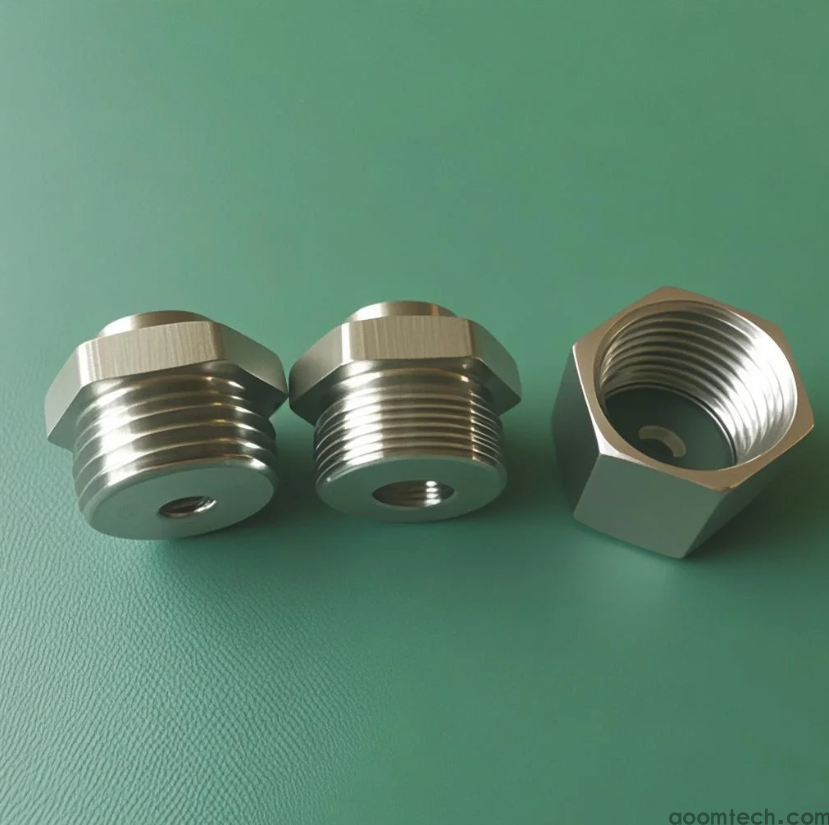
CNC machining offers strong flexibility for custom designs. Manufacturers can produce different types of fasteners such as hex nuts, wing nuts, lock nuts, and special-purpose screws.
Custom threads, head shapes, and coatings can also be created. For example, marine applications often require corrosion-resistant fasteners that can withstand saltwater environments.
This flexibility makes CNC machining suitable for both standard production and highly specialized engineering needs.
CNC Machining Process for Nuts and Fastener Parts
Design and CAD/CAM Programming
The process begins with product design using CAD software. Engineers define dimensions, thread types, load requirements, and industry standards.
Then CAM software converts the design into machine instructions. These instructions control tool paths, cutting speed, and feed rate.
For example, a simple hex nut design is translated into a CNC program that defines internal threading steps, cutting depth, and finishing passes. This ensures accuracy and repeatability during production.
Material Selection and Preparation
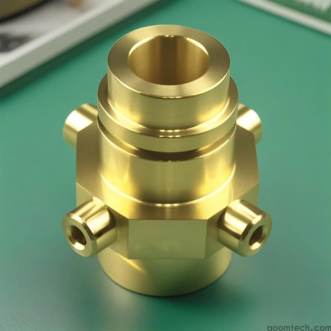
Material choice is very important in fastener manufacturing. Common materials include steel, stainless steel, aluminum, and brass.
Stainless steel is often used for corrosion resistance, especially in outdoor or marine environments. Aluminum is chosen when lightweight performance is needed, such as in aerospace applications.
Before machining, raw materials are cut and inspected to ensure they are free from defects, which helps maintain final product quality.
Machining Operations
Turning
Turning is used to shape the outer structure of fasteners. The material rotates while cutting tools remove excess material to form the correct diameter and head shape. Proper tool selection and cutting speed ensure a smooth surface finish.
Threading
Threading is one of the most important steps. It creates the internal or external spiral grooves that allow nuts and bolts to connect securely. CNC control ensures accurate thread pitch and depth, which is essential for strong fastening performance.
Forming and Shaping
Some fasteners are pre-formed using processes like forging before CNC finishing. Forging improves internal strength, while CNC machining ensures final precision and surface quality.
Finishing and Quality Control
After machining, fasteners go through finishing processes such as deburring, heat treatment, and protective coating. These steps improve durability and appearance.
Quality inspection is then performed using measuring tools like calipers, thread gauges, and hardness testers. This ensures every part meets required standards and prevents defective products from entering the market.
Applications of CNC-Machined Nuts and Fasteners
Automotive Industry
CNC-machined fasteners are widely used in cars and trucks. They secure engines, chassis, and body components. High precision ensures safety, vibration resistance, and long-term reliability.
Applications of CNC-machined nuts and fasteners in automotive systems include engine bolts, suspension fasteners, and transmission assemblies.
Construction Industry
In construction, large steel structures depend on strong bolts and nuts. CNC machining ensures consistent strength and dimensional accuracy, which is critical for building safety.
These fasteners are designed to handle heavy loads, weather conditions, and long service life.
Aerospace Industry
Aerospace systems require lightweight but extremely strong fasteners. CNC machining allows production of high-precision components that can withstand pressure changes, vibration, and temperature extremes.
Aircraft assembly relies heavily on certified CNC-machined fasteners for safety and performance.
Choosing a CNC Machining Service for Nuts and Fasteners
Experience and Expertise
When selecting a supplier, experience matters. A skilled manufacturer understands thread accuracy, material behavior, and industry standards.
Experienced providers can handle complex designs such as small-diameter high-strength bolts or custom locking fasteners.
Quality Assurance
A reliable supplier must have strong quality control systems. This includes in-process inspections and final testing.
Proper quality assurance ensures that every part meets required specifications and reduces the risk of product failure.
Cost and Pricing Transparency
Clear pricing is important when choosing a supplier. Costs usually include material, machining time, tooling, and finishing.
Understanding cost factors in CNC machining of nuts and fasteners helps buyers make better decisions and avoid hidden charges.
Delivery Time and Customer Service
Fast and reliable delivery is important for production schedules. Good communication also helps solve problems quickly and improves cooperation between customers and suppliers.
Cost Factors in CNC Machining of Nuts and Fasteners
Part Complexity
More complex fasteners require additional machining steps, special tools, and longer production time. This increases cost.
For example, a locking nut with special internal features will cost more than a standard hex nut.
Material Cost
Different materials have different prices. High-strength alloys and corrosion-resistant metals are more expensive but offer better performance.
The choice of material directly affects both cost and final application suitability.
Production Volume
Larger production volumes usually reduce cost per unit. Setup costs are spread across more parts, and manufacturers may offer bulk discounts.
This makes mass production more cost-efficient than small batch orders.
Conclusion: Making the Most of CNC Machining for Nuts and Fasteners
CNC machining has greatly improved the production of nuts and fasteners by offering high precision, consistent quality, and strong customization capabilities. It is now an essential technology in many industries.
By understanding the CNC machining process for nuts and fastener parts, as well as choosing the right supplier and considering material and cost factors, businesses can achieve better performance and reliability in their products.
If you are planning a project, start by comparing suppliers and evaluating your technical requirements to ensure the best results for your fastener production needs.
RELATED PRODUCTS
-
Medical Brass CNC Machining Parts
-
Precision CNC Machining PEEK Services
-
Precision Custom CNC Machined Car Parts
-
cnc machining optical housings
-
Precision CNC Casting Machining Services
-
Precision Gear CNC Machining Services
-
Precision Stainless Steel Parts CNC Mach
-
CNC Machining of Precision Aluminum Tube
-
CNC Machining of Large Precision Aluminu
-
CNC Machining & Manufacturing of Pre