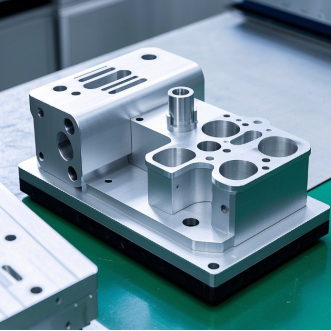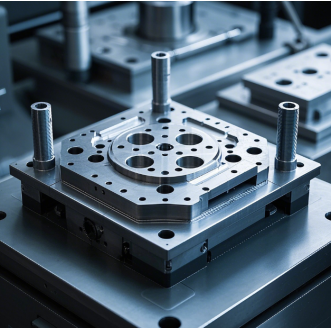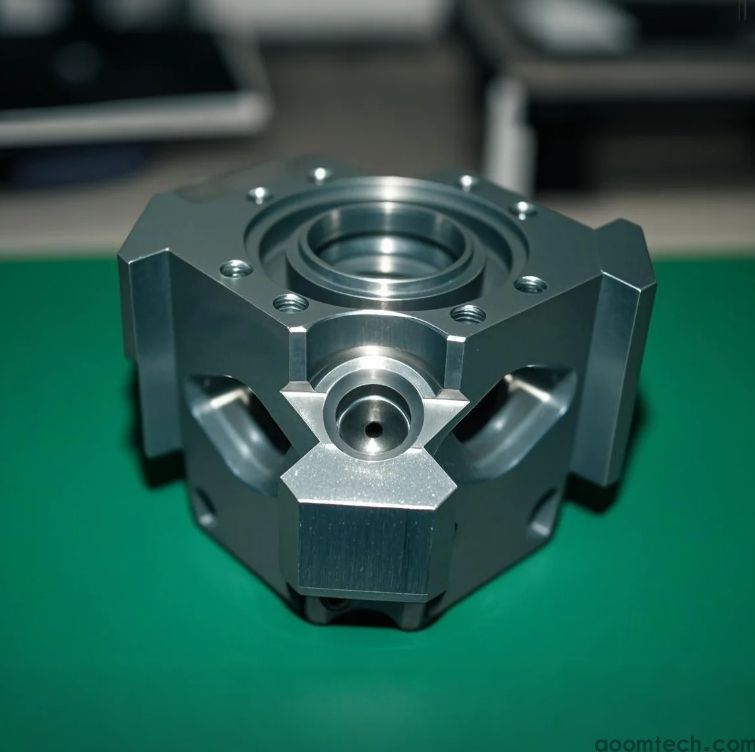
CNC Machining for Tungsten Steel Precision Parts
Introduction to CNC Machining for Tungsten Steel Precision Parts
Tungsten steel precision parts are widely used in modern manufacturing because of their outstanding strength, durability, and resistance to extreme working conditions. These parts are essential in industries where high performance and long service life are required, such as aerospace, automotive, mining, and precision tooling.
CNC (Computer Numerical Control) machining plays a critical role in producing these parts with high accuracy. It allows manufacturers to achieve tight tolerances, consistent quality, and complex geometries that would be difficult or impossible to produce manually. Understanding CNC Machining for Tungsten Steel Precision Parts is important for engineers, designers, and manufacturers who aim to improve product reliability and production efficiency.
The Significance of Tungsten Steel Precision Parts
Tungsten steel precision parts are vital in applications that demand extreme hardness and wear resistance. These components are commonly found in cutting tools, molds, dies, and industrial machinery. Their ability to maintain structural integrity under high stress directly improves the performance and lifespan of equipment.
Without these high-performance materials, many industrial processes would suffer from frequent breakdowns, increased maintenance costs, and reduced efficiency.
Characteristics of Tungsten Steel
High Hardness
Tungsten steel is known for its extremely high hardness, significantly higher than many conventional metals. This property allows it to resist deformation even under heavy mechanical stress. However, this hardness also makes machining more difficult, requiring specialized tools and optimized cutting strategies.
Good Heat Resistance
Tungsten steel can maintain its mechanical strength even at elevated temperatures. This makes it suitable for high-speed cutting tools and engine components where heat generation is unavoidable. During machining, effective cooling systems are essential to prevent thermal damage and maintain dimensional accuracy.
High Wear Resistance
The material’s excellent wear resistance ensures long-term durability in abrasive environments. While this is highly beneficial in real-world applications, it also increases tool wear during machining. As a result, manufacturers must use advanced cutting tools designed for hard materials.
Why CNC Machining is Suitable for Tungsten Steel Precision Parts
Precision Control
CNC machining provides highly accurate control over tool movement and cutting paths. This is essential for tungsten steel parts that require strict tolerances. The automation ensures consistent accuracy, even in complex manufacturing processes such as die and mold production.
Complex Geometries
Modern CNC machines with multi-axis capabilities can produce highly complex shapes. This is especially useful in industries like aerospace and medical manufacturing, where tungsten steel components often require intricate and precise designs.
Repeatability
One of the major advantages of CNC machining is repeatability. Once a program is created, identical tungsten steel parts can be produced consistently. This ensures uniform quality in mass production environments and reduces the risk of human error.
The CNC Machining Process for Tungsten Steel Precision Parts
Design and Programming
The process begins with CAD (Computer-Aided Design) modeling, where engineers create a detailed 3D design of the part. This model is then converted into a CNC program using CAM (Computer-Aided Manufacturing) software.
Programmers must carefully define toolpaths, cutting speeds, feed rates, and depth of cut. Because tungsten steel is extremely hard, even small programming errors can lead to tool damage or part failure.
Machine Setup and Tooling
Proper machine setup is essential for success. High-precision CNC machines and rigid fixtures are required to prevent vibration and movement during machining. Tools such as carbide-tipped or diamond-coated cutters are commonly used due to their superior wear resistance.
Spindle speed and cutting parameters must be carefully adjusted based on the material properties and machining requirements.
Machining Operations
Milling
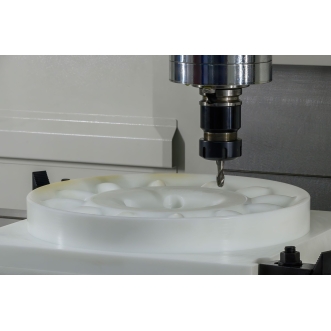
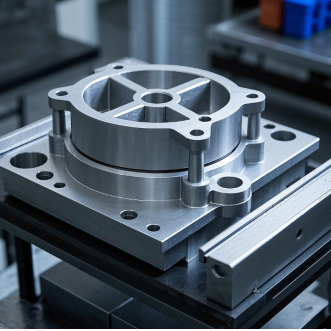
Milling is used to create flat surfaces, grooves, and complex 3D shapes. Selecting the correct tool geometry, such as ball-nose end mills, is important for achieving precision. Proper coolant application helps reduce heat and extend tool life.
Turning
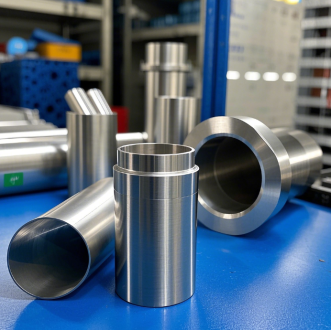
Turning is used for cylindrical tungsten steel parts. The workpiece rotates while the cutting tool removes material. High-quality cutting inserts are required to maintain accuracy and reduce wear. Controlling concentricity and surface finish is critical in this process.
Challenges in CNC Machining of Tungsten Steel Precision Parts
Tool Wear
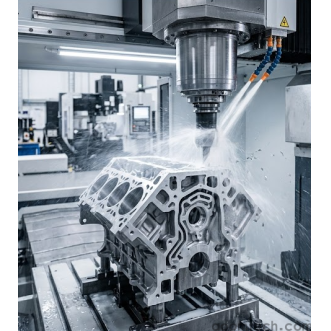
One of the most significant CNC machining challenges for tungsten steel parts is rapid tool wear. Due to the material’s hardness, cutting tools degrade quickly. To address this, manufacturers use optimized cutting speeds, high-performance tools, and effective coolant systems.
Heat Generation
Machining tungsten steel produces a large amount of heat, which can affect both tool life and dimensional accuracy. Efficient cooling strategies and controlled cutting parameters are essential to manage thermal effects.
Brittleness
Although strong, tungsten steel can become brittle under improper machining conditions. Excessive cutting speeds or incorrect tool angles may cause cracking or chipping. Careful process control is required to avoid material failure.
Quality Control in CNC Machining of Tungsten Steel Precision Parts
In-Process Inspection
Quality control in CNC machining of tungsten steel begins during production. Operators continuously monitor dimensions, tool wear, and surface finish using precision instruments such as micrometers and surface testers. Early detection of deviations helps prevent defective parts.
Final Inspection
After machining, each part undergoes thorough inspection using advanced equipment such as Coordinate Measuring Machines (CMM). Dimensional accuracy, surface roughness, and structural integrity are verified to ensure compliance with design specifications.
Non-conforming parts are either reworked or rejected based on quality standards.
Applications of CNC-Machined Tungsten Steel Parts
Cutting Tools
Tungsten steel is widely used in drill bits, end mills, and saw blades due to its hardness and wear resistance. CNC machining ensures precise tool geometry, improving cutting performance and service life.
Molds and Dies
In manufacturing, tungsten steel is commonly used for injection molds, forging dies, and die-casting tools. These components must withstand high pressure and temperature, making precision machining essential.
Aerospace and Defense
Tungsten steel components are used in turbine engines, guidance systems, and protective equipment. These applications require extreme reliability and precision, which CNC machining can consistently deliver.
Applications of CNC-machined tungsten steel parts continue to expand as industries demand stronger and more durable materials.
Conclusion: Mastering CNC Machining for Tungsten Steel Precision Parts
CNC Machining for Tungsten Steel Precision Parts is a highly specialized process that requires careful planning, advanced tools, and strict quality control. The material’s hardness, heat resistance, and wear resistance make it ideal for demanding industrial applications, but they also introduce significant machining challenges.
By understanding the material behavior, optimizing machining strategies, and applying rigorous inspection methods, manufacturers can achieve high-quality results consistently.
Continuous learning and adaptation to new machining technologies are essential for staying competitive in this field. As industries evolve, the demand for precision tungsten steel components will continue to grow, making expertise in CNC machining more valuable than ever.
RELATED PRODUCTS
-
Medical Brass CNC Machining Parts
-
Precision CNC Machining PEEK Services
-
Precision Custom CNC Machined Car Parts
-
cnc machining optical housings
-
Precision CNC Casting Machining Services
-
Precision Gear CNC Machining Services
-
Precision Stainless Steel Parts CNC Mach
-
CNC Machining of Precision Aluminum Tube
-
CNC Machining of Large Precision Aluminu
-
CNC Machining & Manufacturing of Pre