CNC Machining Gears Services
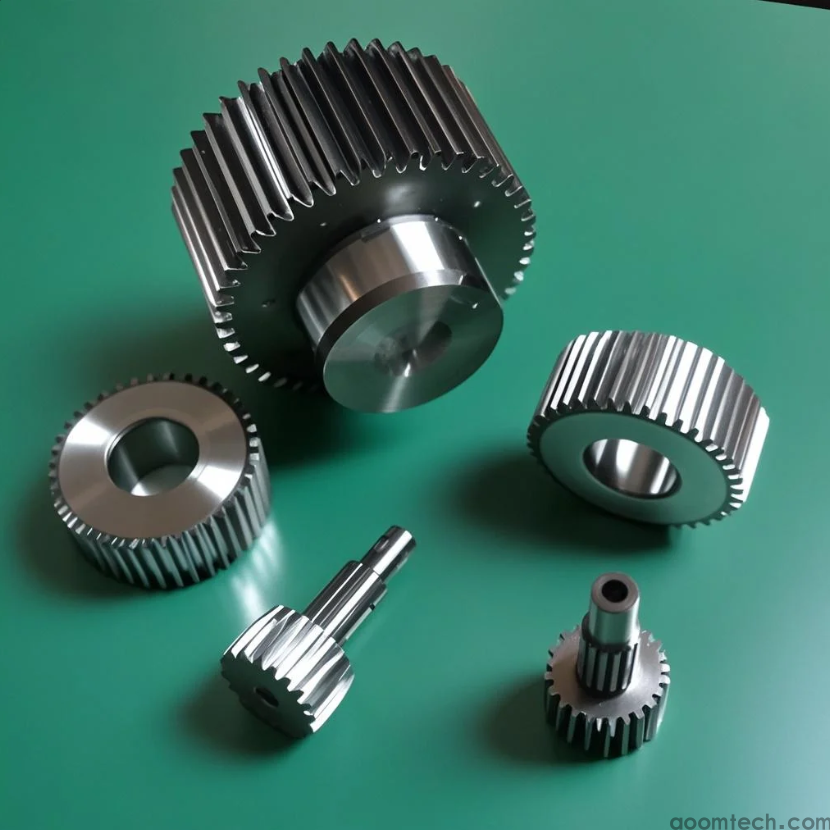
CNC Machining Gears Services play an important role in modern mechanical manufacturing. Gears are key parts in many machines, from car engines and industrial equipment to robots and medical devices. They help transfer power smoothly and control motion with accuracy.
Using CNC (Computer Numerical Control) technology to produce gears ensures high precision, better performance, and long service life. CNC-machined gears are widely used because they improve system stability, reduce noise, and increase efficiency in mechanical operations.
The Significance of CNC Machining in Gear Production
Gears are essential components in mechanical systems. They must fit perfectly and work smoothly under pressure and continuous movement. Even a small error in gear shape can cause vibration, noise, or system failure.
CNC Machining Gears Services provide a reliable solution by using computer-controlled machines to produce accurate gear shapes. This ensures consistent quality and helps industries meet strict performance requirements. CNC-machined gears contribute to smooth operation, durability, and improved efficiency in many applications such as automotive transmissions, aerospace systems, and industrial machinery.
Advantages of CNC Machining for Gears
High Precision and Accuracy
One of the main advantages of CNC machining for gears is extremely high precision. CNC machines follow programmed instructions to create exact gear tooth shapes with very tight tolerances.
This level of accuracy is especially important in industries like aerospace and high-performance automotive systems, where even small errors can affect safety and efficiency. For example, in aircraft engines, high-precision CNC-machined gears help ensure smooth power transfer and reduce vibration during operation.
Complex Gear Geometry Machining
CNC technology allows the production of complex gear types such as helical gears, bevel gears, and worm gears. These shapes are difficult to manufacture using traditional methods.
For example, in robotic arms, custom-designed helical gears are often required to ensure smooth and controlled movement. CNC machining can accurately produce these complex tooth profiles, improving performance and reliability.
Repeatability and Consistency
CNC machining ensures that every gear produced is identical when using the same program. This is very important for mass production.
For instance, in automotive manufacturing, thousands of gears can be produced with the same size, shape, and performance. This consistency reduces assembly problems and improves product reliability.
Process of CNC Machining Gears
Design and CAD/CAM Programming
The process of CNC machining gears begins with design. Engineers use CAD software to create a 3D model of the gear. This includes details such as gear size, tooth shape, and load capacity.
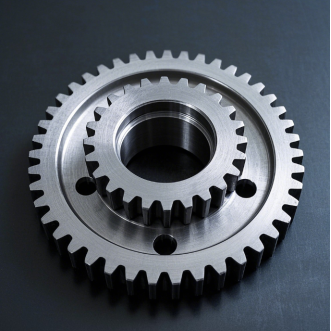
After that, CAM software converts the design into machine instructions. These instructions control tool movement, cutting speed, and feed rate. For complex systems like planetary gear sets, programming must carefully coordinate multiple gear interactions to ensure correct function.
Material Selection and Preparation
Choosing the right material is very important in gear production. Common materials include steel, aluminum, and bronze. Each material has different strength, wear resistance, and cost.
For example, high-strength steel is often used for heavy-duty gears, but it requires stronger cutting tools and slower machining speeds. Before machining, materials may also be heat-treated to improve performance.
Machining Operations
Milling
Milling is used to cut gear teeth using special cutting tools. Operators must carefully control cutting depth and feed rate to ensure accurate tooth shape and smooth surface finish.
Hobbing
Hobbing is a widely used gear production method where a rotating cutting tool (hob) gradually forms gear teeth. It is efficient for producing gears with many teeth and high accuracy.
Heat-Treating and Finishing Operations
After machining, gears often undergo heat treatment to increase hardness and wear resistance. This improves durability and service life.
Finishing processes such as grinding or polishing are then used to improve surface quality and ensure precise dimensions. These steps are important for high-load industrial applications where performance and reliability are critical.
Benefits of CNC-Machined Gears
Improved Mechanical Performance
The benefits of CNC-machined gears include smoother operation, lower friction, and higher efficiency. Accurate tooth profiles reduce energy loss and improve power transmission.
For example, in industrial machines, CNC-machined gears can reduce energy consumption while increasing production speed and stability.
Customization for Specific Applications
CNC machining allows gears to be fully customized based on application needs. This includes special sizes, shapes, and materials.
For example, medical devices often require very small and precise gears. CNC technology makes it possible to produce these custom parts with high accuracy and reliability.
Cost-Effectiveness in the Long Run
Although CNC machining may have higher initial costs, it is cost-effective over time. High-quality gears reduce maintenance needs and last longer.
For example, companies using CNC-machined gears often experience fewer machine breakdowns, which leads to lower repair costs and improved productivity.
Challenges in CNC Machining Gears Services
Complex Programming and Setup
The challenges in CNC machining gears services include complex programming and machine setup. Gear tooth design requires precise calculations and multi-axis control.
A small programming error can lead to defective gears, causing material waste and production delays.
Tool Wear and Replacement
Gear machining, especially with hard materials like steel, causes tool wear. Cutting tools must be replaced regularly, increasing production costs and downtime.
Quality Control Requirements
Gears must meet strict standards for size, shape, and surface finish. Maintaining consistent quality across large production batches can be challenging.
Even small defects can affect the performance of the entire mechanical system.
Choosing a CNC Gears Machining Service Provider
Experience and Expertise in Gear Machining
When choosing a CNC gears machining service provider, experience is very important. An experienced company understands different gear types, materials, and machining methods.
Providers with a strong project portfolio are more likely to handle complex requirements successfully.
Quality Assurance Measures
A reliable provider should have strong quality control systems. This includes in-process inspection, final testing, and the use of precise measuring tools.
Quality certifications and inspection reports help ensure that every gear meets required standards before delivery.
Cost-Effectiveness and Pricing Transparency
Pricing is also an important factor. A good service provider offers clear and transparent pricing, including material, machining, and finishing costs.
It is recommended to compare multiple quotes and evaluate both cost and quality before making a decision.
Conclusion: Selecting the Right CNC Machining Gears Services
CNC Machining Gears Services are essential for producing high-quality, reliable, and efficient gears used in modern industries. From design and material selection to machining and finishing, every step affects the final performance of the gear.
Understanding the advantages of CNC machining for gears, process of CNC machining gears, benefits of CNC-machined gears, and challenges in CNC machining gears services helps businesses make better decisions.
When selecting a provider, always consider experience, quality control, and cost transparency. Careful evaluation will help you find a reliable partner for long-term success in gear manufacturing.
RELATED PRODUCTS
-
Medical Brass CNC Machining Parts
-
Precision CNC Machining PEEK Services
-
Precision Custom CNC Machined Car Parts
-
cnc machining optical housings
-
Precision CNC Casting Machining Services
-
Precision Gear CNC Machining Services
-
Precision Stainless Steel Parts CNC Mach
-
CNC Machining of Precision Aluminum Tube
-
CNC Machining of Large Precision Aluminu
-
CNC Machining & Manufacturing of Pre