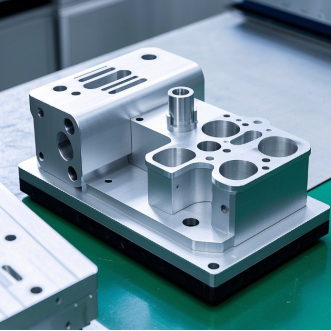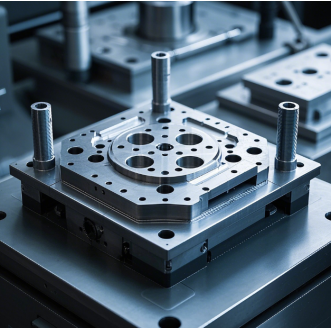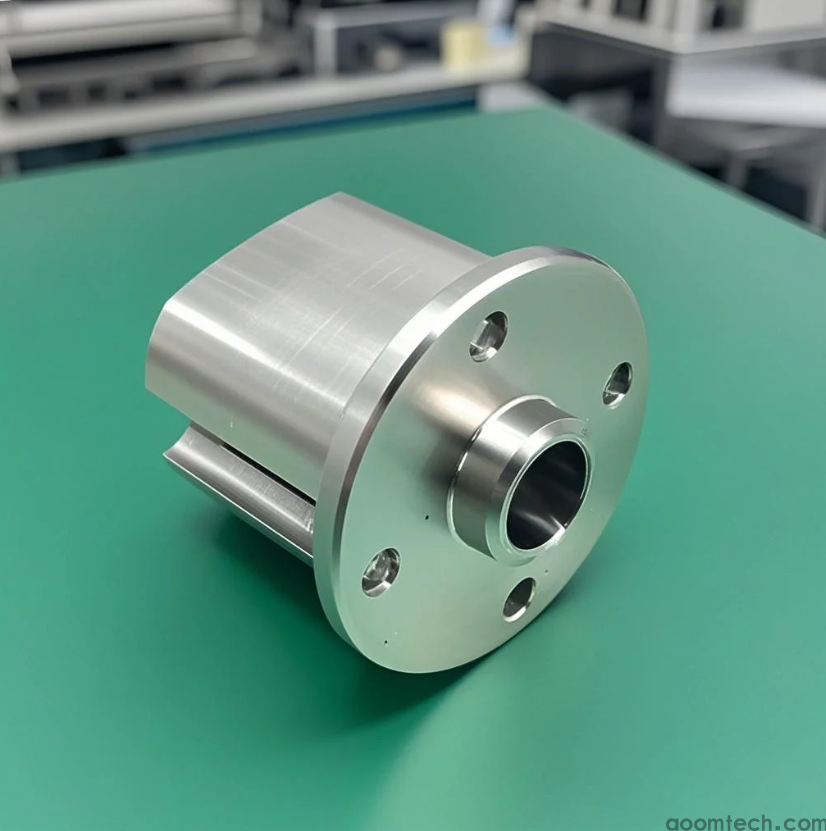
CNC Machining & Manufacturing Parts Services
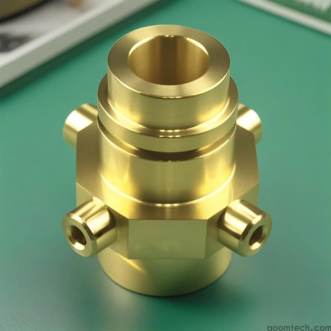
CNC Machining & Manufacturing Parts Services play a key role in today’s global manufacturing industry. They allow companies to produce highly precise, durable, and complex parts used in everything from cars and airplanes to medical devices and consumer electronics. Understanding how these services work helps manufacturers, engineers, and business owners make better decisions, reduce costs, and improve product quality.
Introduction to CNC Machining & Manufacturing Parts Services
CNC (Computer Numerical Control) machining is a manufacturing process where computers control machines such as mills, lathes, and drills to create precise parts. Instead of manual work, machines follow programmed instructions to shape raw materials into finished components.
These services are essential in modern industry because they ensure accuracy, repeatability, and efficiency. Without CNC machining, it would be difficult to produce complex parts at scale with consistent quality.
The importance of CNC Machining & Manufacturing Parts Services lies in their ability to support innovation. They help companies develop new products faster, improve existing designs, and maintain high production standards across industries like automotive, aerospace, electronics, and industrial machinery.
The Process of CNC Machining & Manufacturing Parts
Design and Programming
The process begins with design. Engineers use CAD (Computer-Aided Design) software to create a detailed 3D model of the part. This model defines dimensions, shape, and functional requirements.
Next, CAM (Computer-Aided Manufacturing) software converts the CAD model into machine instructions (G-code). Programmers define toolpaths, cutting speeds, feed rates, and depth of cut.
Different part shapes require different programming strategies. For example, a simple bracket needs basic toolpaths, while a turbine blade requires advanced multi-axis programming for smooth curves and precision surfaces.
Material Selection and Preparation
Choosing the right material is critical in the process of CNC machining parts service. Materials include metals, plastics, and composites, each with unique properties.
Metals: Steel, aluminum, titanium
Plastics: ABS, PEEK, polyethylene
Composites: Carbon fiber and reinforced materials
After selection, raw material is cut into suitable sizes before machining begins.
Machine Setup and Tooling
The CNC machine must be properly set up before production. Fixtures hold the material firmly in place to prevent movement during machining.
Tool selection is also important. Carbide tools are commonly used because they are strong and long-lasting. Spindle speed, feed rate, and cutting depth are adjusted based on material type and part design.
Machining Operations
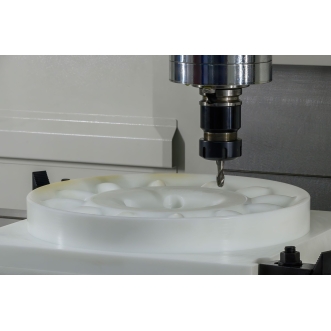
Milling: Used for flat surfaces, slots, and complex 3D shapes. Different cutters are used depending on the required finish and geometry.
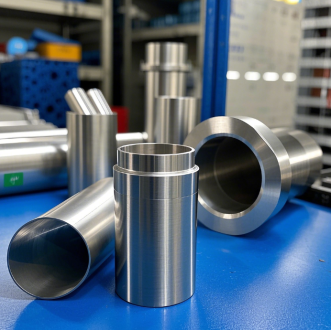
Turning: Used for cylindrical parts. The material rotates while the cutting tool removes excess material to achieve precise diameter and smooth surfaces.
Drilling: Used to create holes. Proper drill selection and speed settings prevent tool damage and ensure accuracy.
Quality Inspection
Quality control is essential in CNC machining. Measurements are taken during and after production using tools such as calipers, micrometers, and coordinate measuring machines (CMM).
This ensures parts meet exact specifications. Defective parts are reworked or rejected to maintain high manufacturing standards.
Benefits of CNC Machining & Manufacturing Parts Services
High Precision
CNC machines can achieve extremely tight tolerances, making them ideal for industries where accuracy is critical, such as aerospace and medical devices.
Consistent Quality
Once a program is set, CNC machines can produce thousands of identical parts with minimal variation, ensuring consistent quality in mass production.
Design Flexibility
Complex shapes and detailed geometries can be manufactured easily. This includes internal cavities, curved surfaces, and custom designs that are difficult to achieve with manual machining.
Cost-Effectiveness
Although setup costs may be high, CNC machining becomes cost-efficient in medium to large production runs due to reduced waste and automation.
These are key benefits of CNC manufacturing parts services that make it a preferred choice for modern industries.
Types of Parts Produced by CNC Machining Services
Mechanical Parts
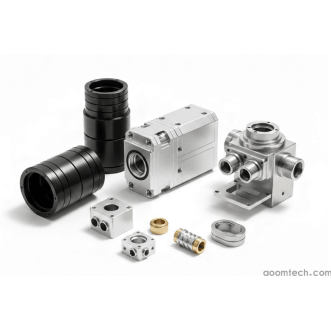
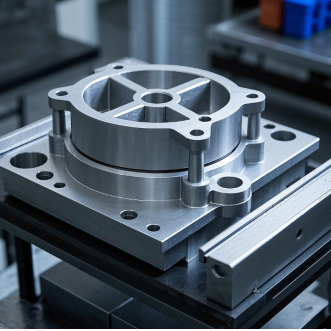
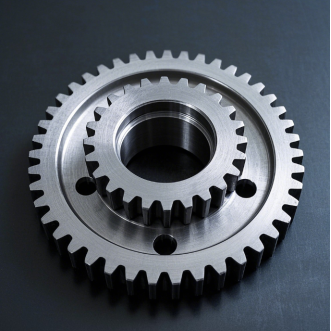
Includes gears, shafts, brackets, and housings used in machines and industrial equipment. These parts require strength and precision.
Electronics-Related Parts
Includes heat sinks, connectors, and electronic enclosures. These parts require accuracy and sometimes thermal or electrical performance.
Aerospace and Automotive Parts
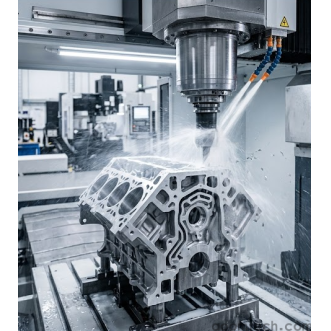
Includes engine components, structural parts, and safety-critical systems. These parts must meet strict safety and performance standards.
Material Considerations in CNC Machining
Metals
Metals like steel, aluminum, and titanium are widely used. Each requires different cutting speeds and tools. Aluminum is easier to machine, while steel requires more power and stronger tools.
Plastics
Plastics are lightweight and corrosion-resistant. However, they require careful machining due to low melting points. Sharp tools and slower speeds are often needed.
Composites
Composites are strong and lightweight but can be difficult to machine. Special tools and techniques are used to avoid damage such as delamination.
Quality Control in CNC Machining & Manufacturing Parts Services
In-Process Inspection
During machining, operators continuously check dimensions and tool wear. Adjustments can be made immediately if errors are detected, reducing waste and improving efficiency.
Final Inspection
After machining is complete, parts undergo detailed inspection using advanced equipment like CMM systems. This ensures all specifications are met before delivery.
How to Choose a CNC Machining & Manufacturing Parts Service Provider
Experience and Expertise
Choose a provider with proven industry experience. Companies with long-term expertise are more likely to handle complex designs and solve technical challenges effectively.
For specialized industries such as medical or aerospace, it is important to select a provider with relevant experience.
Equipment and Technology
Modern CNC machines, including multi-axis systems and high-speed spindles, improve precision and efficiency. Advanced equipment also allows for more complex part production.
This is an important factor in choosing a CNC parts manufacturing service provider.
Quality Management System
A reliable provider should follow strict quality standards such as ISO 9001. Proper documentation, calibration, and training ensure consistent production quality.
Conclusion: Leveraging CNC Machining & Manufacturing Parts Services
CNC Machining & Manufacturing Parts Services are essential for modern production across many industries. They offer high precision, consistent quality, design flexibility, and cost efficiency.
Understanding the process of CNC machining parts service, material selection, and quality control helps businesses make better manufacturing decisions.
By carefully evaluating providers and focusing on experience, equipment, and quality systems, companies can ensure reliable production outcomes and long-term success.
In today’s competitive market, building strong partnerships with CNC service providers is a smart strategy for improving product quality and achieving sustainable growth.
RELATED PRODUCTS
-
Medical Brass CNC Machining Parts
-
Precision CNC Machining PEEK Services
-
Precision Custom CNC Machined Car Parts
-
cnc machining optical housings
-
Precision CNC Casting Machining Services
-
Precision Gear CNC Machining Services
-
Precision Stainless Steel Parts CNC Mach
-
CNC Machining of Precision Aluminum Tube
-
CNC Machining of Large Precision Aluminu
-
CNC Machining & Manufacturing of Pre