CNC Machining Service for Precision Automotive Parts
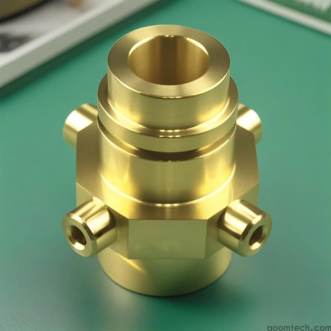
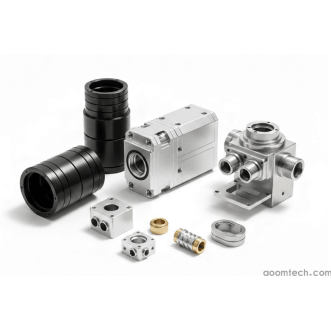
The CNC Machining Service for Precision Automotive Parts plays a key role in modern vehicle manufacturing. Today’s automotive industry depends on highly accurate, durable, and reliable components to ensure safety, performance, and efficiency. CNC (Computer Numerical Control) machining makes it possible to produce these parts with consistent quality, even in large volumes.
This article explains what CNC machining for automotive parts is, why it is important, how the processes work, what materials are used, and how to choose the right service provider. It is written in simple English to help global readers understand the topic easily.
Introduction to CNC Machining Service for Precision Automotive Parts
The Significance of Precision Automotive Parts
Precision automotive parts are the foundation of every vehicle. They ensure smooth operation, fuel efficiency, safety, and long-term reliability. These parts must meet strict dimensional and performance standards because even small errors can affect the entire system.
Examples of important precision automotive parts include:
Engine pistons – essential for converting fuel combustion into mechanical power.
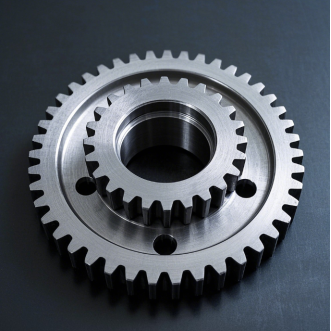
Transmission gears – control torque and speed transfer in the drivetrain.
Brake components – ensure safe and reliable vehicle stopping.
Vehicles such as Toyota Camry and Tesla Model 3 rely heavily on high-precision parts to maintain performance and safety standards in daily driving conditions.
CNC machining services are widely used to manufacture these components with the accuracy required by modern automotive engineering.
Importance of CNC Machining for Precision Automotive Parts
High-precision Manufacturing
The core advantage of a CNC Machining Service for Precision Automotive Parts is its ability to achieve extremely high accuracy. Automotive components often require tight tolerances to ensure perfect fitting and smooth operation.
CNC machines follow computer-controlled instructions, allowing manufacturers to consistently produce identical parts with minimal deviation. This precision directly impacts:
Engine performance and efficiency
Transmission smoothness
Braking safety and response time
Imprecise parts may cause serious issues such as engine misfires, gear failure, vibration, or reduced braking efficiency. These problems can compromise vehicle safety and reliability.
Complex Geometries and Customization
Modern vehicles require highly complex part designs. CNC machining makes it possible to produce intricate shapes and customized components that traditional manufacturing methods cannot easily achieve.
Examples include:
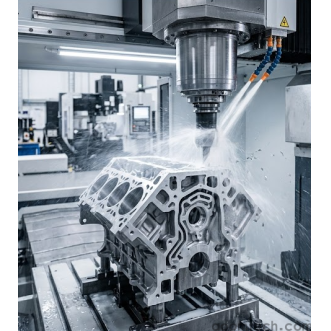
Engine blocks with optimized internal cooling channels
Transmission gears with advanced tooth profiles for smoother power transfer
Custom suspension components for high-performance vehicles
This flexibility supports innovation in automotive engineering and improves vehicle performance.
Cost-effectiveness for Medium to High-volume Production
Once CNC programming is completed, parts can be produced repeatedly with consistent quality. This makes CNC machining cost-effective for medium and large-scale production.
Cost savings come from:
Reduced manual labor
Efficient material usage
Faster production cycles
For automotive manufacturers, this balance between cost and quality is essential when producing thousands or millions of components.
CNC Machining Processes for Precision Automotive Parts
Milling
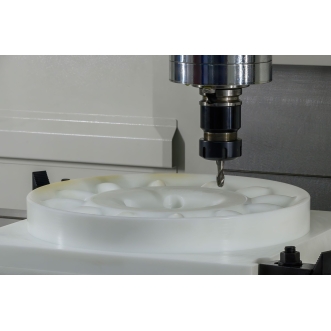
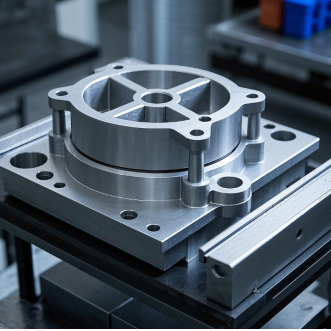
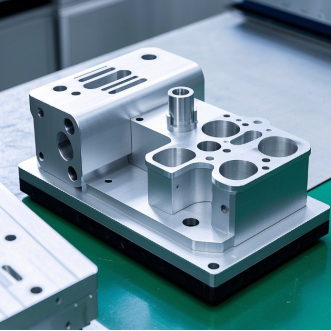
CNC milling for precision automotive parts involves a rotating cutting tool that removes material from a workpiece. It is used to create flat surfaces, grooves, and complex 3D shapes.
Key considerations include:
Tool selection based on material hardness
Spindle speed and feed rate adjustments
Depth of cut control for accuracy
Carbide-coated tools are commonly used for machining hard automotive materials such as steel alloys used in engine components.
Turning
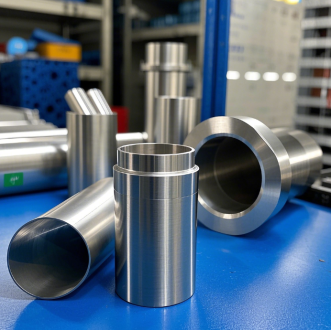
Turning is used for cylindrical parts like shafts, axles, and piston rods. The workpiece rotates while a cutting tool shapes it into precise dimensions.
Important factors include:
Maintaining concentricity for balanced rotation
Achieving smooth surface finishes
Managing chip formation and tool wear
For example, a steel axle must be machined with high precision to ensure smooth vehicle movement and long-term durability.
Electrical Discharge Machining (EDM)
EDM is used for extremely hard materials or complex shapes that are difficult to machine with traditional methods. It uses electrical sparks to remove material.
Types include:
Wire EDM – for cutting detailed shapes in hardened metals
Die-sinking EDM – for creating complex cavities and molds
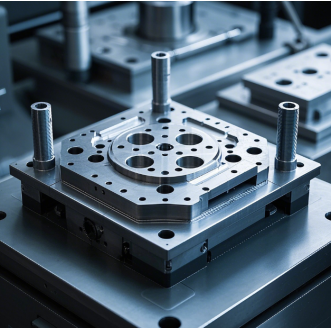
EDM is commonly used in automotive mold production and high-precision tooling applications.
Materials for CNC Machined Precision Automotive Components
Metals
The materials for CNC-machined precision automotive components are carefully selected based on strength, weight, and heat resistance.
Steel – Used for engine parts, crankshafts, and gears due to its strength and durability.
Aluminum – Lightweight material used in engine blocks, wheels, and housings to improve fuel efficiency.
Titanium – High strength-to-weight ratio material used in performance and racing components.
Alloys
Special alloys are designed to improve properties such as heat resistance and wear resistance.
Examples include nickel-based alloys used in high-temperature engine environments. These materials are more difficult to machine but provide excellent long-term performance under extreme conditions.
Challenges in CNC Machining of Precision Automotive Parts
Work-hardening
Some materials become harder during machining, a process known as work-hardening. This increases tool wear and makes further machining more difficult.
Solutions include:
Using sharp cutting tools
Applying high-pressure coolant systems
Optimizing cutting speeds and feeds
Tool Wear
Automotive materials such as hardened steel and titanium can cause rapid tool wear. This affects accuracy and increases production costs.
To reduce tool wear:
Use carbide or diamond-coated tools
Monitor tool condition regularly
Replace tools at planned intervals
Heat Generation
Heat during machining can damage tools and reduce part accuracy. Proper cooling is essential.
Effective solutions include:
Flood coolant systems
Optimized cutting parameters
Heat-resistant tool materials
Choosing a Provider for CNC Precision Automotive Part Machining
Technical Expertise
When selecting a choosing a provider for CNC precision automotive part machining, technical expertise is critical. A good provider understands materials, machining methods, and automotive industry standards.
Evaluation methods include:
Reviewing past automotive projects
Checking engineering qualifications
Inspecting sample parts for accuracy
Quality Assurance
A reliable CNC service provider must have a strong quality control system. This ensures every part meets strict automotive standards.
Quality tools and methods include:
Coordinate Measuring Machines (CMM)
Hardness testers
Surface profilometers
In-process inspections help detect issues early and reduce production waste.
Cost-effectiveness and Lead Times
While cost is important, it should not compromise quality. Reliable suppliers provide a balance between price, precision, and delivery speed.
Key considerations include:
Comparing multiple supplier quotes
Evaluating past delivery performance
Understanding production capacity and scheduling
Conclusion
The CNC Machining Service for Precision Automotive Parts is essential for modern vehicle manufacturing. It ensures high accuracy, supports complex designs, and enables efficient mass production.
By understanding machining processes, materials, challenges, and supplier selection, manufacturers can achieve better performance, safety, and cost efficiency in automotive production.
As the automotive industry continues to evolve toward higher performance and electrification, CNC machining will remain a core technology driving innovation and reliability.
RELATED PRODUCTS
-
Medical Brass CNC Machining Parts
-
Precision CNC Machining PEEK Services
-
Precision Custom CNC Machined Car Parts
-
cnc machining optical housings
-
Precision CNC Casting Machining Services
-
Precision Gear CNC Machining Services
-
Precision Stainless Steel Parts CNC Mach
-
CNC Machining of Precision Aluminum Tube
-
CNC Machining of Large Precision Aluminu
-
CNC Machining & Manufacturing of Pre