CNC Machining Services for Air Cooler Parts
Introduction to CNC Machining Services for Air Cooler Parts
The Role of Air Cooler Parts
Air cooler parts are essential components used to control and maintain safe operating temperatures in many systems. From small electronic devices to large industrial engines, heat generation is unavoidable. Without efficient cooling, equipment performance drops, energy consumption increases, and system failure may occur.
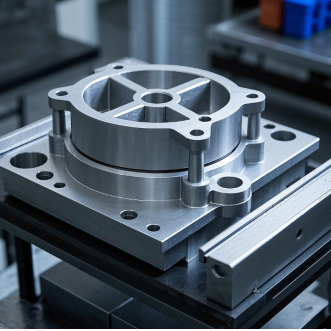
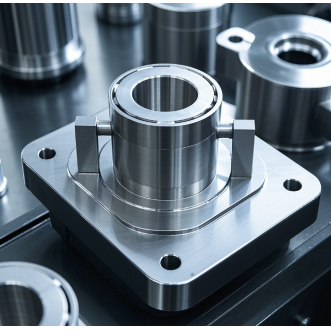
CNC Machining Services for Air Cooler Parts play a key role in producing high-performance cooling components such as heat sinks, fins, housings, and airflow channels. These parts are widely used in computers, automotive engines, power electronics, industrial machinery, and renewable energy systems. Well-designed air cooler parts ensure stable operation, longer service life, and improved energy efficiency.
Importance of CNC Machining for Air Cooler Parts
Precision Manufacturing
Air cooler components often include complex geometries such as thin fins, micro channels, and tightly arranged structures designed to maximize heat dissipation. CNC machining allows manufacturers to achieve extremely high accuracy and repeatability.
With advanced CNC systems, every fin thickness, spacing, and surface finish can be controlled within tight tolerances. This is critical because even small deviations can reduce airflow efficiency, increase thermal resistance, and lead to overheating in the final application.
In high-performance systems, precision control in air cooler part CNC machining ensures optimal thermal transfer and stable system performance.
Customization
Different applications require different cooling solutions. CNC machining allows full customization of air cooler designs based on thermal load, space limitations, and airflow direction.
For example, high-performance gaming computers may require dense fin heat sinks, while automotive systems may require compact, vibration-resistant cooling modules. CNC machining enables engineers to design and produce customized air cooler parts that match exact performance requirements.
Consistent Quality
Once a CNC program is created, it can reproduce identical parts with consistent accuracy. This is especially important in mass production of cooling systems, where uniform performance across all units is required.
Consistent quality reduces assembly issues, improves reliability, and ensures that every cooling component performs as expected under real operating conditions.
Materials Used in CNC Machining of Air Cooler Parts
Aluminum Alloys
Aluminum alloys are the most commonly used materials in air cooler manufacturing due to their excellent thermal conductivity, lightweight structure, and corrosion resistance.
Common grades such as 6061 and 6063 are widely used in heat sink and fin structures. These materials are easy to machine and offer a strong balance between performance and cost.
Aluminum also produces clean chip formation during machining, although careful control of cutting speed and tool wear is required to maintain surface quality in thin fin structures.
Copper
Copper is used in high-performance cooling applications due to its superior thermal conductivity. It transfers heat faster than most metals, making it ideal for demanding thermal environments.
However, copper is heavier and more expensive than aluminum. It also requires specialized machining tools to prevent tool wear, burr formation, and surface adhesion during cutting.
It is commonly used in advanced electronics, power modules, and high-heat industrial systems where maximum cooling efficiency is required.
Composite Materials
Composite materials combine different properties to achieve improved performance. A common structure includes copper base plates with aluminum fins, balancing heat absorption and heat dissipation efficiency.
However, machining composites can be challenging due to risks such as delamination or uneven cutting behavior. Specialized CNC strategies and tooling are required to maintain structural integrity and dimensional accuracy.
CNC Machining Processes for Air Cooler Parts
Programming and Equipment Setup
The process begins with CAD/CAM programming, where engineers convert 3D models into CNC tool paths using G-code. This step defines cutting speed, tool selection, and machining strategy.
Key parameters such as spindle speed, feed rate, and tool compensation are carefully calibrated. Thermal simulation may also be used to optimize fin spacing and airflow channel design for maximum cooling efficiency.
For example, determining fin density is crucial in balancing heat dissipation and airflow resistance in air cooling systems.
Staged Machining Operations
CNC machining for air cooler parts is typically divided into three stages:
Rough machining: Rapid removal of excess material using large cutting tools while minimizing deformation.
Semi-finishing: Refining shapes and improving dimensional accuracy.
Finishing: Using high-precision tools such as micro tungsten steel cutters to achieve final surface quality and exact tolerances.
Each stage uses carefully controlled cutting parameters to ensure stability and precision, especially when machining thin fin structures.
Post-Processing Optimization
After machining, air cooler parts may undergo heat treatment to relieve internal stress caused during cutting. This improves dimensional stability and durability.
Surface treatments such as anodizing are also commonly applied to aluminum parts. Anodizing improves corrosion resistance and enhances heat radiation performance, making the cooling system more efficient.
Precision Control in CNC Machining of Air Cooler Parts
Incoming Material Inspection
Quality control begins with raw material inspection. Spectrometers are used to verify alloy composition, ensuring proper thermal conductivity and mechanical strength.
Flatness and dimensional accuracy are checked using precision measuring instruments. Materials that do not meet standards are rejected before machining begins.
Process Real-Time Monitoring
During machining, CNC systems continuously monitor vibration, temperature, and tool wear. If deviations occur—such as incorrect fin thickness—the system can automatically pause to prevent defects.
Operators also perform regular inspections, while coordinate measuring machines (CMM) are used to verify critical dimensions such as channel depth and hole positions.
This stage is essential in maintaining precision control in air cooler part CNC machining.
Finished Product Detection
Final inspection ensures that every part meets design requirements. Laser scanning is used for full-dimensional verification, while infrared thermal imaging simulates working conditions to analyze temperature distribution.
Non-conforming parts are either reworked or rejected to ensure only high-quality components reach the final assembly stage.
Choosing a CNC Machining Service Provider for Air Cooler Parts
Technical Expertise
A reliable provider should have strong experience in CNC Machining Services for Air Cooler Parts. This includes knowledge of thermal design, material behavior, and precision machining techniques.
Clients should review case studies, evaluate engineering capabilities, and inspect sample products to assess technical strength.
Quality Assurance
A strong quality system is essential for producing reliable cooling components. This includes in-process inspection, final quality checks, and the use of advanced measuring equipment.
Effective quality assurance ensures that each part meets strict standards for accuracy, durability, and thermal performance.
Cost-Effectiveness and Lead Times
While cost is important, it should not compromise quality. A good supplier balances competitive pricing with stable performance and reliable delivery schedules.
When evaluating providers, it is important to compare quotations, check production capacity, and review on-time delivery performance.
Conclusion
CNC Machining Services for Air Cooler Parts are essential for producing high-precision, reliable, and efficient thermal management components. From aluminum and copper materials to advanced machining processes and strict quality control, every stage contributes to the performance of the final cooling system.
By understanding materials for CNC-machined air cooler parts, CNC machining processes for air cooler fins, and precision control in air cooler part CNC machining, businesses can make better decisions when selecting manufacturing partners and designing thermal solutions.
With the right CNC machining service provider, industries can achieve improved cooling efficiency, longer equipment lifespan, and more stable system performance.
RELATED PRODUCTS
-
Medical Brass CNC Machining Parts
-
Precision CNC Machining PEEK Services
-
Precision Custom CNC Machined Car Parts
-
cnc machining optical housings
-
Precision CNC Casting Machining Services
-
Precision Gear CNC Machining Services
-
Precision Stainless Steel Parts CNC Mach
-
CNC Machining of Precision Aluminum Tube
-
CNC Machining of Large Precision Aluminu
-
CNC Machining & Manufacturing of Pre