CNC Machining Services for Bronze Parts
Introduction to CNC Machining Services for Bronze Parts
Bronze is an alloy mainly made of copper and tin. It has been used for hundreds of years because it has strong corrosion resistance, low friction, and good durability. Today, it is still widely used in many industries such as marine equipment, automotive systems, electrical components, and artistic products.
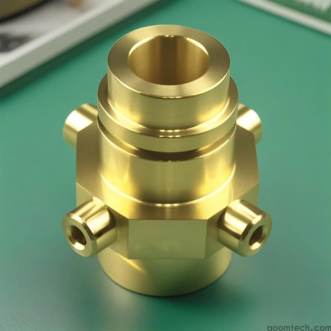
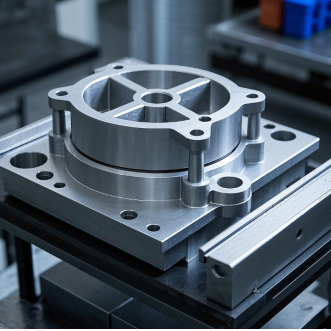
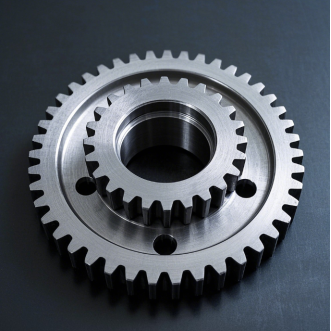
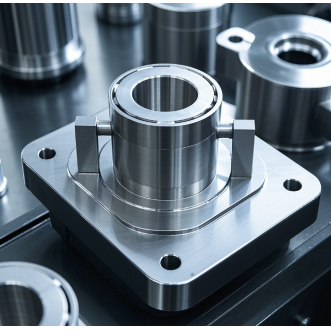
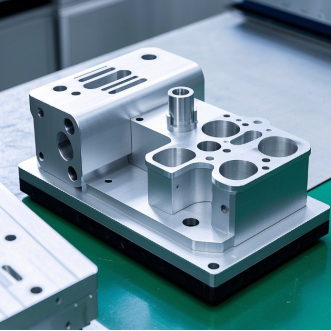
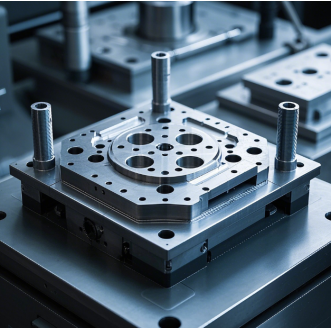
Modern manufacturing relies on CNC Machining Services for Bronze Parts to produce high-quality components with accuracy and efficiency. CNC (Computer Numerical Control) machining uses computer-controlled machines to cut and shape bronze into precise parts. This technology helps industries create reliable parts with consistent quality and complex shapes.
The advantages of CNC machining for bronze parts include high precision, repeatability, and the ability to produce both simple and complex designs. This makes it an essential solution for industries that require strong and stable bronze components.
Advantages of CNC Machining for Bronze Parts
Precision and Accuracy
CNC machining provides extremely high precision when producing bronze parts. Every movement of the machine is controlled by programmed instructions, ensuring tight tolerances and consistent results.
For example, in high-end mechanical systems such as watch movements, a CNC-machined bronze bearing can ensure smooth rotation and long-term reliability. Even a small error could affect performance, so precision is very important.
Complex Design Realization
CNC technology allows manufacturers to produce complex shapes that are difficult or impossible to make by hand. Intricate details, curves, and fine patterns can be accurately created in bronze parts.
For example, decorative bronze door handles with detailed patterns can be manufactured with perfect symmetry and fine surface detail. This is especially useful in art, architecture, and luxury product industries.
Material Preservation
Bronze is a valuable material, so reducing waste is important. CNC machining uses exact cutting paths to minimize unnecessary material removal.
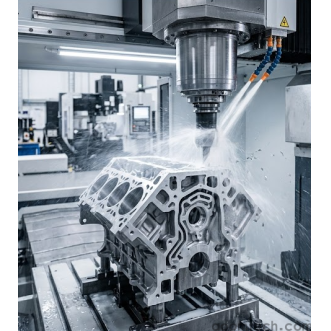
For example, in automotive production, CNC machining helps reduce bronze waste when producing engine bushings and fittings, lowering material costs and improving efficiency.
Process of CNC Machining Bronze Parts
Design and CAD/CAM Programming
The process begins with CAD (Computer-Aided Design), where engineers create a 3D model of the bronze part. After that, CAM (Computer-Aided Manufacturing) software converts the design into machine instructions.
During programming, important settings such as cutting speed, tool path, and feed rate are defined. Since bronze has unique machining behavior, parameters must be carefully adjusted to avoid surface defects.
For example, a custom bronze valve body requires precise internal channels. Engineers design the model in CAD and carefully program tool paths to ensure smooth internal surfaces and accurate dimensions.
Material Selection and Preparation
Different bronze alloys have different properties. Some are stronger, while others are more resistant to corrosion or easier to machine. Choosing the right alloy is important for performance and cost.
Before machining, the material is cut into suitable sizes and inspected for quality. In some cases, heat treatment is applied to improve machinability.
Machining Operations
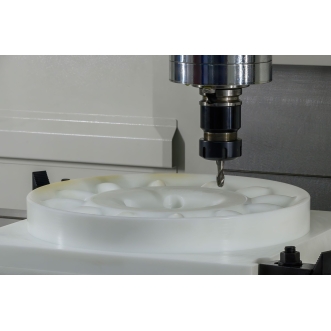
Milling: Milling is used to create flat surfaces, grooves, and complex shapes. It is commonly used for engraving bronze plates or producing 3D shapes.
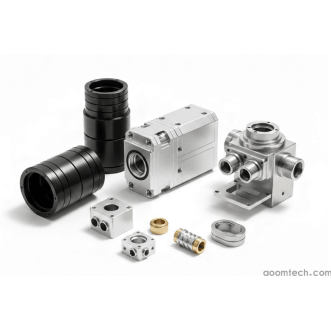
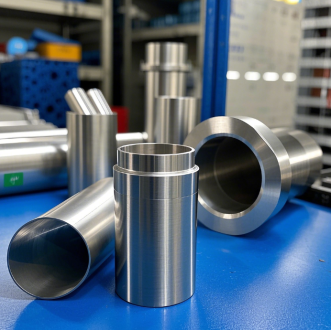
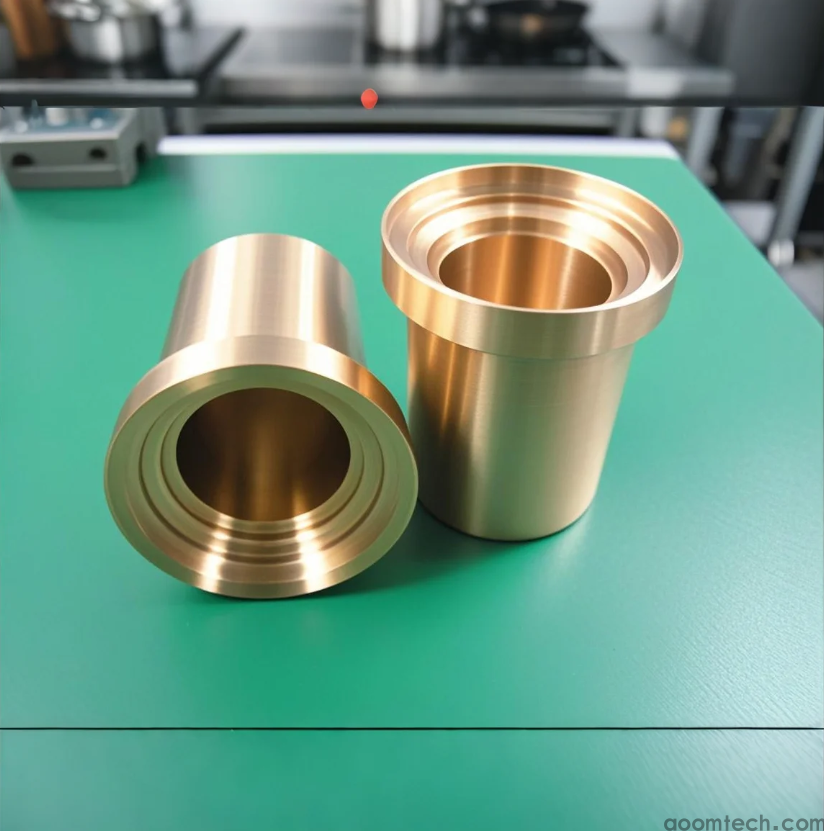
Turning: Turning is used for cylindrical parts such as shafts and bushings. The bronze workpiece rotates while the cutting tool shapes it with precision.
Drilling: Drilling creates accurate holes in bronze parts. Proper coolant is used to reduce heat and improve tool life.
Finishing Operations
After machining, bronze parts may undergo finishing processes such as polishing, coating, or patination.
For example, polishing a bronze statue improves its shine and appearance, making it more visually attractive and valuable.
Tooling for CNC Machining Bronze Parts
High-Speed Steel (HSS) Tools
HSS tools are commonly used for bronze machining because bronze is relatively soft compared to other metals. These tools are cost-effective and suitable for general machining tasks.
For example, HSS end mills are often used to machine flat bronze surfaces with good finish quality.
Carbide-Tipped Tools
Carbide tools are harder and more wear-resistant than HSS tools. They are suitable for high-speed machining and long production runs.
For example, carbide drill bits are used for drilling thick bronze plates with stable accuracy and longer tool life.
Challenges in CNC Machining Bronze Parts
Softness of Bronze
Bronze is soft and can easily deform during machining if cutting parameters are not correct. This may cause surface smearing or uneven finishes.
For example, too high a cutting speed may damage the surface quality of a bronze component.
Chip Control
Bronze often produces long and stringy chips during machining. These chips can wrap around tools and affect performance.
Chip-breaking tools or adjusted cutting settings are often used to solve this issue.
Heat Generation
Excess heat can affect the quality of bronze parts, causing discoloration or dimensional changes.
Using proper coolant and optimized cutting parameters helps control heat and maintain part quality.
Choosing a CNC Service Provider for Bronze Parts
Experience with Bronze Machining
A skilled provider with experience in bronze machining understands its unique properties. This helps avoid common issues such as deformation or poor surface finish.
For example, experienced machinists can successfully produce thin-walled bronze parts without distortion.
Quality Assurance
A reliable provider should have strong quality control systems. This includes inspection tools, measurement processes, and strict production standards.
Regular inspections ensure that each bronze part meets required specifications.
Technology and Equipment
Modern CNC machines improve accuracy and efficiency. Advanced equipment allows faster production and better surface quality.
Companies with updated machines can deliver more consistent results in less time.
Cost-Effectiveness and Pricing Transparency
It is important to compare pricing from different providers. A good service provider should clearly explain material costs, machining costs, and additional fees.
Customers can also request cost-saving suggestions, such as design optimization or bulk order discounts.
Conclusion: Making the Right Choice in CNC Machining Services for Bronze Parts
CNC Machining Services for Bronze Parts play an important role in modern manufacturing. They provide high precision, flexibility, and efficient production for many industries.
By understanding the process of CNC machining bronze parts, selecting proper tooling, recognizing challenges, and choosing the right service provider, businesses can achieve high-quality and cost-effective results.
When selecting a supplier, consider experience, equipment, quality control, and pricing transparency. Taking these factors into account will help ensure successful production of durable and precise bronze components.
RELATED PRODUCTS
-
Medical Brass CNC Machining Parts
-
Precision CNC Machining PEEK Services
-
Precision Custom CNC Machined Car Parts
-
cnc machining optical housings
-
Precision CNC Casting Machining Services
-
Precision Gear CNC Machining Services
-
Precision Stainless Steel Parts CNC Mach
-
CNC Machining of Precision Aluminum Tube
-
CNC Machining of Large Precision Aluminu
-
CNC Machining & Manufacturing of Pre