CNC Machining Services for Metal Parts
Introduction to CNC Machining Services for Metal Parts
CNC (Computer Numerical Control) machining services play a key role in modern manufacturing, especially for producing high-precision metal parts. These services use computer-controlled machines to cut, shape, and finish metal materials with excellent accuracy and repeatability. Compared to traditional manual machining, CNC machining offers higher efficiency, better consistency, and the ability to produce complex shapes that are difficult to achieve by hand.
Today, CNC machining is widely used in industries such as aerospace, automotive, medical, electronics, and industrial machinery. It helps manufacturers produce reliable metal components that meet strict performance and safety standards.
The Significance of CNC Machining for Metal Parts
CNC machining has transformed the way metal parts are manufactured. It allows engineers and manufacturers to create highly detailed components with tight tolerances. This level of precision is essential for modern products where even small errors can affect performance.
Another important advantage is automation. Once the design and program are set, CNC machines can produce large quantities of identical parts with minimal human intervention. This reduces labor costs and improves production speed while maintaining consistent quality.
Types of Metal Parts Produced by CNC Machining
Mechanical Components
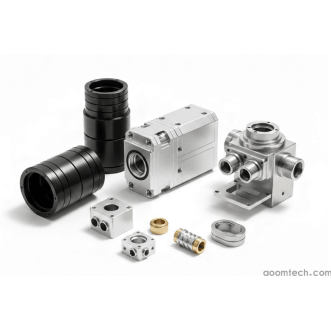
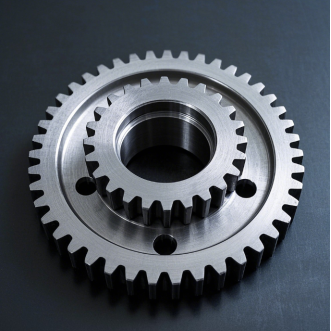
Mechanical components such as gears, shafts, and couplings are commonly produced using CNC machining. These parts must fit and work together precisely to ensure smooth mechanical movement and efficient power transmission.
For example, gears require accurate tooth profiles, which are often created using CNC milling or hobbing. Shafts are typically produced using turning operations to ensure straightness and concentricity. Couplings must be machined with high accuracy to connect rotating parts without vibration or misalignment.
Structural Elements
Structural metal parts include brackets, frames, and enclosures. These components provide support, stability, and protection in machines and systems.
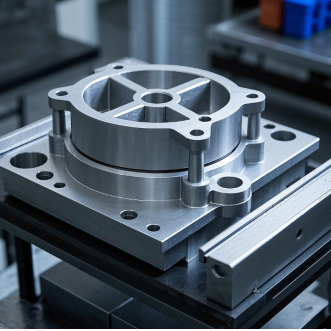
CNC machining ensures that structural elements have precise dimensions, correct hole placements, and strong load-bearing capability. Material selection is very important here. Aluminum is often used for lightweight structures, while steel is chosen for high-strength applications. CNC machines can handle both materials efficiently, ensuring reliability in industries such as construction, transportation, and industrial equipment.
Functional Parts
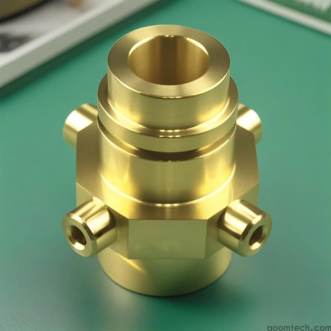
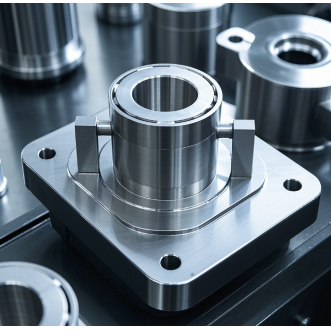
Functional parts such as valves, pistons, and nozzles are designed to perform specific tasks in mechanical or fluid systems. Their performance depends heavily on precise machining and smooth surface finishes.
For instance, valves must seal properly to control fluid flow, while pistons must move smoothly within cylinders. CNC machining allows manufacturers to achieve complex internal and external geometries, ensuring these parts function correctly under pressure and movement.
CNC Machining Processes for Metal Parts
Design and Programming
The CNC machining process begins with CAD (Computer-Aided Design) software, where engineers create a detailed 3D model of the metal part. This design considers function, stress loads, and industry requirements.
Next, CAM (Computer-Aided Manufacturing) software converts the design into machine instructions. These instructions define toolpaths, cutting speeds, feed rates, and cutting depths. Proper programming is essential to ensure accuracy and efficiency during machining.
Machine Setup and Tooling
Before machining begins, the CNC machine must be properly set up. The workpiece is fixed using strong fixtures to prevent movement during cutting. Tool selection is also critical. Common tools include carbide end mills, drills, and turning inserts, chosen based on material type and machining operation.
Machine parameters such as spindle speed and feed rate are carefully adjusted according to the metal being processed. Harder materials like stainless steel require slower speeds and more cooling, while aluminum can be machined at higher speeds.
Machining Operations
Milling
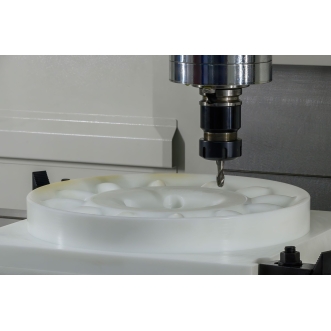
Milling is used to create flat surfaces, grooves, holes, and complex 3D shapes. Different cutting tools are used depending on the shape required. For example, ball-end mills are used for curved surfaces, while flat-end mills are used for straight cuts.
Proper control of cutting speed and chip removal is important to maintain surface quality and prevent tool wear.
Turning
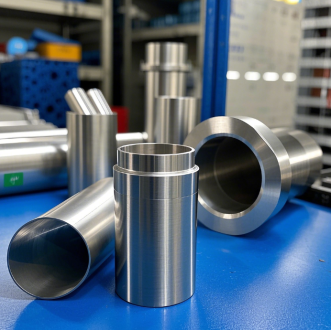
Turning is used to produce cylindrical parts such as shafts and pistons. The workpiece rotates while a cutting tool removes material to achieve the desired shape.
This process requires precise control of tool alignment and feed rate to ensure smooth surfaces and accurate diameters.
Drilling
Drilling is used to create holes in metal parts. The correct drill bit must be selected based on material type and hole depth.
Proper spindle speed and feed rate help prevent tool damage and ensure clean, accurate holes.
Benefits of CNC Machining Services for Metal Parts
High Precision
CNC machining can achieve extremely tight tolerances, often within a few microns. This level of accuracy ensures that metal parts fit perfectly in assemblies, reducing errors and improving product performance. It is especially important in aerospace and medical industries, where precision is critical.
Complex Geometry Capability
CNC machines can produce complex shapes that are difficult or impossible with traditional methods. Multi-axis machines allow cutting tools to move in multiple directions, enabling the production of intricate designs such as turbine blades and medical implants.
Production Efficiency
Once programmed, CNC machines can produce large quantities of parts quickly and consistently. This automation reduces labor costs and increases productivity, making CNC machining ideal for both small batches and mass production.
Material Selection for CNC-Machined Metal Parts
Common Metals
Common materials include aluminum, steel, and titanium.
Aluminum is lightweight and easy to machine, making it suitable for aerospace and automotive parts. Steel offers high strength and durability, ideal for heavy-duty applications. Titanium provides excellent strength-to-weight ratio and corrosion resistance, often used in medical and aerospace industries.
Alloys
Alloys are widely used to improve material performance. For example, stainless steel contains chromium for corrosion resistance, while aluminum alloys can improve strength and fatigue resistance.
Different alloys require different machining strategies, including tool selection and cutting speeds, to ensure quality results.
Quality Control in CNC Machining of Metal Parts
In-Process Inspection
Quality control begins during machining. Operators regularly check dimensions, surface finish, and tool wear using measuring instruments such as calipers, micrometers, and surface testers.
If any deviation is found, adjustments are made immediately to avoid producing defective parts.
Final Inspection
After machining, parts undergo final inspection using advanced tools like Coordinate Measuring Machines (CMM). These machines verify that all dimensions meet design specifications.
Non-conforming parts are either reworked or discarded depending on the severity of the issue.
Applications of CNC-Machined Metal Parts
Aerospace Industry
CNC-machined metal parts are essential in aerospace applications such as engine components, landing gear, and structural frames. These parts must meet extremely strict safety and performance standards.
Automotive Industry
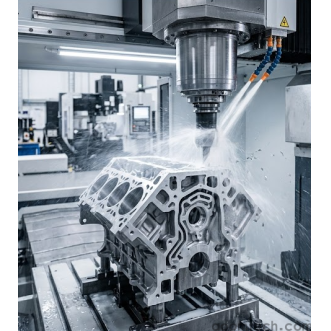
In the automotive industry, CNC machining is used to produce engine blocks, transmission parts, and suspension components. These parts improve vehicle performance, durability, and fuel efficiency.
Medical Industry
Medical devices such as surgical tools, implants, and orthopedic components rely on CNC machining for precision and biocompatibility. Accurate machining ensures patient safety and effective treatment outcomes.
Conclusion: Choosing the Right CNC Machining Service for Metal Parts
Summary and Key Takeaways
CNC machining services for metal parts provide high precision, flexibility, and efficiency across many industries. Understanding the types of metal parts in CNC machining, CNC machining processes for metal components, material selection, and quality control in CNC machining of metal parts is essential for making the right manufacturing decisions.
When selecting a CNC machining service provider, businesses should consider experience, technical capability, material expertise, and quality assurance systems. A reliable partner ensures consistent product quality and long-term manufacturing success.
RELATED PRODUCTS
-
Medical Brass CNC Machining Parts
-
Precision CNC Machining PEEK Services
-
Precision Custom CNC Machined Car Parts
-
cnc machining optical housings
-
Precision CNC Casting Machining Services
-
Precision Gear CNC Machining Services
-
Precision Stainless Steel Parts CNC Mach
-
CNC Machining of Precision Aluminum Tube
-
CNC Machining of Large Precision Aluminu
-
CNC Machining & Manufacturing of Pre