CNC Machining Services for Precision Stainless Steel Parts
Introduction to CNC Machining Services for Precision Stainless Steel Parts
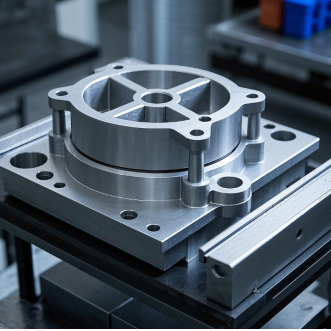
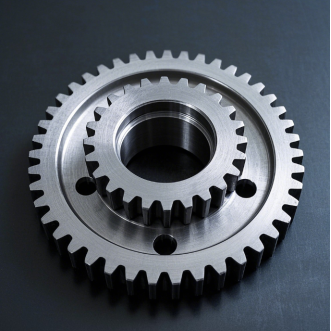
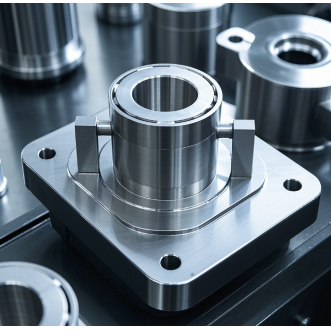
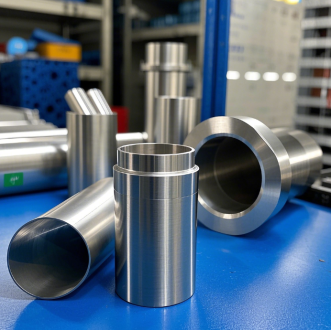
CNC Machining Services for Precision Stainless Steel Parts play an important role in modern manufacturing. Many industries depend on high-accuracy metal parts that must work reliably in demanding environments. Stainless steel is widely used because it offers strong corrosion resistance, excellent durability, and good heat resistance. When combined with CNC (Computer Numerical Control) technology, manufacturers can produce parts with very tight tolerances and consistent quality.
Precision stainless steel parts are used in aerospace systems, medical devices, food processing equipment, chemical plants, automotive components, and many other critical applications. In these fields, even a small error in size or shape can lead to performance problems or safety risks. That is why understanding the CNC machining process for precision stainless steel parts is essential for engineers, manufacturers, and procurement teams.
The Significance of Precision Stainless Steel Parts
Precision stainless steel parts are designed for applications where strength, stability, and resistance to harsh conditions are required. Stainless steel grades like 304, 316, and 440C are commonly used depending on the environment and mechanical needs.
Aerospace: Lightweight but strong components for engines and structures.
Medical: Surgical tools and implants requiring biocompatibility and hygiene.
Food processing: Equipment that must resist corrosion and meet cleanliness standards.
Chemical industry: Parts exposed to corrosive substances and high temperatures.
Because of these demanding conditions, precision is not optional—it is required for safe and efficient operation.
The CNC Machining Process for Precision Stainless Steel Parts
Design and CAD Modeling
The process begins with product design using CAD (Computer-Aided Design) software. Engineers create a 3D model that defines the exact shape, size, and function of the part. Every detail is carefully planned, including tolerances and performance requirements.
Different industries have different design priorities. In aerospace, designs focus on reducing weight while maintaining strength. In medical applications, designs must ensure biocompatibility and high hygiene standards. In industrial machinery, durability and wear resistance are key factors.
CNC Programming
After the design is completed, it is converted into a CNC program using CAM (Computer-Aided Manufacturing) software. This program tells the machine how to move and cut the material.
Programmers define toolpaths, cutting speeds, feed rates, and cutting depth. Stainless steel is a hard material, so machining strategies must be carefully optimized. Lower cutting speeds and controlled feed rates are often used to reduce tool wear and maintain accuracy.
A well-written CNC program is essential for efficiency, surface finish quality, and dimensional accuracy in CNC machining services for precision stainless steel parts.
Material Selection and Preparation
Choosing the correct stainless steel grade is a critical step. Each grade has unique properties:
304 stainless steel: General-purpose, good corrosion resistance, widely used.
316 stainless steel: Excellent corrosion resistance, ideal for marine and chemical environments.
440C stainless steel: High hardness, suitable for cutting tools and wear-resistant parts.
After selecting the material, it is prepared by cutting, cleaning, and sometimes heat treatment. Proper preparation improves machinability and helps achieve better results during machining.
Machine Setup and Tooling
CNC machines must be properly set up before machining begins. The workpiece is fixed using specialized fixtures to prevent movement during cutting. Tool selection is also very important.
Carbide tools are commonly used because they are strong and wear-resistant. Different tools are used for milling, turning, and drilling operations. Machine settings such as spindle speed and feed rate are adjusted based on the material and design requirements.
Machining Operations
Milling
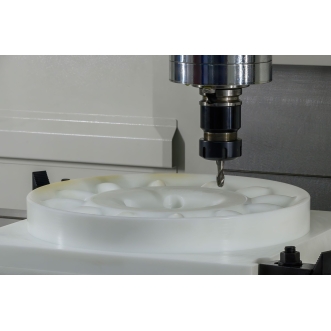
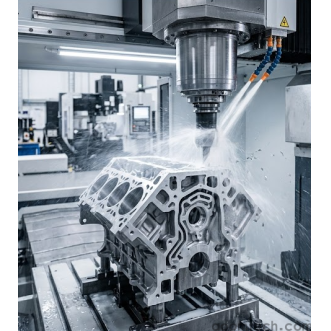
Milling is used to create flat surfaces, slots, and complex shapes. Tools such as end mills and ball nose cutters are used depending on the geometry. Coolant is important to reduce heat and improve tool life when working with stainless steel.
Turning
Turning is used for cylindrical parts like shafts and bushings. The workpiece rotates while the cutting tool shapes it. High-pressure coolant helps improve surface finish and remove chips efficiently.
Drilling
Drilling creates precise holes in stainless steel parts. Proper drill selection and speed control are necessary to avoid tool breakage. Peck drilling is often used to improve chip removal and reduce heat buildup.
Finishing and Inspection
After machining, finishing processes improve the final quality of the part. These may include deburring, polishing, and passivation. Passivation improves corrosion resistance, which is important for harsh environments.
Inspection is done using tools such as calipers, micrometers, surface roughness testers, and coordinate measuring machines (CMM). These tools ensure that the part meets all design requirements and tolerances.
Benefits of CNC Machining for Precision Stainless Steel Parts
High Precision Manufacturing
CNC machining delivers very high accuracy and repeatability. This ensures that every part matches the design exactly, which is essential for complex assemblies.
Complex Geometries
CNC technology allows manufacturers to produce complex shapes that would be difficult or impossible with traditional methods. This supports innovation in product design.
Material Efficiency and Cost-Effectiveness
CNC machining reduces material waste through precise cutting paths. For medium and large production runs, this improves cost efficiency while maintaining quality.
Challenges in CNC Machining of Precision Stainless Steel Parts
Tool Wear
Stainless steel is hard and can cause fast tool wear. This affects accuracy and increases production costs. Using high-quality tools and optimized cutting parameters helps reduce this issue.
Heat Generation
Machining stainless steel generates heat, which can cause dimensional changes. Proper coolant use and controlled cutting speeds help manage temperature.
Surface Finish Requirements
Many applications require a very smooth surface. Achieving this requires careful control of machining parameters and finishing processes.
Quality Control for CNC-Machined Precision Stainless Steel Parts
In-Process Inspection
During machining, measurements are taken to ensure the process stays within tolerance. Adjustments can be made immediately if deviations are detected, reducing waste and errors.
Final Inspection
After production, each part is carefully inspected for size accuracy, surface quality, and material integrity. Non-conforming parts may be reworked or rejected depending on severity.
Quality control for CNC-machined precision stainless steel parts ensures reliability, safety, and consistent performance in real-world applications.
How to Choose a CNC Machining Service Provider for Precision Stainless Steel Parts
Experience and Expertise
Choose a provider with proven experience in machining stainless steel parts. Experience in your industry is especially valuable because it ensures better understanding of requirements and standards.
Equipment and Technology
Modern CNC machines with multi-axis capabilities and advanced CAD/CAM systems improve accuracy and efficiency. A good provider invests in updated technology to handle complex projects.
Quality Assurance and Customer Service
A reliable provider should have strong quality control systems, including in-process and final inspection processes. Good communication and customer support are also important for smooth project management.
Conclusion: Mastering CNC Machining for Precision Stainless Steel Parts
CNC Machining Services for Precision Stainless Steel Parts are essential for producing high-quality components used in critical industries. The CNC machining process for precision stainless steel parts includes careful design, programming, material selection, machining, and inspection.
However, challenges such as tool wear, heat generation, and surface finish requirements must be managed properly. Strong quality control ensures that every part meets strict standards.
For businesses, choosing the right machining partner is key to success. By focusing on experience, technology, and quality assurance, manufacturers can achieve reliable and cost-effective production results.
In modern manufacturing, precision, planning, and quality control remain the foundation of successful CNC machining operations.
RELATED PRODUCTS
-
Medical Brass CNC Machining Parts
-
Precision CNC Machining PEEK Services
-
Precision Custom CNC Machined Car Parts
-
cnc machining optical housings
-
Precision CNC Casting Machining Services
-
Precision Gear CNC Machining Services
-
Precision Stainless Steel Parts CNC Mach
-
CNC Machining of Precision Aluminum Tube
-
CNC Machining of Large Precision Aluminu
-
CNC Machining & Manufacturing of Pre