CNC Machining Various Parts Services
Introduction to CNC Machining Various Parts Services
CNC Machining Various Parts Services plays a key role in modern manufacturing. CNC (Computer Numerical Control) machining is a process where machines are controlled by computer programs to produce precise parts from raw materials. This technology helps manufacturers create complex, accurate, and repeatable components used in many industries.
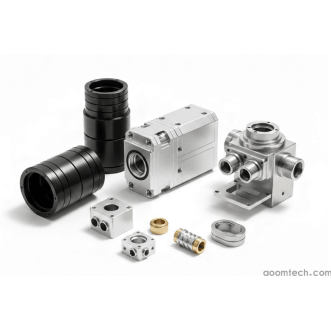
From automotive and aerospace to electronics and medical equipment, CNC machining supports the production of essential parts that ensure product performance, safety, and durability. Whether it is a simple bracket or a complex engine component, CNC machining provides high precision and stable quality that traditional manual machining cannot easily achieve.
In today’s competitive global market, companies rely on CNC machining to reduce production errors, improve efficiency, and bring better products to customers.
Scope of CNC Machining Various Parts Services
Diverse Part Geometries
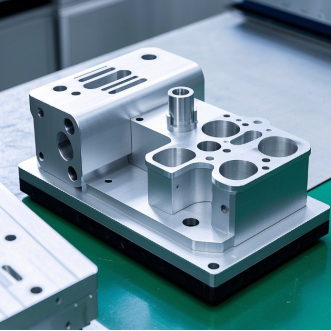
CNC machining can produce parts with highly complex geometries that are difficult or impossible to make manually. Multi-axis CNC machines can move tools in several directions at the same time, allowing precise shaping of intricate designs.
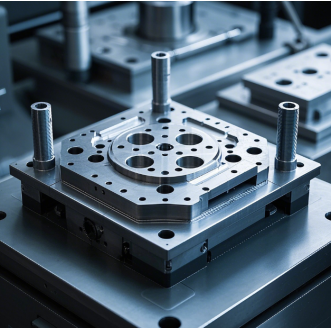
Examples include turbine blades used in aerospace engines, precision molds, and custom industrial brackets. These parts often require tight tolerances and smooth surface finishes, which CNC machining can consistently achieve.
Customization and Prototyping
One of the biggest advantages of CNC machining is its flexibility for customization and prototyping. Engineers can quickly convert a CAD design into a physical part without expensive tooling.
This is especially important in product development. Companies can test one-off or small batch prototypes, evaluate performance, and make design improvements before starting mass production. This reduces development time and lowers overall costs.
Mass Production Capabilities
Although CNC machining is ideal for prototypes, it is also highly efficient for mass production. Once a program is created, the machine can produce thousands of identical parts with consistent quality.
This makes CNC machining ideal for industries like automotive manufacturing, where large volumes of precise parts are required. It also reduces labor costs and improves production speed compared to traditional methods.
Types of Parts Produced by CNC Machining
Mechanical Parts
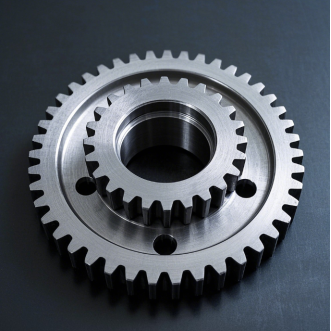
Mechanical components such as gears, shafts, and couplings require high precision to ensure smooth operation and power transmission.
CNC machining produces accurate gear tooth profiles, perfectly aligned shafts, and well-fitted couplings. Common processes include turning for shafts and milling or hobbing for gears. These processes ensure durability and mechanical efficiency.
Structural Parts
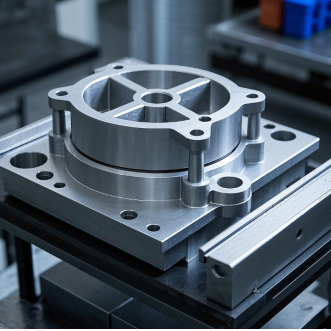
Structural parts include brackets, frames, and enclosures. These components provide support and stability for larger systems.
CNC machining ensures correct dimensions, hole placement, and thickness control. For example, industrial machine brackets must align components precisely to avoid mechanical failure. Material selection is also important, as different metals and plastics offer varying strength and weight advantages.
Functional Parts
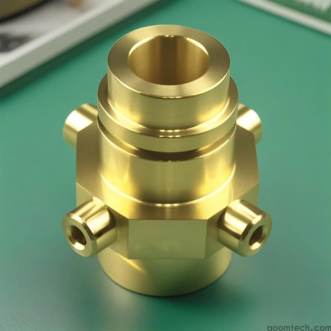
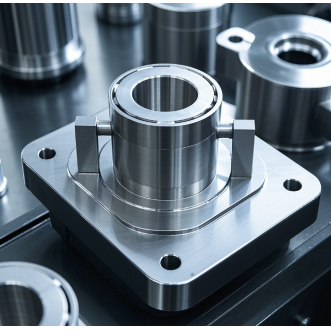
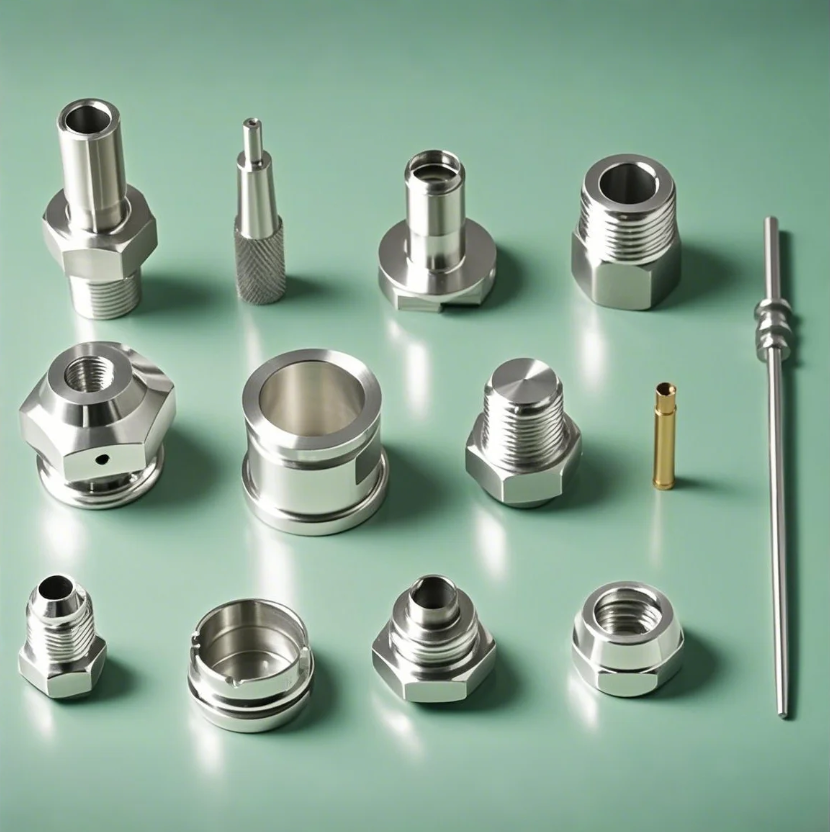
Functional parts such as valves, pistons, and nozzles are designed to perform specific tasks within a system.
For example, a valve must control fluid flow with high accuracy. CNC machining ensures precise internal and external geometries, smooth surfaces, and tight tolerances to guarantee reliable performance in real-world applications.
Materials Used in CNC Machining of Various Parts
Metals
Common metals include aluminum, steel, and titanium. Each material has unique properties that affect machining performance and application.
Aluminum is lightweight and easy to machine, making it ideal for aerospace and automotive parts. Steel is strong and durable, widely used in heavy machinery. Titanium offers an excellent strength-to-weight ratio and corrosion resistance, often used in aerospace and medical applications.
Machining parameters such as cutting speed and tool selection vary depending on the metal type.
Plastics
Plastics such as ABS, POM, and PEEK are widely used in CNC machining.
ABS is impact-resistant and easy to process, making it suitable for consumer products. POM has excellent mechanical strength and low friction, ideal for gears and bearings. PEEK is a high-performance plastic that can withstand extreme temperatures, used in aerospace and medical devices.
Proper heat control is important when machining plastics to avoid melting or deformation.
Composites
Composite materials such as carbon fiber reinforced polymers are used in high-performance industries.
They offer high strength and low weight, making them ideal for aerospace and automotive applications. However, CNC machining composites requires special care to avoid delamination. Diamond-coated tools and controlled cutting speeds are often used to maintain material integrity.
The CNC Machining Process for Various Parts
Design and Programming
The process begins with CAD (Computer-Aided Design), where engineers create a digital model of the part. This model defines dimensions, shapes, and functional requirements.
Next, CAM (Computer-Aided Manufacturing) software converts the design into machine instructions. These instructions define toolpaths, cutting speeds, and feed rates, ensuring accurate machining operations.
Machine Setup and Tooling
Before machining starts, the CNC machine must be properly set up. Fixtures are used to hold the workpiece securely in place during machining.
Tool selection is also critical. Different tools are used for milling, turning, and drilling operations. Machine parameters are adjusted based on material type and part complexity to ensure precision and efficiency.
Machining Operations
Milling
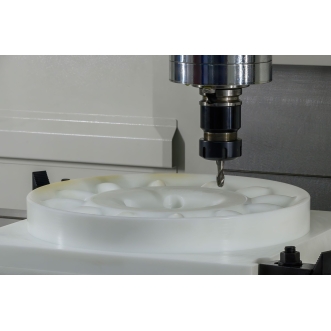
Milling is used to create flat surfaces, slots, and complex 3D shapes. It is one of the most versatile CNC operations. Tool selection and cutting speed depend on the material being machined.
Turning
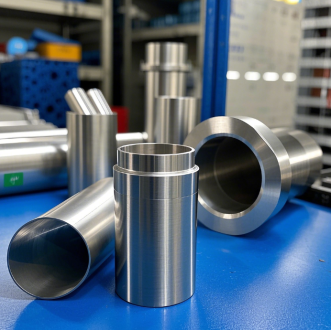
Turning is used for cylindrical parts such as shafts. The workpiece rotates while the cutting tool removes material. This process ensures smooth surface finishes and accurate diameters.
Drilling
Drilling creates holes in materials. Proper drill selection and feed control are important to prevent tool breakage and ensure accurate hole placement.
Quality Control in CNC Machining Various Parts
In-Process Inspection
Quality control begins during machining. Operators monitor dimensions, surface finish, and tool wear using precision instruments such as calipers and micrometers.
This allows immediate corrections if deviations occur, ensuring consistent product quality throughout production.
Final Inspection
After machining is complete, each part undergoes a final inspection. Coordinate Measuring Machines (CMM) are often used to verify dimensional accuracy.
This stage ensures that parts meet strict tolerance requirements. Non-conforming parts may be reworked or rejected depending on severity.
Strong quality control in CNC machining various parts is essential for maintaining reliability and customer trust.
Benefits of CNC Machining Services for Different Industries
Aerospace Industry
The aerospace industry demands extremely high precision and reliability. CNC machining produces engine parts, structural components, and landing gear with strict tolerances.
Lightweight materials and complex geometries are essential for improving aircraft performance and fuel efficiency.
Automotive Industry
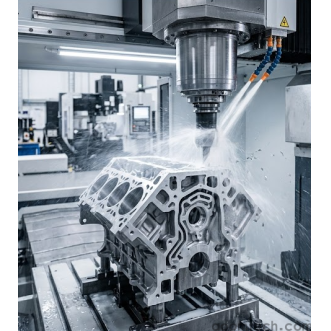
In automotive manufacturing, CNC machining is used for engine blocks, transmission systems, and suspension components.
Its ability to support high-volume production ensures consistency and cost efficiency. It also allows customization for performance vehicles.
Medical Industry
Medical devices require high precision and biocompatible materials. CNC machining is used to produce surgical instruments, implants, and diagnostic equipment.
Custom manufacturing allows parts to be tailored for individual patient needs, improving treatment outcomes and safety.
Conclusion: Leveraging CNC Machining Various Parts Services
CNC Machining Various Parts Services is a critical technology in modern manufacturing. It supports a wide range of industries by producing precise, durable, and high-quality components.
Key advantages include the ability to handle complex geometries, support both prototyping and mass production, and work with diverse materials such as metals, plastics, and composites. Understanding types of parts in CNC machining services and materials for CNC-machined parts services helps businesses choose the right manufacturing approach.
For companies looking to improve product quality and efficiency, CNC machining offers a reliable and scalable solution. By working with experienced providers and ensuring strong quality control in CNC machining various parts, businesses can achieve consistent performance and long-term success.
RELATED PRODUCTS
-
Medical Brass CNC Machining Parts
-
Precision CNC Machining PEEK Services
-
Precision Custom CNC Machined Car Parts
-
cnc machining optical housings
-
Precision CNC Casting Machining Services
-
Precision Gear CNC Machining Services
-
Precision Stainless Steel Parts CNC Mach
-
CNC Machining of Precision Aluminum Tube
-
CNC Machining of Large Precision Aluminu
-
CNC Machining & Manufacturing of Pre