CNC Mold Machining Services
Introduction to CNC Mold Machining Services
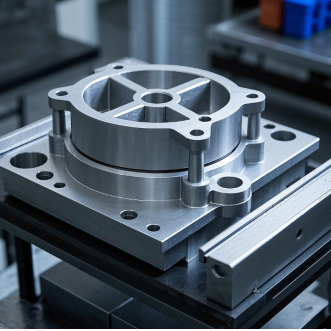
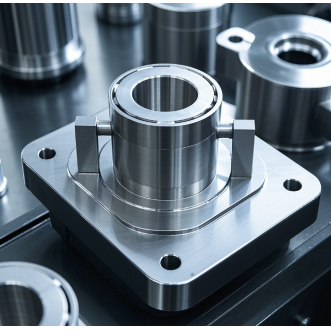
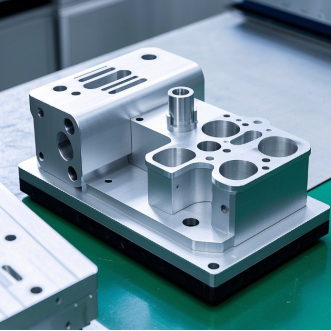
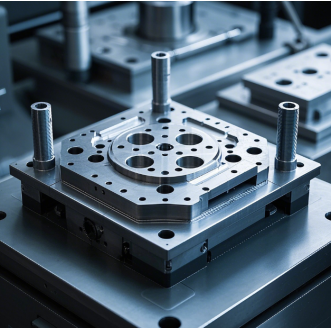
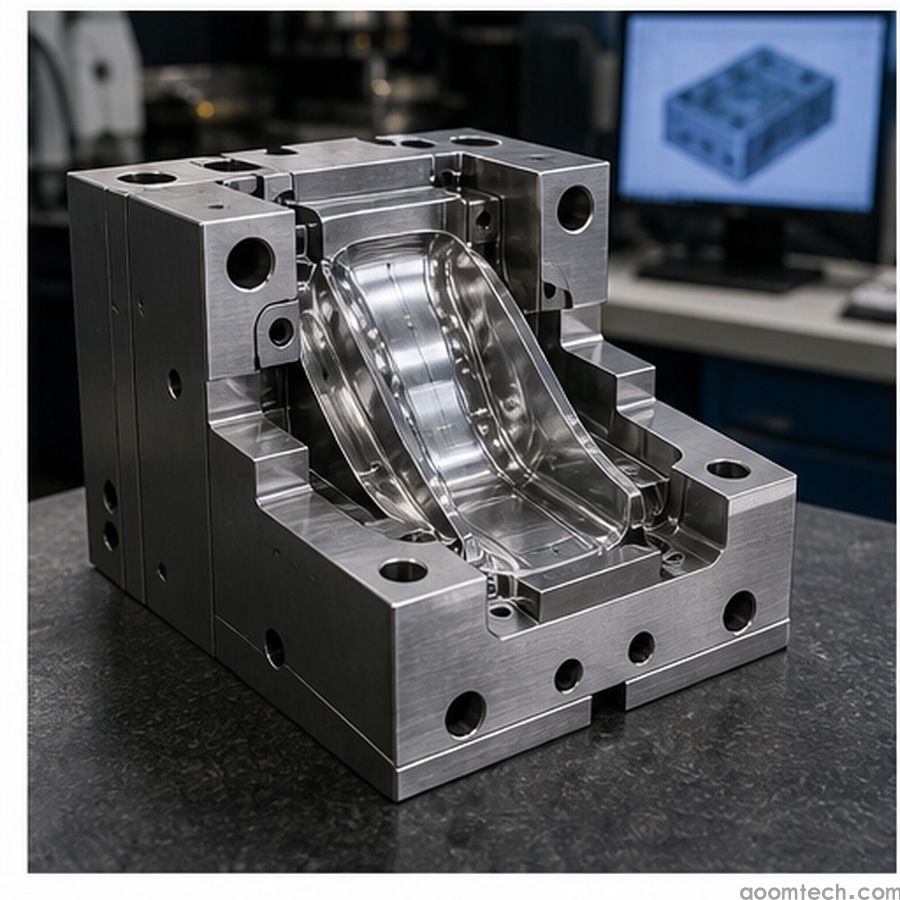
CNC Mold Machining Services are professional manufacturing solutions used to create high-precision molds with computer-controlled machines. These molds are essential tools in modern production, especially for industries that produce large quantities of identical parts. By using CNC (Computer Numerical Control) technology, manufacturers can achieve consistent accuracy, improved efficiency, and better product quality.
Molds are widely used in plastic, metal, and rubber manufacturing. Without high-quality molds, mass production would not be possible at the level of speed and precision required today. CNC technology makes mold production more reliable and reduces human error, helping companies innovate and improve production performance.
The significance of CNC Mold Machining Services lies in their ability to support industries such as automotive, electronics, medical devices, and consumer goods. These services improve product consistency, reduce production waste, and enable complex product designs that would be difficult to manufacture using traditional methods.
Process of CNC Mold Machining
Design and CAD/CAM Programming
The process begins with product and mold design. Engineers use CAD (Computer-Aided Design) software to create a detailed 3D model of the mold. This model includes key features such as cavities, cores, cooling channels, and ejection systems.
After design, CAM (Computer-Aided Manufacturing) software converts the model into CNC machine instructions. These instructions define toolpaths, cutting speeds, and feed rates. For example, a complex injection mold with deep cavities and fine surface details requires multiple toolpaths and careful programming to ensure precision and smooth finishing.
This stage is critical because even small programming errors can affect the final mold accuracy and performance.
Material Selection and Preparation
Choosing the right material is an important step in CNC mold production. Common materials include:
P20 steel – widely used for general-purpose molds due to good machinability
H13 steel – suitable for high-temperature and high-strength applications
Aluminum – used for lightweight molds and prototype production
Copper alloys – used when better heat transfer is required
Material preparation may include cutting, heat treatment, and inspection. Harder materials like H13 require slower machining speeds and stronger cutting tools. Proper material selection directly affects mold durability, production cost, and machining efficiency.
Machining Operations
Milling
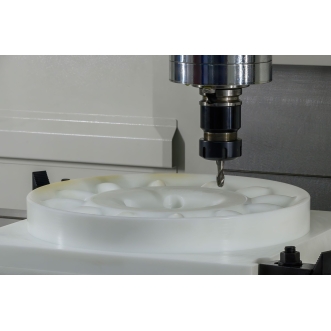
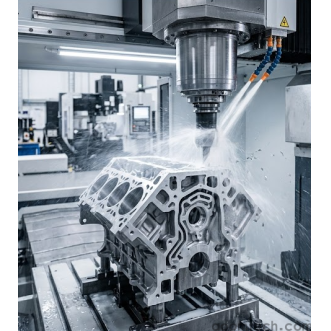
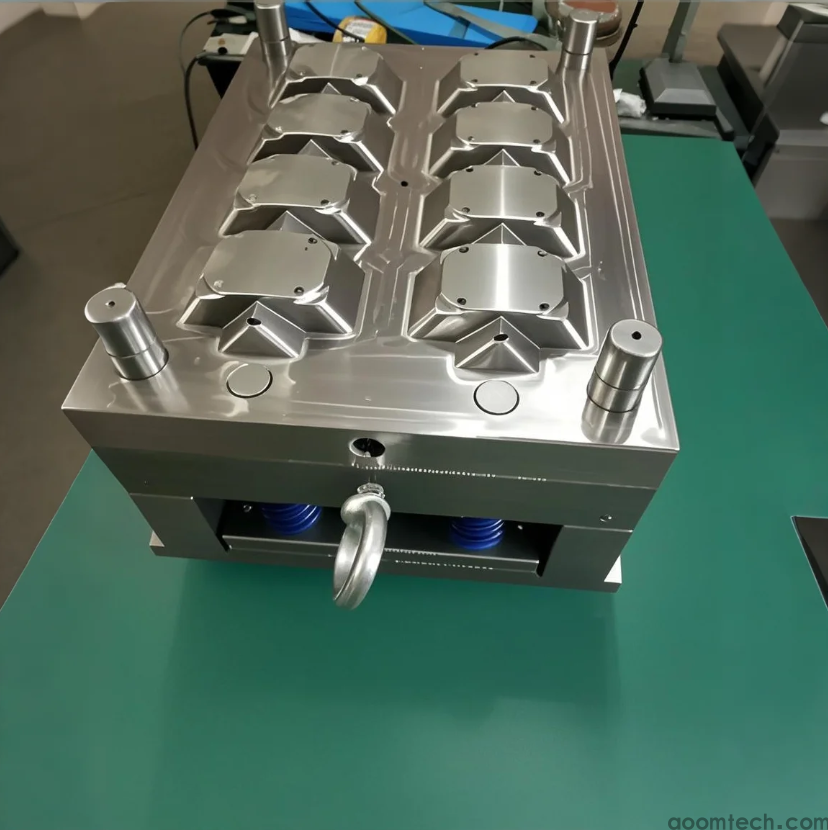
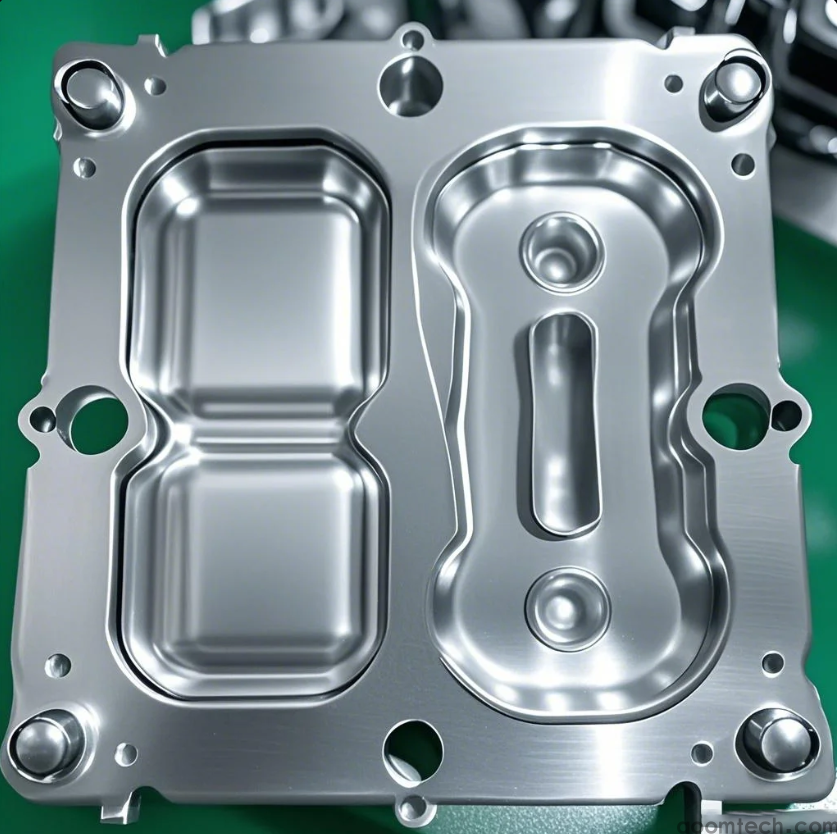
Milling is the main process used in CNC mold machining. It creates cavities, cores, and parting surfaces. Different tools such as end mills, ball-nose mills, and face mills are used depending on the shape and surface requirements.
For finishing operations, slower feed rates and finer cutting tools are used to achieve smooth surfaces. Milling is especially important in creating large injection mold cavities with high precision and consistency.
Drilling and Boring
Drilling is used to create holes for ejector pins and cooling channels. Boring is used to refine and enlarge holes to precise dimensions.
Techniques such as peck drilling help remove chips during deep-hole machining. Accurate drilling ensures proper alignment of components, which is essential for smooth mold operation.
Electrical Discharge Machining (EDM)
EDM is used for complex shapes that are difficult to machine using traditional cutting tools. It works by using electrical discharges to remove material.
There are two main types: sinker EDM and wire EDM. Sinker EDM creates deep cavities using a shaped electrode, while wire EDM cuts precise profiles using a thin wire.
This process is commonly used for molds with sharp corners, fine details, and intricate internal structures.
Finishing and Heat Treatment
Finishing processes include deburring, polishing, and surface texturing. These steps improve mold surface quality and ensure smooth product release during production.
Heat treatment is often applied to increase hardness, wear resistance, and durability. For example, injection molds used in high-volume production require both polished surfaces and strong heat-treated steel to ensure long service life.
Quality Control
Quality control ensures that every mold meets design requirements. Inspection tools such as calipers, micrometers, and coordinate measuring machines (CMM) are used during and after machining.
For example, if a cavity dimension is out of tolerance, it can be corrected before final assembly. This prevents production defects and reduces manufacturing costs caused by faulty molds.
Advantages of CNC Mold Machining
High Precision
CNC Mold Machining Services offer extremely high accuracy due to computer-controlled operations. Tight tolerances ensure that every mold produces consistent parts. This is especially important in industries like automotive and electronics, where even small deviations can cause assembly issues.
Complex Design Realization
One major benefit is the ability to create complex shapes and internal structures. CNC technology allows manufacturers to produce molds with detailed geometry, such as internal cooling channels that follow the shape of the product.
This capability supports advanced product designs that improve performance and efficiency.
Cost-Effectiveness for High-Volume Production
Although mold production may be expensive initially, it becomes cost-effective for large-scale manufacturing. Once a mold is created, it can produce thousands or even millions of identical parts.
For example, a plastic container manufacturer can reduce per-unit cost significantly by using a durable CNC-machined mold for long-term production.
Applications of CNC-Machined Molds
Plastic Injection Molding
CNC-machined molds are widely used in plastic injection molding. Products such as electronic housings, toys, and automotive interior parts depend on high-precision molds for consistent quality and smooth surface finishes.
Die-Casting
In die-casting, metal is injected into molds to create strong and durable parts. CNC-machined molds ensure high precision and heat resistance, making them suitable for automotive and aerospace components.
Compression Molding
Compression molding uses heat and pressure to shape materials like rubber and composite materials. CNC machining ensures accurate mold shape and surface finish, improving product performance and durability.
Choosing a CNC Mold Machining Service Provider
Experience and Expertise
When selecting a provider, experience is crucial. A skilled company understands mold design challenges, material behavior, and machining techniques. This helps prevent issues such as shrinkage errors or poor surface finishing.
Quality Assurance
A reliable provider should have strict quality control systems. This includes in-process inspection and final testing using advanced measuring equipment. Strong quality assurance ensures consistent and reliable mold performance.
Cost-Effectiveness and Pricing Transparency
Clear pricing is important when choosing a service provider. A trustworthy company provides detailed cost breakdowns, including material, machining, and finishing costs. Comparing multiple suppliers helps ensure fair pricing.
Delivery Time and Customer Service
Timely delivery is essential for production schedules. Good customer service ensures smooth communication, regular updates, and quick problem-solving. Delays in mold delivery can significantly affect product launch timelines.
Cost Factors in CNC Mold Machining
Mold Complexity
More complex molds require longer machining time and advanced tools. Features like multiple cavities or intricate cooling channels increase production difficulty and cost.
Material Costs
Material selection has a major impact on cost. High-performance steels like H13 are more expensive but provide better durability. The size and weight of the material also affect overall cost.
Production Volume
High production volume can reduce cost per part, but it may require stronger and more durable molds. This increases initial machining costs but improves long-term efficiency.
Conclusion: Making the Right Choice in CNC Mold Machining Services
CNC Mold Machining Services play a key role in modern manufacturing by enabling precise, durable, and efficient mold production. Understanding the process, benefits, applications, and cost factors helps businesses make better decisions when selecting a service provider.
By carefully evaluating experience, quality control, pricing, and delivery performance, companies can ensure successful mold production and long-term manufacturing efficiency. Investing in the right CNC mold machining partner ultimately leads to better product quality and stronger competitiveness in the market.
RELATED PRODUCTS
-
Medical Brass CNC Machining Parts
-
Precision CNC Machining PEEK Services
-
Precision Custom CNC Machined Car Parts
-
cnc machining optical housings
-
Precision CNC Casting Machining Services
-
Precision Gear CNC Machining Services
-
Precision Stainless Steel Parts CNC Mach
-
CNC Machining of Precision Aluminum Tube
-
CNC Machining of Large Precision Aluminu
-
CNC Machining & Manufacturing of Pre