CNC Turning Milling Services
Introduction to CNC Turning Milling Services
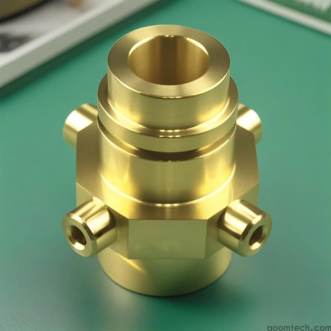
In modern manufacturing, CNC Turning Milling Services play an important role in producing high-quality and complex parts. These services combine two key machining processes—turning and milling—into one integrated system. This approach allows manufacturers to create precise components more efficiently, reducing errors and improving productivity.
By using a single setup for multiple operations, CNC turning and milling help industries such as aerospace, automotive, and medical manufacturing achieve better consistency, faster production, and improved product quality. To understand the full value, it is important to explore the importance, process, benefits, challenges, and applications of this technology.
Importance of CNC Turning Milling Services
Enhanced Precision
The importance of CNC turning milling services is strongly linked to precision. When multiple machining operations are completed in one setup, the risk of repositioning errors is greatly reduced. This ensures tighter tolerances and better alignment between features.
For example, in aerospace manufacturing, a turbine housing may require both cylindrical turning and complex milling features. Using integrated CNC turning milling services ensures all features are perfectly aligned, improving performance and safety.
Improved Productivity
Another key advantage is productivity. Traditional machining requires moving parts between different machines, which increases time and handling. CNC turning milling machines combine these steps, reducing delays and improving workflow efficiency.
For instance, an automotive manufacturer producing engine components can significantly increase output by using CNC turning milling services, as multiple operations are completed without repositioning the part.
Process of CNC Turning Milling Services
Part Design and Programming
The process of CNC turning milling services begins with digital design using CAD (Computer-Aided Design) software. Engineers create a 3D model with precise dimensions and tolerances. Then CAM (Computer-Aided Manufacturing) software converts the design into machine instructions.
Programming involves defining toolpaths for both turning and milling operations, selecting cutting tools, and setting parameters such as spindle speed and feed rate. For complex parts, programmers must carefully coordinate both operations to avoid tool collisions and ensure smooth transitions.
For example, a hybrid shaft component with grooves and flat surfaces requires carefully synchronized turning and milling toolpaths to achieve accurate geometry.
Learn more about CAD/CAM systems from Computer-Aided Design.
Material Selection and Preparation
Material selection is critical in CNC machining. Common materials include aluminum, stainless steel, titanium, and engineering plastics. Each material behaves differently during cutting, affecting tool choice and machining parameters.
For example, titanium is strong but difficult to machine, requiring slower speeds and specialized cutting tools. Aluminum, on the other hand, allows faster machining and smoother finishes. Proper preparation includes cutting raw stock to size and ensuring stability before machining begins.
Machine Setup and Tooling
Setting up a CNC turning milling machine involves installing the correct cutting tools, tool holders, and fixtures. Modern machines often include automatic tool changers, which improve efficiency and reduce downtime.
For example, a production setup for a hydraulic valve body may include rough turning tools, finishing tools, and multiple milling cutters arranged in a tool magazine for fast switching between operations.
Turning and Milling Operations
Turning Operations
During turning, the workpiece rotates while a cutting tool removes material to form cylindrical shapes. Operators control cutting speed, feed rate, and depth of cut to achieve smooth surfaces and accurate dimensions.
Milling Operations
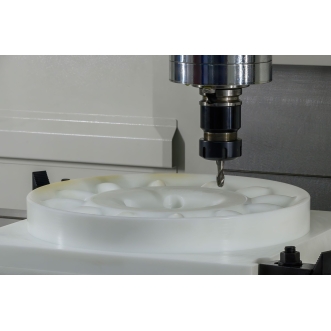
In milling, a rotating cutter moves across the workpiece to create flat surfaces, holes, slots, and complex shapes. Proper tool selection and spindle speed adjustment are essential for high-quality results.
Quality Control and Inspection
Quality control ensures that finished parts meet design specifications. Tools such as calipers, micrometers, coordinate measuring machines (CMM), and surface testers are used.
For example, if a CMM detects a dimensional deviation in a machined aerospace bracket, engineers can adjust tool offsets or machining parameters to correct future production.
More information on measurement standards can be found at ISO Standards.
Benefits of CNC Turning Milling Services
Cost-Effectiveness
The benefits of CNC turning milling services include lower production costs. Combining multiple operations reduces machine usage, labor time, and part handling.
For example, a manufacturing company producing industrial fittings can reduce costs by eliminating separate turning and milling setups, improving overall efficiency.
Complex Part Production
These services allow manufacturers to produce highly complex parts with both cylindrical and geometric features. Traditional machines often cannot achieve this level of detail in a single process.
For example, a custom robotic arm joint may require curved surfaces, threaded holes, and flat mounting areas—all achievable using CNC turning milling services.
Reduced Lead Times
Since multiple processes are completed in one setup, production time is significantly reduced. This helps companies meet tight deadlines and improve delivery performance.
For example, a supplier of automotive prototypes can shorten delivery time from weeks to days by adopting integrated machining systems.
Challenges in CNC Turning Milling Services
Complex Programming
The challenges in CNC turning milling services often begin with programming. Coordinating turning and milling operations requires advanced skills and careful planning.
For example, a programming error in toolpath sequencing can cause collisions or surface defects, requiring engineers to revise the code and retest the process.
Tool Management
Tool wear is another challenge. Different materials and operations cause tools to wear at different rates, affecting surface quality and accuracy.
For instance, worn cutting tools may produce rough surfaces, requiring regular monitoring and replacement schedules to maintain quality.
Machine Maintenance
CNC machines require regular maintenance to ensure stability and accuracy. Lack of maintenance can lead to breakdowns or reduced precision.
For example, insufficient lubrication or calibration errors may cause machining defects, making preventive maintenance essential for long-term reliability.
Applications of CNC Turning Milling Services
Aerospace Industry
The applications of CNC turning milling services in aerospace include manufacturing turbine blades, engine housings, and structural components. These parts require extremely high precision and reliability.
For example, a turbine blade produced using CNC turning milling must withstand high temperatures and mechanical stress while maintaining exact geometry.
Automotive Industry
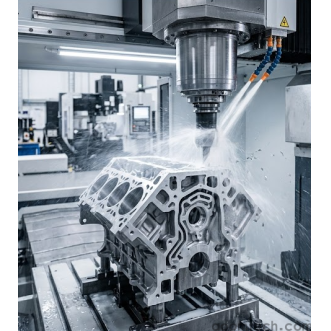
In automotive manufacturing, these services are used for engine blocks, crankshafts, and transmission components.
For example, a CNC-machined crankshaft benefits from precise balancing and smooth surface finishing, improving engine performance and durability.
Medical Device Manufacturing
CNC turning milling is widely used in medical applications such as surgical instruments, implants, and diagnostic equipment components.
For example, a dental implant requires biocompatible materials and extremely precise machining to ensure safe integration with human bone.
Conclusion: Leveraging CNC Turning Milling Services
Summary and Key Takeaways
CNC Turning Milling Services provide a powerful solution for modern manufacturing by combining two essential machining processes into one system. They improve precision, increase productivity, reduce costs, and enable the production of highly complex parts.
Despite challenges such as programming complexity, tool management, and maintenance requirements, the advantages make this technology essential across industries like aerospace, automotive, and medical manufacturing.
Manufacturers, engineers, and production managers should consider adopting CNC turning milling services to improve efficiency and competitiveness. As digital manufacturing continues to evolve, these services will remain a core part of advanced production systems worldwide.
RELATED PRODUCTS
-
Medical Brass CNC Machining Parts
-
Precision CNC Machining PEEK Services
-
Precision Custom CNC Machined Car Parts
-
cnc machining optical housings
-
Precision CNC Casting Machining Services
-
Precision Gear CNC Machining Services
-
Precision Stainless Steel Parts CNC Mach
-
CNC Machining of Precision Aluminum Tube
-
CNC Machining of Large Precision Aluminu
-
CNC Machining & Manufacturing of Pre