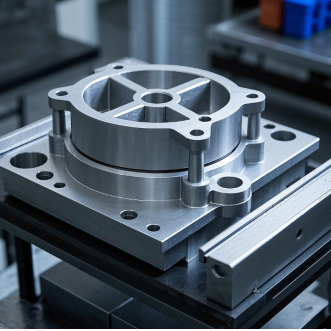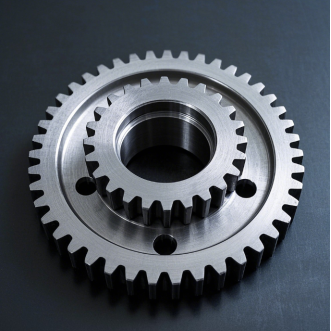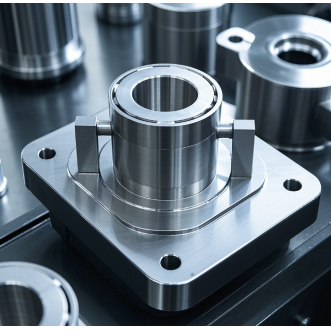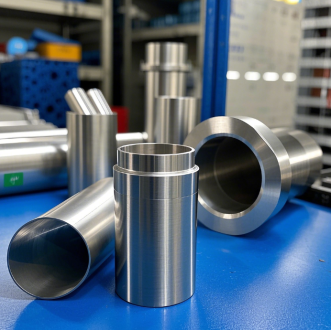
Custom Mold Manufacturing & CNC Machining Services
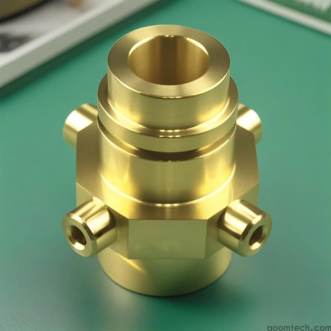
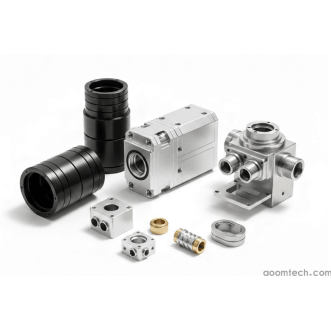
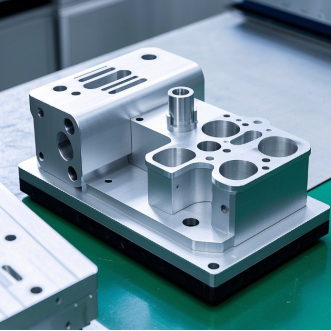
Custom Mold Manufacturing & CNC Machining Services play a crucial role in today’s manufacturing world. They support industries such as automotive, electronics, medical devices, consumer goods, and aerospace by enabling the production of precise, repeatable, and high-quality parts. Understanding these services helps businesses improve product design, reduce production costs, and achieve better manufacturing efficiency.
In simple terms, custom molds are used to mass-produce identical products, while CNC machining is used to create highly accurate parts from digital designs. Together, they form the backbone of modern industrial production and product development.
Introduction to Custom Mold Manufacturing & CNC Machining Services
The Significance of These Services
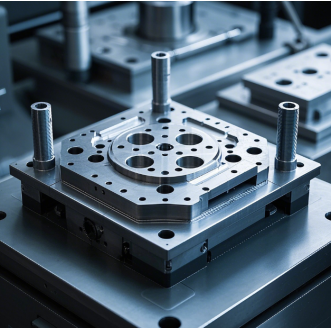
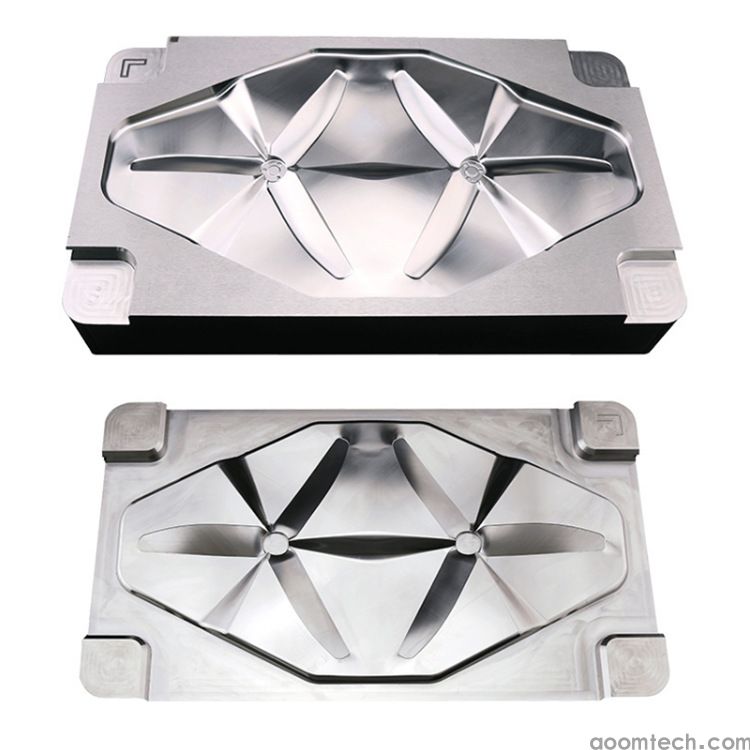
Custom mold manufacturing and CNC machining services are essential in turning ideas into real products. A mold acts as a reusable tool that shapes materials into identical parts, while CNC (Computer Numerical Control) machining ensures precise cutting, shaping, and finishing of materials using automated machines.
These services are important because they improve:
Product development speed
Manufacturing accuracy
Production efficiency
Long-term cost savings
For engineers, designers, and manufacturers, understanding how these processes work is key to making better production decisions and achieving consistent product quality.
The Process of Custom Mold Manufacturing
Design Phase
The custom mold manufacturing process begins with design. Engineers use CAD (Computer-Aided Design) software to create detailed 3D models of the mold. This step defines the shape, size, and structure of both the mold and the final product.
Designers must consider manufacturability, including:
Draft angles – to allow easy removal of the molded part
Parting lines – where mold sections separate
Cooling channels – to control temperature during production
A well-designed mold improves production speed and reduces defects such as warping or incomplete filling.
Machining Phase
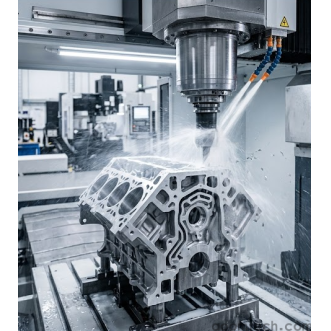
Once the design is finalized, CNC machines are used to produce mold components. Common machines include:
CNC milling machines
EDM (Electrical Discharge Machining) systems
CNC turning lathes
Different methods are used depending on material and complexity. For example, EDM is ideal for hard metals or detailed shapes that are difficult to cut using traditional tools.
The machining process is controlled through computer programs that guide tool movement with high precision, ensuring accuracy down to micrometers.
Assembly and Testing
After machining, mold components are carefully assembled. Precision is critical because even small alignment errors can affect product quality.
Testing involves trial production runs using real materials. This helps identify issues such as:
Improper filling
Air traps
Ejection problems
If issues are found, adjustments are made by modifying mold parts or refining the design. This ensures the mold is ready for mass production.
The Process of CNC Machining Services
Part Design and Programming
In CNC machining, the process starts with a digital design created using CAD software. Then CAM (Computer-Aided Manufacturing) software converts the design into machine instructions.
Programmers define:
Toolpaths
Cutting speed
Feed rate
Depth of cut
Accurate programming is essential for achieving precise dimensions and smooth surface finishes.
Machine Setup and Tooling
Before machining begins, the workpiece is securely fixed using specialized fixtures. The correct cutting tools are selected based on material type.
For example:
Carbide end mills for metals
Coated tools for high-speed cutting
Machine settings such as spindle speed and feed rate must match the material and design requirements to ensure quality and tool life.
Machining Operations
Milling
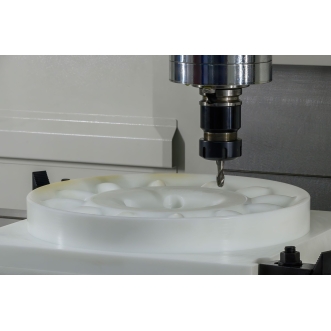
Milling is used to create flat surfaces, holes, grooves, and complex 3D shapes. Tools like end mills and ball-nose cutters are selected depending on the required finish and geometry.
Proper cutting parameter control ensures accuracy and reduces tool wear.
Turning
Turning is used for cylindrical parts. The workpiece rotates while a cutting tool removes material to form the desired shape.
This process requires careful control of speed and tool selection to maintain concentricity and achieve smooth surfaces.
Benefits of Custom Mold Manufacturing & CNC Machining Services
High Precision and Consistency
One of the major benefits of CNC machining services is high precision. CNC machines can produce parts with extremely tight tolerances, ensuring uniformity across large production batches.
This is especially important in industries such as automotive and electronics, where even small deviations can affect performance and safety.
Customization Options
These services allow full customization of parts and molds. Businesses can develop unique products, prototypes, or specialized components tailored to specific applications.
For example, a startup can use CNC machining to quickly develop prototypes, while manufacturers can create custom molds for niche product lines.
Cost-Effectiveness in Mass Production
Custom molds are highly cost-effective for mass production. Once a mold is created, it can produce thousands or even millions of identical parts at low cost per unit.
CNC machining also reduces material waste and improves efficiency, lowering overall production costs.
Material Considerations
Mold Materials
Common materials used in mold manufacturing include:
Steel – strong and durable, ideal for high-volume production
Aluminum – lightweight and easy to machine, suitable for prototypes and small runs
Plastic molds – used for specialized or low-cost applications
The choice depends on production volume, cost, and durability requirements.
CNC Machining Materials
CNC machining supports a wide range of materials, including:
Stainless steel
Titanium
Aluminum alloys
Plastics and composites
Each material requires different cutting strategies. Hard metals need slower speeds and stronger tools, while plastics require careful temperature control to prevent deformation.
Quality Control in Custom Mold Manufacturing & CNC Machining Services
In-Process Inspection
During production, continuous inspection ensures quality is maintained. Tools such as calipers, micrometers, and surface testers are used to check accuracy.
If deviations are found, immediate adjustments are made to prevent defects.
Final Inspection
After production, final inspection ensures the part or mold meets all specifications. Advanced tools like Coordinate Measuring Machines (CMMs) are often used.
Key inspection factors include:
Dimensional accuracy
Surface finish
Functional performance
Non-conforming parts are reworked or remanufactured to meet standards.
How to Choose a Custom Mold Manufacturing & CNC Service Provider
Experience and Expertise
When choosing a custom mold and CNC service provider, experience is one of the most important factors. Providers with long-term industry experience are more likely to handle complex projects successfully.
Look for companies that have worked in your industry, such as medical, automotive, or electronics manufacturing.
Range of Services and Equipment
A reliable provider should offer a wide range of services, including CNC milling, EDM machining, and mold design.
Advanced equipment such as multi-axis CNC machines ensures higher precision and flexibility in production.
Quality Assurance and Customer Service
A strong quality control system ensures consistent results. Good communication is also essential for smooth project execution.
Reliable providers offer regular updates, technical support, and clear feedback during all stages of production.
Conclusion: Leveraging Custom Mold Manufacturing & CNC Machining Services
Custom mold manufacturing and CNC machining are essential technologies in modern production. They enable high precision, customization, and cost-effective mass manufacturing across many industries.
By understanding the custom mold manufacturing process, the benefits of CNC machining services, and how to select the right provider, businesses can significantly improve product quality and production efficiency.
In the future, these technologies will continue to evolve, offering even greater precision, faster production times, and more advanced manufacturing possibilities. Clear communication with service providers and well-defined requirements remain key to achieving the best results.
RELATED PRODUCTS
-
Medical Brass CNC Machining Parts
-
Precision CNC Machining PEEK Services
-
Precision Custom CNC Machined Car Parts
-
cnc machining optical housings
-
Precision CNC Casting Machining Services
-
Precision Gear CNC Machining Services
-
Precision Stainless Steel Parts CNC Mach
-
CNC Machining of Precision Aluminum Tube
-
CNC Machining of Large Precision Aluminu
-
CNC Machining & Manufacturing of Pre