Steel CNC Machining Process
Introduction to Steel CNC Machining Process
The Steel CNC Machining Process is a modern manufacturing method used to produce precise and durable steel components. CNC stands for Computer Numerical Control, which means machines are guided by computer programs to cut, shape, and finish steel parts with high accuracy.
Steel is one of the most widely used materials in the world. It is strong, reliable, and suitable for many industries. By using CNC machining, manufacturers can turn raw steel into high-quality parts with consistent performance. This process helps improve production efficiency, reduce waste, and meet strict industry standards in sectors such as automotive, construction, energy, and general manufacturing.
In this article, we will explain the Steel CNC Machining Process in simple steps, including design, tooling, machining operations, quality control, and real-world applications.
The Significance of Steel CNC Machining
Steel CNC machining plays an important role in modern industry because it combines strength and precision. Steel parts are often used in demanding environments where durability and accuracy are critical.
This process offers several key benefits:
High precision for complex shapes and tight tolerances
Consistent quality in mass production
Efficient use of raw materials
Ability to produce strong parts for heavy-duty use
Industries such as automotive, construction, and machinery manufacturing rely heavily on steel CNC machining to produce safe and reliable components.
Steps in Steel CNC Machining
Design and CAD/CAM Programming
The first step in the Steel CNC Machining Process is design. Engineers use CAD (Computer-Aided Design) software to create a detailed 3D model of the steel part. This design includes size, shape, tolerances, and functional requirements.
Next, CAM (Computer-Aided Manufacturing) software converts the design into machine instructions. These instructions define tool paths, cutting speeds, and feed rates based on steel properties such as hardness and toughness.
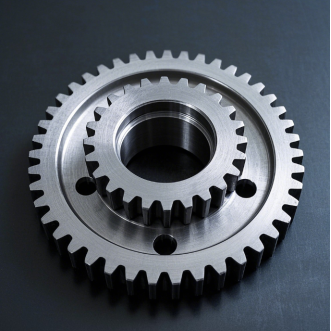
For example, when designing a heavy-duty steel gear, engineers must carefully plan tooth shape, strength requirements, and cutting strategy to ensure smooth operation under high pressure.
Material Selection and Preparation
Choosing the right steel type is essential. Different steel grades affect machining performance and final product quality.
Carbon steel: Easy to machine and cost-effective for general use
Alloy steel: Stronger and more wear-resistant for demanding applications
Stainless steel: Corrosion-resistant for harsh environments
After selection, the steel is cut into proper sizes and may undergo heat treatment or inspection. Harder steels often require slower machining speeds and stronger cutting tools.
Tooling Selection for Steel CNC Machining
Tool selection is a critical factor in tooling for steel CNC machining. Steel is tough, so tools must be strong and wear-resistant.
Carbide-tipped tools are commonly used because they can handle high heat and cutting forces. Different tools are used for different operations:
End mills for milling flat surfaces and pockets
Turning inserts for cylindrical parts
Drill bits for hole-making operations
Using the wrong tool can lead to poor surface finish, tool breakage, or inaccurate dimensions. For example, a weak tool used on hardened steel may wear out quickly and damage the part.
Machine Setup and Fixturing
Machine setup ensures that the CNC machine follows the programmed instructions correctly. Equally important is fixturing, which holds the steel workpiece firmly in place.
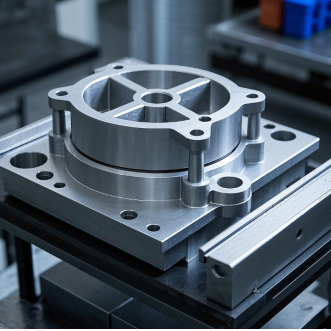
A stable fixture prevents vibration and movement during machining. For large steel plates, custom fixtures are often designed to ensure even support and avoid deformation.
Machining Operations
Milling
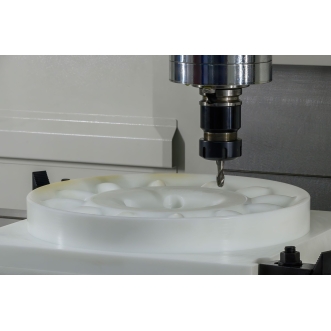
Milling is used to remove material and create flat surfaces, grooves, and complex shapes. Face mills are used for large surfaces, while end mills are used for detailed features.
Cutting speed and feed rate must be carefully adjusted. Rough milling uses lower speed and higher feed, while finishing requires higher speed and smoother cutting for better surface quality.
Turning
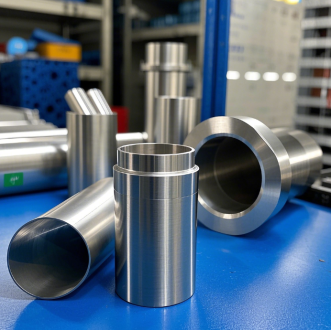
Turning is used for cylindrical parts such as shafts and tubes. The steel workpiece rotates while the cutting tool shapes it.
Carbide inserts are commonly used due to their strength. Proper setup ensures accurate diameter control and smooth surface finish, especially for high-strength alloy steel shafts.
Drilling
Drilling creates precise holes in steel components. The correct drill bit must be selected based on hole size and depth.
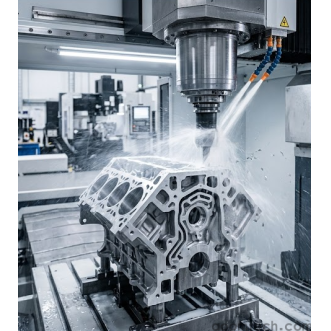
Coolant is often used to reduce heat and extend tool life. Controlled feed pressure is important to prevent tool breakage and ensure accurate hole placement.
Heat Treatment and Surface Finishing
Heat treatment is an important part of the Steel CNC Machining Process because it improves mechanical properties.
Quenching: Increases hardness
Tempering: Improves toughness and reduces brittleness
Annealing: Improves machinability and relieves stress
After heat treatment, surface finishing processes such as grinding, polishing, or coating may be applied. These improve appearance, corrosion resistance, and wear resistance.
For example, a heat-treated and coated steel component used in consumer products may offer both durability and an attractive finish.
Quality Control in Steel CNC Machining
In-Process Inspection
In-process inspection is essential in quality control in steel CNC machining. It ensures that errors are detected early before they become serious problems.
Operators use tools such as calipers, micrometers, and surface roughness testers to check dimensions and surface quality during production.
For example, if a dimension goes out of tolerance, adjustments can be made immediately to avoid producing defective parts.
Final Inspection
Final inspection ensures that the finished steel parts meet all design requirements. This includes detailed dimensional checks using Coordinate Measuring Machines (CMMs).
Non-destructive testing methods such as ultrasonic testing or magnetic particle inspection may be used to detect internal cracks or defects.
For instance, a final inspection might reveal an internal crack in a critical steel component, preventing it from being used in a high-risk application.
Applications of Steel CNC-Machined Parts
Automotive Industry
In the automotive industry, steel CNC-machined parts are used in engines, transmissions, and suspension systems. These parts must be highly precise and durable.
High-quality machining improves vehicle performance, fuel efficiency, and safety. For example, precision-engineered engine components help reduce friction and improve efficiency.
Construction Industry
Steel CNC machining is widely used in construction for structural parts such as beams, bolts, and fasteners.
Accurate machining ensures that components fit together properly and can handle heavy loads. This improves the strength and safety of buildings and infrastructure.
Manufacturing Industry
In manufacturing, steel CNC-machined parts are used in machines, gears, and shafts. These components are essential for smooth operation and energy transmission.
For example, precisely machined gears help machines run efficiently, reduce wear, and improve long-term reliability.
Conclusion: Mastering the Steel CNC Machining Process
The Steel CNC Machining Process is a complete system that transforms raw steel into precise, durable, and high-performance components. It involves several important stages, including design, material selection, tooling, machining operations, heat treatment, and quality control.
Understanding steps in steel CNC machining, choosing proper tooling for steel CNC machining, applying strong quality control in steel CNC machining, and knowing the applications of steel CNC-machined parts are all essential for successful production.
By carefully controlling each stage, manufacturers can achieve high accuracy, reduce production errors, and produce reliable parts for demanding industries. Reviewing and improving each step of the process can significantly enhance efficiency and product quality in real-world manufacturing environments.
RELATED PRODUCTS
-
Medical Brass CNC Machining Parts
-
Precision CNC Machining PEEK Services
-
Precision Custom CNC Machined Car Parts
-
cnc machining optical housings
-
Precision CNC Casting Machining Services
-
Precision Gear CNC Machining Services
-
Precision Stainless Steel Parts CNC Mach
-
CNC Machining of Precision Aluminum Tube
-
CNC Machining of Large Precision Aluminu
-
CNC Machining & Manufacturing of Pre