


CNC Machining Process Flow for Copper Parts
How We Approach Copper Machining
Copper is one of the trickiest materials we cut at AOOM. It conducts heat aggressively, which sounds good in theory, but on the machine it means the heat leaves the cut zone fast and the tool edge can chill and chip unpredictably. It's also gummy — chips don't break cleanly like they do on aluminum or steel. A good copper machining process needs specific tooling, coolant strategy, and programming techniques.
Material Selection
The most common copper grades we machine are C10100 (oxygen-free electronic grade) and C11000 (electrolytic tough pitch). C10100 is preferred for high-conductivity electrical applications. C11000 is more common for general-purpose parts. There's also C14500 with added tellurium, which machines significantly better — closer to brass in chip control — and is ideal for high-volume copper parts.
If your application calls for copper and you're running more than 500 parts, I suggest asking about C14500. It costs slightly more per kg but machines 30-40% faster, which offsets the material premium in most cases.
Our CNC Copper Machining Process
We start with ultrasonic cleaning and stress-relief annealing on raw copper stock. Copper can have internal stresses from the forming process, and if you machine those stresses out unevenly, the part distorts. Annealing before cutting reduces that risk.
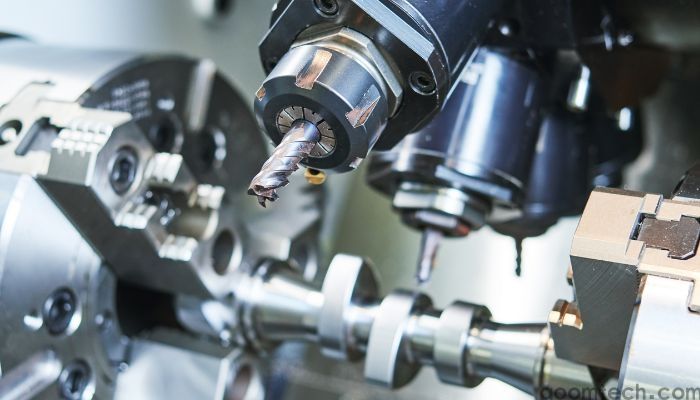
We use diamond-coated end mills for copper. Carbide works but dulls faster. Diamond tooling stays sharp longer and produces a better surface finish. Flood coolant is mandatory — copper needs constant lubrication to prevent the chip from welding to the cutting edge. We also program chip-breaking toolpaths with pecking cycles on deep pockets and drilling operations.
Post-Processing and Inspection
After machining, we deburr every copper part by hand. Copper burrs are soft and tough — machine deburring often leaves a ragged edge. Hand deburring gives a clean, consistent finish. For electrical components, we measure conductivity after machining to confirm the process hasn't affected the material properties. Surface treatments include electropolishing and passivation for corrosion resistance.
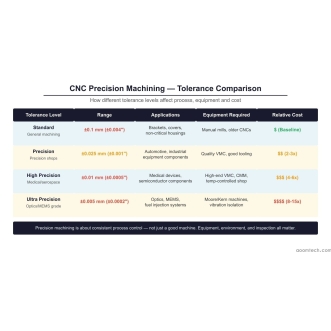
Our copper machining capabilities extend to complex geometries with thin walls, deep bores, and fine threads. We hold ±0.01mm as standard, ±0.005mm with extra care.
Where Copper Parts Are Used
The bulk of our copper work goes into electrical components — busbars, connectors, switchgear parts, RF shielding. We also machine copper heat sinks and cold plates for thermal management in electronics. In the aerospace sector, copper parts appear in avionics and grounding systems.
If you need precision CNC copper machining, our process is proven and our tolerances are consistent.
Send your CAD files to chen@aoomtech.com for a quote within 24 hours.
 CNC Machining of Parts for the
CNC Machining for Medical Devi
CNC Machining of Parts for the
CNC Machining for Medical Devi
 CNC Precision Machining Parts
 Tips for CNC Machining Titaniu