


CNC Machined Parts Price Range: Aluminum, Stainless Steel, Copper, and Small-Batch Pricing Guide
What Is the Price Range of CNC Machined Parts?
I get asked about pricing every single day. How much for aluminum? How much for stainless steel? Why is copper so expensive? And why does small-batch cost more per piece?
These are fair questions. CNC machining pricing looks confusing if you don't know what drives the numbers. Let me explain how we calculate it at our shop so you know what to expect.
Material Cost Is the Foundation
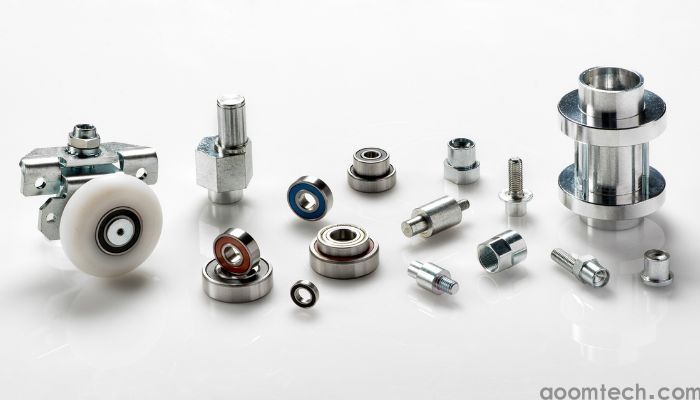
Material sets the floor for pricing. Aluminum 6061 is the most cost-effective. It's easy to machine, causes minimal tool wear, and is widely available. A simple aluminum part can range from a few dollars to around thirty dollars per piece depending on complexity.
Stainless steel 304 or 316 runs higher. The hardness wears tools faster, so the machining time cost increases. A typical stainless steel part runs roughly double what the same design in aluminum would cost. Copper is pricier still — it's expensive as raw material, soft enough to cause adhesion issues on tools, and requires more frequent equipment maintenance.
Complexity and Precision Drive Cost Up
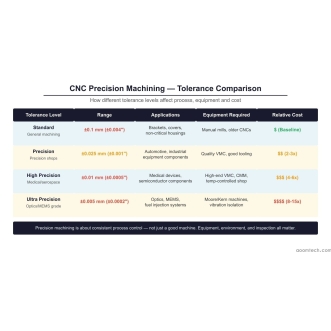
This is where most clients get surprised. "It's just a simple turned part," they say. But if it has multi-curved surfaces, irregular holes, micro-threads, or tolerances within ±0.01mm, the programming time and trial-and-error costs add up fast.
My advice: don't specify tighter tolerances than you actually need. Standard IT7 grade is sufficient for most applications. Every micron you tighten adds cost without adding value if the application doesn't require it.
Why Small-Batch Costs More Per Piece
Small-batch orders — 50 pieces or fewer — typically have unit prices 30-50% higher than volume production. The reason is simple: programming and machine setup time are fixed costs. Whether we make one piece or one thousand, the initial time investment is roughly the same. That cost gets spread over fewer parts in a small batch.
You can reduce this by standardizing designs to avoid special tooling, combining multiple part types in the same run, or signing an annual agreement for volume discounts.
Machine Selection Affects Hourly Rate
A standard CNC lathe might cost $15-30 per hour. A five-axis machining center can run $40-110 per hour. The difference is significant, so it's worth asking what equipment will be used for your parts. A five-axis machine can complete complex parts in one setup, which may be more cost-effective overall despite the higher hourly rate.
I always recommend requesting quotes from shops with five-axis capabilities and proper inspection equipment. The unit price may be slightly higher, but the yield rate and quality consistency more than make up for it.
Send your CAD files to chen@aoomtech.com for a quote within 24 hours.
 CNC Machining for Defense and
 CNC Machining for Aerospace: M
CNC Machining for Medical Devi
CNC Machining for Aerospace: M
CNC Machining for Medical Devi
 CNC Precision Machining Parts: