


CNC Machining Process for Bearing Parts
CNC Machining Process for Bearing Parts
Introduction to CNC Machining Process for Bearing Parts
Bearings are essential components in almost every rotating mechanical system, including automotive engines, electric motors, industrial machines, and aerospace equipment. Their main function is to reduce friction between moving parts and support smooth, controlled rotation.
The CNC Machining Process for Bearing Parts plays a key role in producing these components with high accuracy and repeatability. CNC (Computer Numerical Control) machining uses computer-controlled machines to manufacture bearing parts with tight tolerances and excellent surface quality. This ensures better performance, longer service life, and higher reliability of the final mechanical systems.
In modern manufacturing, CNC-machined bearing parts are widely used because they help improve efficiency and reduce mechanical wear in demanding applications.
Advantages of CNC Machining for Bearing Parts
High Precision Manufacturing
CNC machining can achieve extremely high precision when producing bearing parts. The computer-controlled process allows manufacturers to maintain tight tolerances, which is critical for smooth rotation and reduced vibration.
For example, in a high-speed spindle bearing, CNC machining ensures that the inner and outer diameters are perfectly matched. This level of precision allows the bearing to operate smoothly even at very high speeds without overheating or failing early.
This is one of the key advantages of CNC machining for bearing parts, especially in industries where accuracy directly affects machine performance.
Consistent Quality
CNC machining ensures consistent quality across large production batches. Once the program is set, every bearing part is manufactured with the same specifications and surface finish.
For instance, a large bearing manufacturer may produce thousands of bearing races using CNC machines. Each part maintains identical dimensions, which improves assembly quality and ensures stable performance in mass production systems.
Complex Feature Machining
CNC machines can create complex structures on bearing parts, such as lubrication grooves, oil channels, and custom load-distribution designs.
For example, a custom bearing may include internal lubricant grooves that are precisely machined using CNC technology. These grooves improve lubrication flow, reduce friction, and significantly extend the service life of the bearing.
Steps in CNC Machining of Bearing Parts
Design and CAD/CAM Programming
The process begins with CAD (Computer-Aided Design), where engineers design a 3D model of the bearing part. They consider load requirements, speed conditions, and material standards.
Next, CAM (Computer-Aided Manufacturing) software converts the design into machine instructions. These instructions define toolpaths, cutting speeds, feed rates, and spindle speeds.
For example, when designing a tapered roller bearing, engineers must carefully program the toolpath to maintain the correct angle and surface smoothness. This step is crucial for ensuring performance accuracy.
Material Selection and Preparation
Choosing the right material is essential in bearing manufacturing. Common materials include high-carbon chromium steel, stainless steel, and ceramics.
Each material has different properties. Steel offers high strength and durability, while ceramics provide excellent heat resistance and low friction.
Before machining, materials may be cut into rough shapes and treated through processes like annealing to improve machinability. Proper material selection is a key factor in the steps in CNC machining of bearing parts.
Machining Operations
Turning
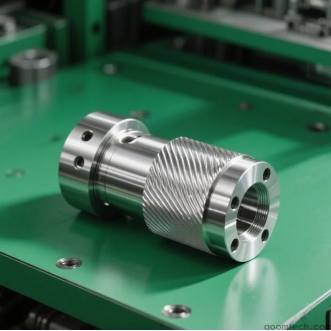
Turning is used to create the cylindrical surfaces of bearing races. Carbide tools are commonly used to achieve smooth and accurate shaping.
Grinding
Grinding is essential for achieving high surface accuracy and fine finishes. It ensures the bearing surfaces meet strict roundness and smoothness requirements.
Drilling and Grooving
Drilling is used to create holes for lubrication systems, while grooving forms channels or ball paths. These operations require precise control to avoid defects.
Heat Treatment and Surface Finishing
Heat treatment improves hardness, wear resistance, and durability. After heat treatment, surface finishing such as polishing is applied to reduce friction and improve smoothness.
For example, a heat-treated bearing race followed by precision polishing can perform better in high-load industrial environments due to improved wear resistance.
Benefits of CNC-Machined Bearing Parts
Enhanced Product Performance
Benefits of CNC-machined bearing parts include improved efficiency, reduced friction, and better load handling. These improvements directly increase the performance of mechanical systems.
For example, in electric motors, CNC-machined bearings help reduce energy loss caused by friction, improving overall motor efficiency.
Cost-Effectiveness in Mass Production
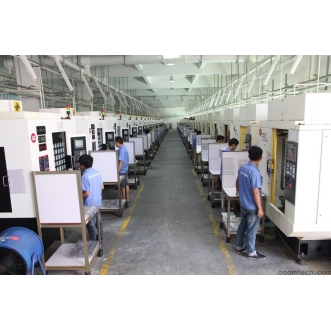
CNC machining becomes highly cost-effective in large-scale production. Once the setup is complete, thousands of identical parts can be produced with minimal variation and reduced waste.
Quick Turnaround for Small-Batch Prototyping
CNC machining is also ideal for prototyping. Engineers can quickly produce small batches of new bearing designs for testing and development.
This flexibility helps speed up product innovation and reduces time-to-market.
Challenges in CNC Machining of Bearing Parts
Meeting High-Precision Tolerances
One of the main challenges in CNC machining of bearing parts is maintaining extremely tight tolerances. Even small deviations can lead to performance issues or assembly failure.
Tool Wear and Breakage
Hard bearing materials can cause rapid tool wear. Cutting tools must be frequently replaced or maintained to ensure consistent machining quality.
Heat Generation and Its Effects
Heat produced during machining can cause material expansion and dimensional errors. Proper cooling systems and optimized cutting speeds are required to control temperature.
Quality Control in CNC Machining of Bearing Parts
Dimensional Inspection
Quality control in CNC machining of bearing parts starts with dimensional inspection using tools such as micrometers, calipers, and CMM (Coordinate Measuring Machines).
This ensures that all dimensions meet design specifications and remain within tolerance limits.
Surface Finish Inspection
Surface roughness is checked using profilometers. A smooth surface is essential to reduce friction and extend bearing life.
Material Integrity Inspection
Non-destructive testing methods such as ultrasonic testing are used to detect internal cracks or defects. This ensures the bearing is safe for use in critical applications.
Conclusion: Mastering CNC Machining for Bearing Parts
The CNC Machining Process for Bearing Parts is essential for producing high-performance, durable, and precise components used in modern machinery. From design and material selection to machining and quality control, each step plays an important role in final product quality.
Understanding the advantages of CNC machining for bearing parts, steps in CNC machining of bearing parts, benefits of CNC-machined bearing parts, challenges in CNC machining of bearing parts, and quality control in CNC machining of bearing parts helps manufacturers improve production efficiency and product reliability.
By applying proper machining strategies and strict quality control, manufacturers can achieve higher performance and longer-lasting bearing components for a wide range of industrial applications.
 How to Ensure Precision in CNC
 Small Batch Precision CNC Mach
 What surface finish can CNC ma
 CNC Machining Tolerance Settin