


Process of Custom CNC Machining for Metal Parts
HTML
Process of Custom CNC Machining for Metal Parts
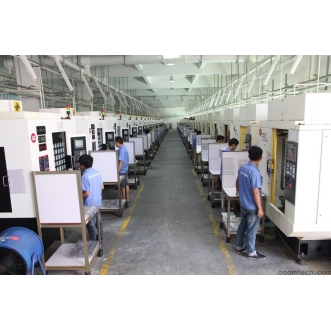
The Process of Custom CNC Machining for Metal Parts is a modern and precise way to produce metal components that are made for specific needs. It is widely used in many industries such as automotive, aerospace, electronics, and industrial machinery. This process helps companies create strong, accurate, and reliable metal parts with high efficiency.
Today, CNC (Computer Numerical Control) technology allows machines to follow digital instructions with very high accuracy. This reduces human error and ensures every part matches the required design. Because of this, custom CNC machining has become one of the most important methods for producing metal parts worldwide.
The Importance of Custom CNC Machining for Metal Parts
Custom CNC machining for metal parts is important because many industries need parts that are not standard or mass-produced. These parts must fit exact sizes, shapes, and performance requirements.
For example, in manufacturing machines, parts must handle heavy loads and long working hours. In automotive systems, components must be strong, lightweight, and safe. In aerospace applications, parts must meet strict safety and performance standards.
CNC technology makes it possible to produce these custom parts with high precision, repeatability, and speed. This is why the process is widely trusted in modern engineering.
Steps in Custom CNC Metal Part Machining
Design and Specification Gathering
The process starts with a clear design. Engineers create a 3D model using CAD (Computer-Aided Design) software. This model includes all details such as size, shape, tolerance, and function.
For example, if a metal bracket is designed for industrial equipment, engineers must consider load strength, installation space, and working environment. A good design should include clear notes, proper labeling, and accurate measurements to avoid mistakes later.
Tip: Use clear file naming and include all technical requirements to make communication easier between design and production teams. This is one of the key steps in custom CNC metal part machining.
Material Selection
Material selection in custom CNC metal machining is a very important step because different metals have different properties.
For example, stainless steel is often used in environments where corrosion resistance is needed, such as food processing or marine equipment. Carbon steel is chosen when high strength and lower cost are required. Aluminum is commonly used when lightweight parts are needed.
When selecting materials, engineers consider strength, hardness, machinability, cost, and availability. Choosing the right material ensures better performance and longer product life.
CNC Programming
After the design and material are ready, the CAD model is converted into a CNC program using CAM (Computer-Aided Manufacturing) software.
In this step, toolpaths, cutting speed, feed rate, and cutting depth are defined. If the part has complex shapes, the programming becomes more detailed and precise.
For example, in high-speed machining of hardened steel, trochoidal milling can be used to reduce tool wear and improve efficiency. Good programming ensures smooth machining and better surface quality.
Machine Setup and Tooling
Before machining starts, the CNC machine must be properly set up. The metal workpiece is fixed using strong fixtures to prevent movement during cutting.
Different cutting tools are selected based on the operation. End mills are used for shaping, drills for holes, and turning tools for cylindrical parts. Carbide tools are often used for hard metals because they last longer and cut more efficiently.
Correct setup ensures safety, accuracy, and stable production quality.
Machining Operations
Milling
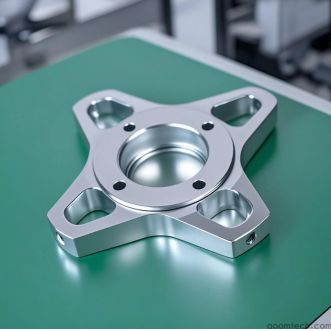
Milling is used to remove material and create flat surfaces, grooves, and complex shapes. It is one of the most common CNC operations.
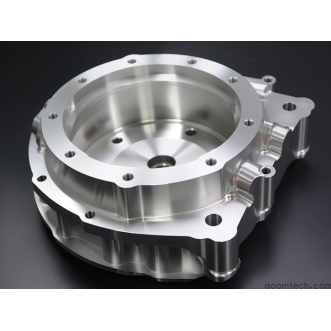
By adjusting spindle speed and feed rate, manufacturers can achieve smooth surfaces and accurate dimensions. For example, milling can be used to create a cavity inside a metal block for hydraulic systems.
Turning
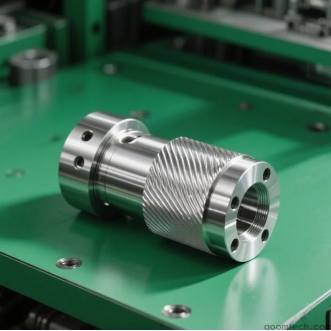
Turning is used for cylindrical parts such as shafts and bushings. The workpiece rotates while the cutting tool removes material.
Precision is very important in turning to ensure correct shape and alignment. Hard metals usually require carbide tools, while softer metals can be machined with high-speed steel tools.
Drilling
Drilling creates holes in metal parts. The drill type depends on hole size, depth, and material hardness.
To improve accuracy, a center drill is often used first. Coolant is also applied to reduce heat and prevent tool damage. Careful control helps avoid drill breakage and ensures clean holes.
Finishing and Post-Machining Operations
After machining, finishing steps improve the quality and safety of the part.
Deburring removes sharp edges that may cause injury or assembly problems. Polishing improves surface smoothness and appearance. Heat treatment can increase hardness, strength, or wear resistance depending on the requirement.
For example, a metal gear may be heat-treated to improve durability and extend its service life in heavy machinery.
Quality Control in Custom CNC Metal Part Machining
In-Process Inspection
Quality control in custom CNC metal part machining starts during production. Measurements are taken regularly to ensure accuracy.
Tools such as calipers, micrometers, and surface roughness testers are used. If any error is found, adjustments are made immediately.
For example, if a shaft diameter is slightly out of tolerance during turning, corrections can be made before continuing production, preventing waste.
Final Inspection
After machining is complete, the final inspection ensures the part meets all requirements.
Coordinate Measuring Machines (CMM) are often used for high precision checks. Surface finish, dimensions, and material properties are carefully tested.
In some cases, functional tests are also performed, such as checking how parts fit together or testing strength. Only parts that pass all checks are approved for use.
Conclusion: Ensuring High-Quality Custom CNC Machined Metal Parts
The Process of Custom CNC Machining for Metal Parts includes several important stages: design, material selection, programming, machining, finishing, and quality control. Each step plays a key role in ensuring the final product is accurate, strong, and reliable.
By following proper procedures and using advanced CNC technology, manufacturers can produce high-quality custom metal parts for many industries.
If you need reliable and precise metal components, it is recommended to work with experienced CNC machining providers who follow strict quality control and professional manufacturing standards.
 How to Ensure Precision in CNC
 Small Batch Precision CNC Mach
 What surface finish can CNC ma
 CNC Machining Tolerance Settin