


CNC Machining of Parts for Oil and Gas Industry
CNC Machining of Parts for Oil and Gas Industry
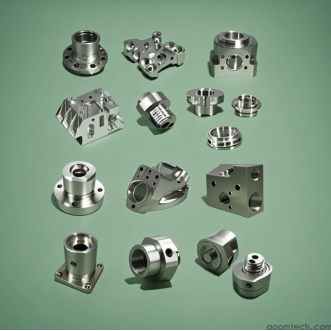
The CNC Machining of Parts for Oil and Gas Industry plays a critical role in ensuring safe, efficient, and reliable energy production. Oil and gas operations work in extreme environments, including high pressure, high temperature, and highly corrosive conditions. Because of this, every component must be manufactured with extreme precision and strict quality control.
This article explains the key materials, machining processes, tooling requirements, quality control methods, and cost considerations used in the production of CNC-machined oil and gas parts. It also highlights real-world engineering challenges and practical solutions used in the industry.
Unique Demands of Oil and Gas CNC Machining
Oil and gas components must perform reliably under harsh operating conditions. These parts are often used in offshore platforms, drilling systems, refineries, and pipelines. Failure is not an option because it can lead to safety risks, environmental damage, and high financial loss.
Main requirements include:
High pressure resistance for deep drilling and pipeline systems
High temperature stability in refining and extraction environments
Corrosion resistance due to exposure to saltwater, hydrogen sulfide, and chemicals
High precision fit to ensure sealing, alignment, and system safety
Materials Used in Oil and Gas Part Machining
The choice of material is one of the most important factors in machining performance and final part reliability. Common materials for oil and gas part CNC machining include alloy steels, nickel-based alloys, and duplex stainless steels.
Alloy Steels
Alloy steels are widely used for drill pipes, shafts, and structural components. They offer high strength and good toughness. However, they can be difficult to machine due to hardness and wear resistance, which increases tool wear.
Nickel-Based Alloys
Materials like Inconel are used in high-temperature and highly corrosive environments. They maintain strength under extreme heat but are challenging to machine because of work-hardening behavior and high cutting forces.
Duplex Stainless Steels
Duplex stainless steels combine high strength with excellent corrosion resistance. They are commonly used in offshore systems. Machining them requires careful control of cutting speed and tool selection to avoid rapid tool degradation.
Machining Processes for Oil and Gas Parts
Turning Operations
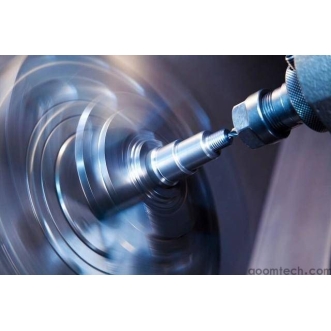
Turning in oil and gas part machining is commonly used to produce cylindrical components such as drill pipes, pump shafts, and valve bodies. These parts require tight dimensional accuracy, smooth surface finish, and perfect concentricity.
Because materials are often hard and abrasive, carbide cutting tools are typically used. Cutting parameters such as feed rate, spindle speed, and depth of cut must be carefully optimized to reduce tool wear and maintain precision.
Milling Operations
Milling is used to create complex shapes in components such as wellhead equipment, compressor housings, and manifold blocks. Multi-axis CNC milling is often required to achieve complex geometries and deep cavities.
Large oil and gas parts also present challenges in workholding, vibration control, and heat management during machining.
Drilling and Boring
Drilling and boring processes are essential for creating accurate holes in critical components. Deep-hole drilling is widely used in drill bits, hydraulic systems, and pipeline equipment.
Maintaining hole straightness, surface quality, and diameter accuracy is essential. Any deviation can lead to leakage or system failure under pressure.
Tooling Considerations
Tool selection is a key factor in successful machining of oil and gas components. Due to the hardness and abrasiveness of materials, standard tools often wear out quickly.
Carbide-tipped tools for general high-strength alloy machining
Coated tools (such as TiAlN coatings) to reduce friction and heat
Diamond-coated tools for specific high-wear applications
Tool life management is also essential. Many manufacturers use tool monitoring systems to track wear, predict failure, and schedule replacements. This helps prevent unexpected downtime and ensures consistent quality.
Quality Control and Inspection
Strict inspection standards are required in the oil and gas industry. quality control in oil and gas CNC-machined parts ensures safety, reliability, and compliance with international standards such as API, ISO, and NACE MR0175 (ISO 15156).
Common inspection methods include:
Radiographic testing (RT) to detect internal defects
Ultrasonic testing (UT) for deep internal flaw detection
Magnetic particle inspection (MPI) for surface and near-surface cracks
In addition to non-destructive testing, precision measurement tools such as coordinate measuring machines (CMM) are used to verify tight dimensional tolerances.
Cost Efficiency in Oil and Gas Part Machining
Oil and gas components are expensive to produce due to material cost, machining complexity, and strict quality requirements. However, cost control is still possible through smart engineering and process optimization.
Effective strategies include:
Optimizing tool paths to reduce machining time
Minimizing material waste through efficient design
Selecting materials that balance performance and cost
Using standardized machining processes when possible
Long-term partnerships with experienced CNC suppliers can also reduce costs by improving production stability and reducing rework rates.
Conclusion
The CNC Machining of Parts for Oil and Gas Industry requires advanced technology, skilled engineering, and strict quality control. From material selection to final inspection, every step must be carefully managed to ensure safety and performance in extreme environments.
By understanding machining processes, tooling strategies, and inspection standards, manufacturers can produce reliable components that meet the demanding needs of the global oil and gas industry while maintaining cost efficiency and long-term durability.
 How to Ensure Precision in CNC
 Small Batch Precision CNC Mach
 What surface finish can CNC ma
 CNC Machining Tolerance Settin