


CNC Machining and Production of Non-standard Stainless Steel Parts
The CNC Machining and Production of Non - standard Stainless Steel Parts process plays an essential role in modern precision manufacturing. Many industries today require parts that cannot be purchased as standard components. These custom parts must be carefully designed and manufactured to meet strict performance, safety, and durability requirements. CNC machining makes it possible to produce these complex stainless steel parts with high accuracy and repeatability.
Introduction to Non - standard Stainless Steel Parts
Significance of Non - standard Stainless Steel Parts
Non - standard stainless steel parts are specially customized components used when standard off-the-shelf parts cannot meet technical or functional requirements. These parts are widely used in aerospace systems, medical devices, automotive equipment, and industrial machinery.
For example, in aerospace engineering, a custom stainless steel bracket may be designed to withstand high vibration and temperature changes inside an engine system. In the medical field, precision surgical instrument components must meet strict hygiene and biocompatibility standards. These applications show how important customized stainless steel parts are in ensuring safety and performance.
Pre - production Considerations for CNC Machining
Part Design and Engineering
The stage of pre - production for non - standard stainless - steel CNC parts is critical for ensuring successful manufacturing. Engineers use CAD (Computer-Aided Design) software to build detailed 3D models of the part.
A well-designed part should consider:
Functional requirements and load conditions
Material behavior during machining
Tool accessibility for CNC operations
Design optimization tips include avoiding sharp internal corners, adding fillets to reduce stress concentration, and ensuring smooth tool paths. These improvements help reduce tool wear and prevent machining errors.
Material Selection
Choosing the right stainless steel grade is essential. Common grades include:
304 stainless steel – good corrosion resistance and general-purpose use
316 stainless steel – excellent for marine and chemical environments
430 stainless steel – cost-effective but lower corrosion resistance
The material choice directly affects machining performance. Harder materials require slower cutting speeds and more durable cutting tools, while softer grades allow faster machining but may require careful surface finishing.
Machine and Tool Selection
Selecting the right CNC machine ensures stability and precision during production. High-torque CNC machines are preferred for stainless steel due to its toughness.
For tooling, carbide end mills, drills, and inserts are commonly used because of their wear resistance. In addition, keeping backup tools available is important to avoid production delays caused by unexpected tool breakage.
CNC Machining Operations
Rough Machining Operations
Rough machining is the first stage of material removal in machining operations in non - standard stainless - steel part production. Large cutting tools are used to quickly remove excess material.
This stage focuses on efficiency rather than surface quality. High feed rates and deep cuts are applied, but proper cooling is necessary to reduce heat buildup and tool wear.
Key practices include:
Optimized toolpath planning for faster material removal
Continuous coolant application to reduce heat
Stable machine setup to avoid vibration
Finish Machining Operations
Finish machining is responsible for achieving final dimensions and surface quality. Smaller cutting tools are used with lower feed rates and shallow cutting depths.
Precision CNC machines with high-resolution encoders help maintain tight tolerances. Operators often monitor tool wear closely and make adjustments in real time to ensure accuracy.
Specialized Machining for Complex Features
Non-standard stainless steel parts often include complex features such as deep holes, internal threads, or irregular cavities.
Common techniques include:
Tapping for internal thread creation
Deep-hole drilling for long and narrow channels
EDM (Electrical Discharge Machining) for complex or hard-to-reach geometries
These advanced methods allow manufacturers to achieve high precision even in difficult geometries.
Challenges in CNC Machining Stainless Steel Parts
Tool Wear and Breakage
Stainless steel is tough and work-hardening, which leads to faster tool wear. Excessive heat and cutting forces can also cause tool failure.
To reduce this issue, manufacturers use coated cutting tools, optimize cutting parameters, and monitor tool condition regularly. Preventive tool replacement is often more cost-effective than emergency downtime.
Thermal Deformation
Heat generated during machining can cause dimensional changes in both the tool and the workpiece. This may affect final accuracy.
Solutions include:
Using high-performance coolant systems
Applying multi-pass machining strategies
Allowing cooling intervals during production
Complex Geometries and Tight Tolerances
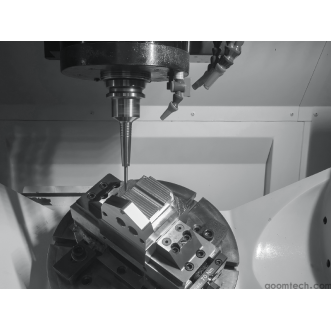
Producing complex shapes while maintaining tight tolerances is one of the biggest challenges in CNC machining. Multi-axis CNC machines help solve this issue by allowing more flexible tool movement.
High-precision measurement tools are also used during machining to ensure consistency.
Quality Control in CNC Machining and Production
In-process Inspection
Quality control in non - standard stainless - steel CNC machining begins during production. Operators regularly measure dimensions and surface quality using calipers, micrometers, and surface testers.
Typical inspection points include:
Shaft diameter accuracy
Slot width consistency
Surface roughness after finishing passes
If deviations are detected, machining parameters are adjusted immediately to prevent defects from spreading.
Final Inspection and Testing
After machining is completed, a full inspection ensures that all requirements are met. This includes dimensional checks, visual inspection, and functional testing.
Parts that fail inspection may be reworked or rejected depending on the severity of the defect. High-precision industries such as aerospace and medical manufacturing require extremely strict acceptance standards.
Post - production Processes
Deburring and Edge Finishing
After machining, sharp edges and burrs must be removed to ensure safety and functionality. Methods include manual deburring, abrasive brushing, and electrochemical deburring.
Edge finishing techniques such as chamfering or rounding also help reduce stress concentration and improve part durability.
Surface Treatment
Surface treatment improves both appearance and performance. Common methods include:
Passivation – enhances corrosion resistance
Polishing – improves surface smoothness and aesthetics
Bead blasting – creates a uniform matte surface finish
These treatments are selected based on the final application of the part and its operating environment.
Conclusion
The CNC Machining and Production of Non - standard Stainless Steel Parts is a highly technical process that requires careful planning, skilled machining, and strict quality control. From design and material selection to final inspection and surface treatment, every step plays an important role in achieving high-quality results.
By understanding key processes such as pre - production for non - standard stainless - steel CNC parts, advanced machining techniques, and quality control in non - standard stainless - steel CNC machining, manufacturers can improve efficiency, reduce errors, and deliver reliable custom components for demanding industries.
 Process of Custom High-Precisi
 CNC Machining Parameter Settin
 5 Key Tips for CNC Machining o
 Small-batch Precision Parts 5-