


CNC Machining of Precision Shaft Parts
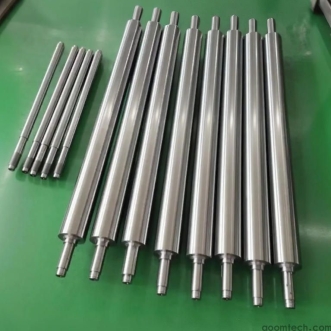
CNC Machining of Precision Shaft Parts is a key manufacturing process used to produce high-accuracy rotating components for modern mechanical systems. These parts must meet strict requirements for diameter, straightness, surface finish, and mechanical strength. Even a small error can affect the performance of an entire machine.
Introduction to CNC Machining of Precision Shaft Parts
Importance of Precision Shaft Parts
Precision shaft parts play a vital role in many mechanical systems. They are used to transfer motion, torque, and power between components. In the automotive industry, shafts are used in engines, transmissions, and drive systems to ensure smooth power delivery. In aerospace systems, shafts are essential in turbine engines, landing gear mechanisms, and control systems where reliability and accuracy are critical.
In industrial machinery, shafts are used in pumps, compressors, conveyor systems, and robotic equipment. Even in medical devices, small precision shafts help drive motors in surgical tools and imaging equipment. Without high-quality shafts, many machines would fail to operate efficiently or safely.
Design Considerations for Precision Shaft Parts
Function-based Design
The design of a shaft must always start with its function. Engineers must consider how much load the shaft will carry, the rotational speed, and how it connects with gears, bearings, or couplings.
For example, a high-speed shaft in a turbine must withstand strong centrifugal forces and vibration. This requires a balanced design with high strength and excellent fatigue resistance. In contrast, a low-speed conveyor shaft may focus more on durability and cost efficiency rather than extreme performance.
Key design guidelines include:
Define torque and bending load requirements clearly.
Consider rotational speed and dynamic balance needs.
Design appropriate steps, shoulders, and keyways for assembly.
Avoid sharp corners to reduce stress concentration.
Design considerations for CNC-machined precision shafts should always include both mechanical performance and manufacturability to reduce production difficulty and cost.
Tolerance and Surface Finish
Tolerances are one of the most important factors in shaft design. Tight tolerances ensure proper fit between shafts and mating components such as bearings or gears. Standards such as ISO 286 are often used to define fit classes like H7 or g6.
Surface finish is equally important. A smoother surface reduces friction, improves wear resistance, and increases fatigue life. For example, a gearbox shaft requires a fine surface finish to ensure smooth gear meshing and reduce energy loss.
General recommendations include:
Use tighter tolerances for bearing seats and coupling areas.
Apply rougher tolerances for non-critical sections to reduce cost.
Specify surface roughness (Ra) based on function, such as Ra 0.2–0.8 μm for precision fits.
Material Selection for Precision Shaft Parts
Mechanical Properties
Material selection directly affects strength, durability, and performance. Common materials used in CNC machining of precision shaft parts include steel, stainless steel, and aluminum.
Carbon steel / alloy steel: High strength and wear resistance, suitable for heavy-duty applications such as automotive drivetrains.
Stainless steel: Excellent corrosion resistance, ideal for marine, medical, and food processing equipment.
Aluminum: Lightweight and easy to machine, suitable for aerospace and lightweight machinery systems.
Material selection in precision shaft CNC machining should always match mechanical requirements such as tensile strength, hardness, fatigue resistance, and environmental conditions.
Cost and Availability
While high-performance materials may offer better properties, they are often more expensive and harder to source. In mass production, cost efficiency becomes very important.
For example, automotive manufacturers often choose medium-carbon steel because it offers a good balance between cost, strength, and machinability. Engineers must always balance performance, availability, and budget when selecting materials.
CNC Machining Processes for Precision Shaft Parts
Turning Operations
Turning is the primary process used in shaft manufacturing. In CNC turning, the workpiece rotates while a cutting tool removes material to form the desired diameter and shape.
Common turning operations include rough turning, finish turning, grooving, and threading.
Typical machining parameters:
Spindle speed: Adjust based on material hardness and diameter.
Feed rate: Lower feed for finishing to improve surface quality.
Depth of cut: Higher in roughing, lower in finishing.
Optimizing these parameters improves accuracy and surface finish while reducing tool wear.
Grinding Operations
Grinding is used when extremely tight tolerances and smooth surface finishes are required. External cylindrical grinding is commonly used to finish shaft diameters after turning.
Grinding benefits include:
Achieving micron-level dimensional accuracy
Improving surface finish quality
Correcting minor shape errors after turning
Important factors in grinding include grinding wheel selection, cutting speed, and coolant usage. Coolant is essential to prevent overheating and maintain dimensional stability.
Drilling and Boring (if applicable)
Some precision shafts require holes, oil channels, or internal features. Drilling is used for creating initial holes, while boring improves accuracy and surface finish.
To ensure accuracy:
Use rigid setups to prevent tool vibration.
Select drill bits based on material hardness.
Apply boring tools for tight tolerance internal diameters.
Tooling and Fixturing for Precision Shaft Parts
Tool Selection
Tool selection plays a critical role in machining quality. Common tools include high-speed steel (HSS) and carbide tools. Carbide tools are preferred for most CNC machining of precision shaft parts due to their hardness and wear resistance.
Tool geometry, including rake angle and clearance angle, must be optimized to reduce cutting force and improve chip removal.
Fixturing Design
Proper fixturing ensures that the shaft remains stable during machining. Poor fixturing can lead to vibration, dimensional errors, and poor surface finish.
Common fixturing solutions include:
Three-jaw and four-jaw chucks for general holding
Collets for high-precision concentricity
Centers for long shaft support
Good fixturing ensures alignment, repeatability, and machining stability.
Quality Control in CNC Machining of Precision Shaft Parts
In-process Inspection
Quality control must be applied during machining, not only at the end. In-process inspection helps detect problems early and reduce waste.
Common inspection tools include micrometers, calipers, dial indicators, and surface roughness testers.
Quality control in CNC-machined precision shaft parts includes checking diameter consistency, concentricity, straightness, and surface finish at different machining stages.
Final Inspection and Testing
After machining is complete, final inspection ensures the shaft meets all specifications. This includes full dimensional measurement, surface finish testing, and sometimes functional testing.
For high-speed applications, dynamic balancing tests are also performed to reduce vibration during operation.
If a part fails inspection, it may be reworked, scrapped, or analyzed for process improvement.
Applications of Precision Shaft Parts
Automotive Industry
In the automotive industry, shafts are used in engines, transmissions, drive shafts, and differentials. They ensure smooth power transmission and vehicle stability. Any failure in a shaft can lead to serious performance issues or safety risks.
Aerospace Industry
In aerospace applications, precision shafts are used in turbine engines, landing gear systems, and flight control systems. These shafts must withstand high temperatures, extreme speeds, and strong mechanical stress while maintaining perfect reliability.
Manufacturing and Machinery
In industrial manufacturing, shafts are widely used in conveyor systems, pumps, printing machines, and industrial robots. They help ensure smooth motion transfer and continuous production efficiency in automated systems.
Conclusion
CNC Machining of Precision Shaft Parts is a highly specialized process that requires careful attention to design, material selection, machining methods, tooling, and quality control. Each step plays an important role in ensuring performance, reliability, and cost efficiency.
By understanding design considerations for CNC-machined precision shafts, selecting the right materials, and applying strict quality control methods, manufacturers can produce high-quality shafts suitable for demanding industries such as automotive, aerospace, and industrial machinery.
 Process of Custom High-Precisi
 CNC Machining Parameter Settin
 5 Key Tips for CNC Machining o
 Small-batch Precision Parts 5-