


CNC Machining Process for Piston Parts
The CNC Machining Process for Piston Parts is a precise manufacturing workflow used to produce high-performance pistons for modern engines. Pistons are critical components in internal combustion engines, where they convert combustion pressure into mechanical motion that powers vehicles and machinery.
Piston parts are widely used in many types of engines, including automotive engines in cars and trucks, marine engines in boats, and industrial engines used in generators and heavy equipment. Because pistons operate under high temperature, pressure, and continuous motion, their accuracy and quality directly affect engine performance, fuel efficiency, and durability.
Pre-machining Considerations for Piston Parts
Design Understanding
A successful pre-machining for CNC piston part processing begins with a deep understanding of the piston design. Engineers design pistons based on engine displacement, compression ratio, combustion pressure, and thermal load.
Key piston features include:
Piston crown – the top surface exposed to combustion pressure
Piston skirt – guides movement inside the cylinder
Piston pin boss – connects the piston to the connecting rod
Using CAD/CAM software helps engineers simulate machining operations and identify potential issues before production begins. Tight tolerances must be carefully interpreted, especially for sealing surfaces and pin bore alignment. Even small deviations can lead to engine noise, oil leakage, or reduced efficiency.
Material Selection
Material choice is essential for piston performance. Most pistons are made from aluminum alloys due to their lightweight nature and good thermal conductivity. These properties help reduce engine mass and improve heat dissipation.
However, not all aluminum alloys behave the same. Some offer higher strength, while others provide better heat resistance or lower thermal expansion. The selected alloy must match the engine type and operating conditions.
For high-performance engines, forged aluminum alloys are often preferred, while cast aluminum alloys are commonly used in standard automotive applications. Material selection also influences tool wear and cutting speed during machining.
CNC Machining Operations for Piston Parts
Turning Operations
Turning operations in CNC piston part machining are used to create the piston’s cylindrical geometry. This includes the outer diameter of the skirt and the inner bore of the pin boss.
High-precision turning is essential to ensure smooth movement inside the engine cylinder. Cutting parameters must be carefully controlled:
High spindle speed for rough machining to remove material quickly
Moderate speed with fine feed rate for finishing operations
Shallow depth of cut to achieve better surface finish
Proper CNC programming ensures smooth toolpaths, reduced vibration, and accurate dimensional control. Tool changes should be optimized to reduce downtime and maintain consistency.
Milling Operations
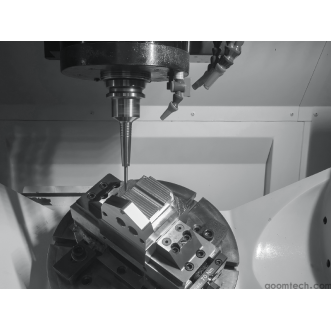
Milling is used to form complex piston features such as the crown shape, valve reliefs, and oil control grooves. Different cutters are used depending on the geometry:
End mills for general surface shaping
Ball nose cutters for curved surfaces on piston crowns
Special groove cutters for oil ring lands
Accurate feed rates and spindle speeds are required to maintain surface quality and avoid thermal deformation. Multi-axis CNC machines are often used to achieve complex geometries in a single setup.
Drilling and Boring (if applicable)
Pistons require precise holes for piston pins and sometimes oil passages. Drilling is used for initial hole creation, while boring ensures final accuracy and surface finish.
To achieve high precision:
Use rigid drill guides or fixtures for alignment
Apply proper coolant to reduce heat and improve chip removal
Use boring tools for final diameter correction and tight tolerance control
Accurate hole placement is critical because misalignment can cause uneven wear or engine failure during operation.
Tooling and Fixturing for Piston Parts
Tool Selection
Tool selection plays a major role in machining quality. Carbide tools are commonly used due to their hardness, wear resistance, and ability to handle high-speed machining of aluminum alloys.
Important tool geometry considerations include:
Rake angle – improves chip flow
Clearance angle – reduces tool rubbing
Helix angle – improves cutting stability
Regular tool inspection is necessary to prevent wear-related dimensional errors. Worn tools can cause poor surface finish and reduced piston accuracy.
Fixturing Design
A stable fixture is essential for piston machining due to the component’s complex geometry. A well-designed fixture ensures that the workpiece remains stable during cutting operations.
Common fixturing methods include:
Multi-point clamping systems
Custom soft jaws designed for piston shape
Precision locating pins for repeatable alignment
Proper fixture alignment with CNC machine axes is critical to maintain dimensional accuracy and reduce machining errors.
Quality Control in CNC Machining of Piston Parts
In-process Inspection
Quality control in CNC-machined piston parts begins during machining. Continuous inspection helps detect errors early and reduce scrap rates.
Common inspection tools include calipers, micrometers, and coordinate measuring machines (CMMs). Key parameters checked during production include:
Piston skirt diameter
Pin boss roundness and alignment
Piston crown flatness or contour accuracy
Early detection of deviations allows immediate tool or process adjustments.
Final Inspection and Testing
After machining, pistons undergo final inspection to ensure compliance with design specifications. This includes dimensional verification, surface roughness measurement, and sometimes functional testing under simulated engine conditions.
If a piston fails inspection, possible actions include re-machining, process adjustment, or part rejection. This ensures only high-quality components enter engine assembly.
Post-machining Processes for Piston Parts
Deburring and Edge Finishing
After CNC machining, pistons often have sharp edges or burrs that must be removed. Deburring ensures smooth operation and prevents stress concentration.
Methods include manual deburring tools, vibratory finishing, or abrasive blasting. Chamfering and edge rounding further improve durability and reduce wear during engine operation.
Surface Treatment
Surface treatment enhances piston performance and lifespan. Common treatments include anodizing and specialized coatings.
Benefits include:
Improved wear resistance
Reduced friction between piston and cylinder wall
Better corrosion protection
Coating selection depends on engine type, operating temperature, and performance requirements. High-performance engines often use advanced low-friction coatings for improved efficiency.
Conclusion
The CNC Machining Process for Piston Parts requires precise coordination of design understanding, material selection, machining operations, tooling, fixturing, and strict quality control. Every step directly affects engine performance and reliability.
By applying best practices in turning, milling, drilling, and inspection, manufacturers can produce high-quality pistons that meet demanding automotive, marine, and industrial standards. A well-controlled process ensures durability, efficiency, and consistent engine performance over time.
Reliable industry references such as ASM material standards and ISO machining tolerance guidelines are commonly used to support piston manufacturing accuracy and quality assurance.
 Process of Custom High-Precisi
 CNC Machining Parameter Settin
 5 Key Tips for CNC Machining o
 Small-batch Precision Parts 5-