


CNC Machining Process for Precision Robot Parts
The CNC Machining Process for Precision Robot Parts is a key technology behind modern robotics. From industrial robot arms to medical robotic systems, every moving part must be highly accurate, strong, and reliable. Even a small machining error can affect the robot’s movement, stability, and long-term performance.
This article explains how CNC machining is used to produce precision robot components, including materials, machining processes, programming methods, and post-processing treatments. The goal is to provide clear and practical knowledge for engineers, manufacturers, and beginners in robotics production.
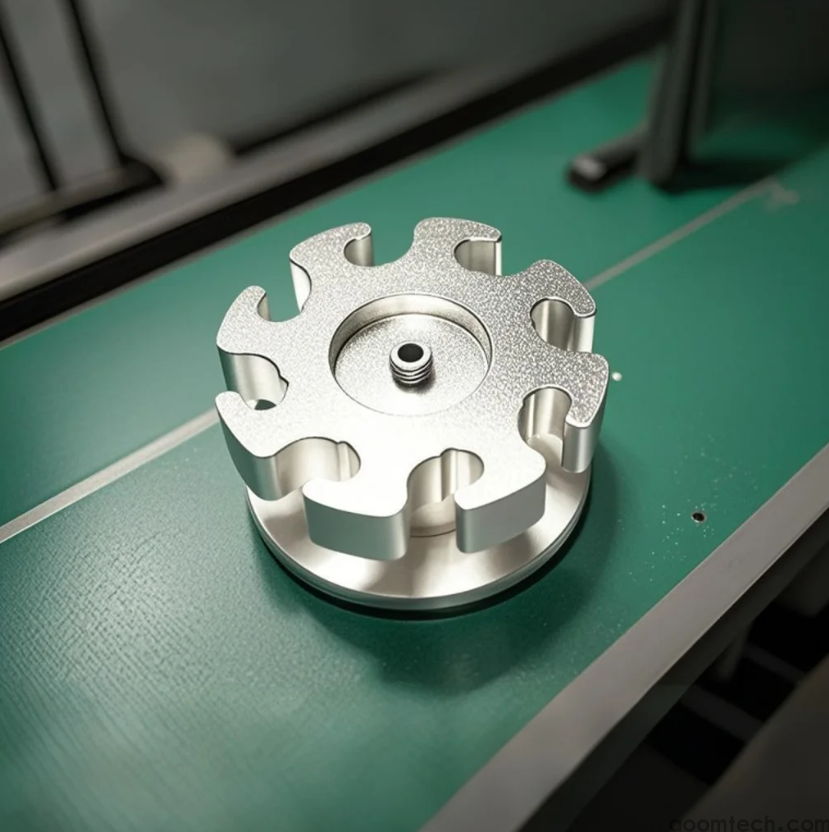
1. Requirements of Precision Robot Parts
Robot parts must meet strict performance requirements because they operate in high-speed and high-load environments. Unlike simple mechanical parts, robotic components require both accuracy and durability.
High precision: Typical tolerances can reach ±0.05mm or even tighter for critical joints.
High strength-to-weight ratio: Parts must be strong but lightweight to improve motion efficiency.
Wear resistance: Robot joints and moving parts must resist friction over long cycles.
Repeatability: Every part must be identical in mass production to ensure stable robot operation.
These requirements make CNC machining the preferred manufacturing method, as it offers high accuracy, consistency, and flexibility for complex designs.
2. Material Selection for Precision Robot Part CNC Machining
Choosing the right material is one of the most important steps in robotics manufacturing. Different materials affect machining difficulty, tool wear, and final performance.
Aluminum Alloys
Aluminum is widely used for robot arms and structural parts due to its lightweight nature and good machinability. It allows fast machining and reduces overall robot weight, improving speed and energy efficiency.
Stainless Steel
Stainless steel is used for parts requiring corrosion resistance and high strength, such as fasteners and load-bearing joints. However, it is harder to machine and requires stronger cutting tools and lower cutting speeds.
Titanium Alloys
Titanium is used in high-stress robotic applications, especially in aerospace or medical robots. It offers excellent strength-to-weight ratio but generates heat quickly during machining, requiring careful control of cutting conditions.
The right material selection for precision robot part CNC machining directly affects production cost, machining efficiency, and final performance quality.
3. CNC Machining Processes for Robot Components
The CNC machining process for robot parts involves several advanced manufacturing techniques. Each process is selected based on part geometry, material type, and precision requirements.
Multi-Axis Milling for Complex Shapes
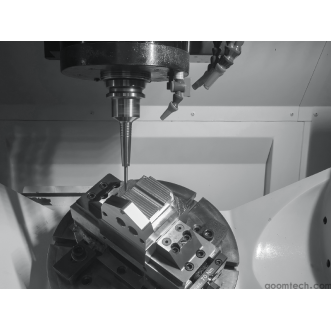
Robot arms and joints often have complex curved surfaces. Multi-axis CNC milling machines (such as 4-axis and 5-axis systems) allow tools to reach multiple angles without repositioning the part. This improves accuracy and reduces setup time.
Turning for Cylindrical Parts
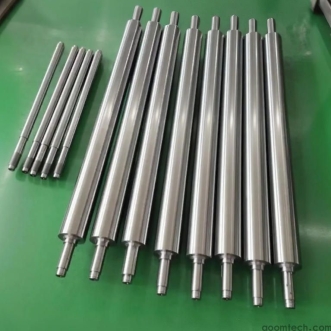
Rotational parts like shafts, pins, and connectors are produced using CNC turning. This process ensures high roundness accuracy and smooth surface finishes.
Drilling and Tapping
Precision holes are essential for assembly alignment. CNC drilling and tapping ensure consistent hole positioning and thread quality for robotic assembly.
Grinding and Finishing
For extremely tight tolerances, grinding is used to achieve final dimensional accuracy and surface smoothness.
4. Machine Setup and Cutting Tool Selection
Proper machine setup is essential to achieve stable and accurate machining results in robotics production.
Work Holding Fixtures
Robotic parts often have irregular shapes. Custom fixtures are used to hold parts securely and prevent vibration during machining. Poor fixture design can lead to dimensional errors.
Cutting Tools for Robot Machining
Tool selection depends on material hardness and machining type. Using the wrong tool can cause wear, breakage, or poor surface quality.
Carbide-coated tools: Ideal for stainless steel and titanium due to high hardness and heat resistance.
High-speed steel (HSS) tools: Suitable for soft materials like aluminum and plastics.
Diamond-coated tools: Used for ultra-precision finishing operations.
Proper cutting tools for robot part CNC machining help improve efficiency, reduce tool wear, and ensure better surface quality.
Cutting Parameter Optimization
Correct machining parameters are critical for quality and tool life:
Spindle speed: Higher for aluminum, lower for titanium and stainless steel.
Feed rate: Must balance speed and surface quality.
Depth of cut: Shallow cuts are used for high-precision finishing.
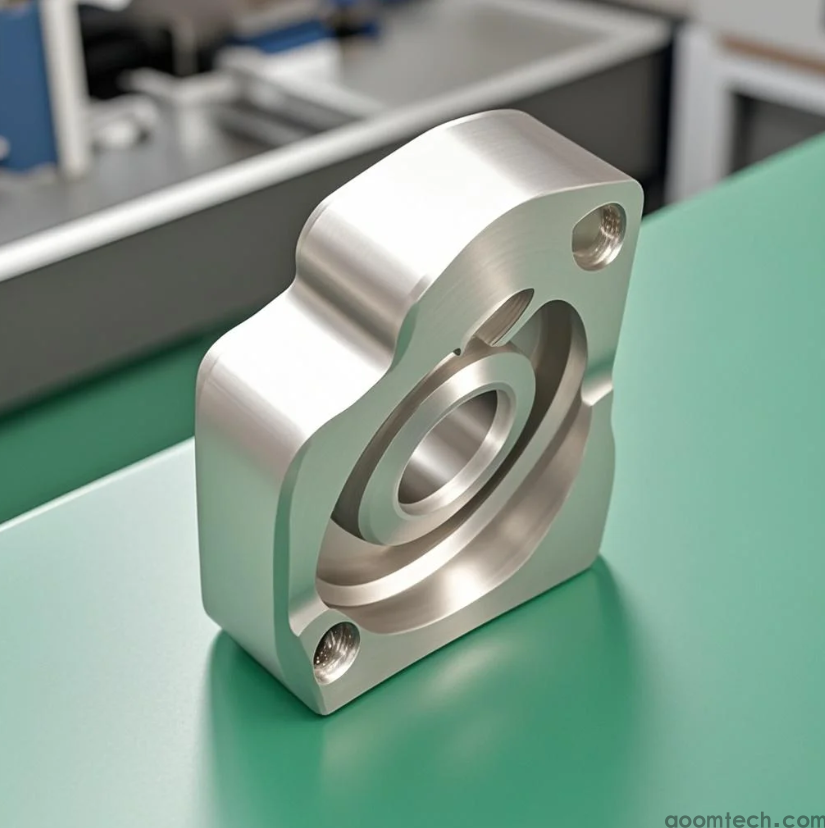
5. Programming Techniques for Precision Machining
Modern CNC programming uses CAD/CAM software to convert 3D robot designs into precise tool paths. This step ensures that complex geometries are machined accurately.
CAD/CAM Tool Path Generation
Engineers use CAD models to design robot parts and CAM software to generate machining paths. The system calculates tool movements based on geometry, tolerances, and surface requirements.
High-Precision Programming
Advanced programming techniques are used to reduce errors and improve surface quality. These include:
Tool path smoothing to avoid sudden tool movement changes
Backlash compensation for machine accuracy
Adaptive feed control for material variation
Programming Techniques for Precision Robot Part CNC
The programming techniques for precision robot part CNC focus on accuracy, repeatability, and efficiency. Proper programming reduces waste, shortens cycle time, and ensures every robot part meets strict tolerance requirements.
6. Post-Machining Treatments
After CNC machining, robot parts often require additional treatments to improve strength, durability, and appearance.
Heat Treatment
Heat treatment improves hardness and reduces internal stress caused during machining. This helps extend the life of robot components under continuous operation.
Stress Relief
Machining can create internal stress in metal parts. Stress relief processes help stabilize the material and prevent deformation over time.
Surface Finishing
Surface finishing improves corrosion resistance and aesthetics. Common methods include:
Anodizing (especially for aluminum parts)
Polishing for smooth surfaces
Coating for wear and corrosion protection
These post - machining treatments for robot part CNC ensure long-term durability and reliable robot performance.
7. Quality Control in Robot Part Manufacturing
Quality control is essential in robotics because even small errors can affect system performance. Manufacturers use advanced inspection methods such as:
Coordinate Measuring Machines (CMM) for dimensional accuracy
Laser scanning for surface geometry verification
Surface roughness testing for performance evaluation
Strict inspection ensures that every part meets engineering specifications before assembly.
8. Conclusion
The CNC Machining Process for Precision Robot Parts plays a critical role in modern robotics manufacturing. From material selection to machining, programming, and post-processing, every step must be carefully controlled to achieve high accuracy and reliability.
As robotics technology continues to grow in industries such as automation, healthcare, and aerospace, CNC machining will remain the foundation for producing high-performance robot components. By combining advanced machines, skilled programming, and proper material selection, manufacturers can achieve superior quality and long-lasting robotic systems.
This knowledge helps engineers and manufacturers improve efficiency, reduce production costs, and build more reliable robotic systems for the future.
 Process of Custom High-Precisi
 CNC Machining Parameter Settin
 5 Key Tips for CNC Machining o
 Small-batch Precision Parts 5-