


CNC Machining Solutions for Precision Steel Parts
Introduction to CNC Machining for Precision Steel Parts
The Significance of Precision Steel Parts
Precision steel parts are essential components in many modern industries, including automotive, aerospace, energy, and general manufacturing. Steel is widely used because of its high strength, durability, and ability to maintain tight tolerances even under heavy stress and extreme working conditions.
In automotive systems, precision steel parts are used in engines, gearboxes, and transmission systems to ensure reliable power transfer and long service life. In aerospace applications, steel components are used in structural supports and landing systems where safety and load-bearing performance are critical. These examples show how precision steel parts directly affect the performance, safety, and efficiency of end products.
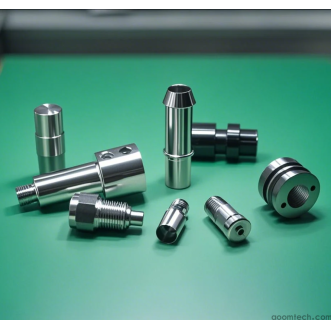
Because of these demanding requirements, manufacturers rely on advanced CNC Machining Solutions for Precision Steel Parts to achieve consistent accuracy, high repeatability, and excellent surface quality.
CNC Machining Processes for Precision Steel Parts
Milling Operations
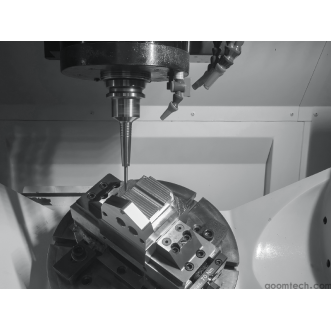
Milling is one of the most important processes in milling solutions for precision steel CNC parts. It is used to create flat surfaces, grooves, pockets, slots, and complex 3D geometries. CNC milling machines use rotating cutting tools to remove material from a steel workpiece with high accuracy.
Common tools used in steel milling include high-speed steel (HSS) cutters and carbide end mills. Carbide tools are preferred for steel machining because they offer better hardness, heat resistance, and longer tool life.
Tool selection guidelines:
Flat end mill: Used for flat surfaces and sharp edges
Ball nose end mill: Used for curved surfaces and 3D contouring
Roughing end mill: Used for fast material removal
Key machining parameters:
Spindle speed: Adjusted based on steel hardness
Feed rate: Balanced to avoid tool overload or poor finish
Depth of cut: Controlled to reduce vibration and tool wear
Coolant plays a critical role in steel milling. It helps reduce heat, improves surface finish, and extends tool life by preventing thermal damage during cutting.
Turning Operations
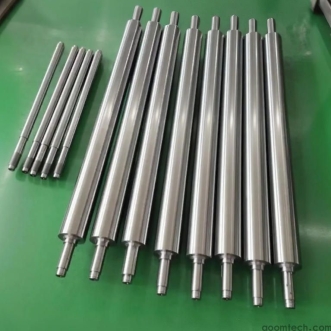
Turning is used to manufacture cylindrical precision steel parts such as shafts, bushings, and rollers. In this process, the steel workpiece rotates while a stationary cutting tool removes material.
Carbide inserts are commonly used due to their durability and ability to withstand high temperatures generated during steel cutting.
Important turning considerations:
Spindle speed must match material hardness and diameter
Feed rate affects surface finish and machining efficiency
Depth of cut must avoid excessive tool pressure
Maintaining concentricity is essential in turning operations. Poor alignment can cause imbalance, vibration, and product failure in real-world applications such as rotating shafts in engines or pumps.
Chip control is another challenge. Proper tool geometry and cutting parameters help ensure smooth chip formation and prevent tool clogging or surface damage.
Drilling and Boring Operations
Drilling and boring are essential when precision steel parts require holes with tight tolerances. Drilling creates the initial hole, while boring refines it to achieve precise diameter and improved surface finish.
Carbide drill bits are often used for harder steel grades, while high-speed steel drills may be used for softer steels.
Best practices for drilling:
Select correct drill point angle for material type
Use proper flute design for efficient chip evacuation
Apply coolant to reduce heat and tool wear
Boring operations are used when higher accuracy is required. Boring bars must be rigid and properly aligned to ensure consistent hole geometry and surface quality.
Key Considerations in CNC Machining of Precision Steel Parts
Material Grade and Properties
Understanding material grade is one of the key considerations in CNC machining of precision steel. Steel types such as carbon steel, alloy steel, and stainless steel behave differently during machining.
For example, stainless steel has high toughness and work-hardening characteristics, requiring slower cutting speeds and sharper tools. Alloy steels may require reduced feed rates due to increased hardness.
Tolerance Requirements
Tolerances define how much deviation is acceptable in a finished part. Tight tolerances are common in aerospace and automotive applications where even small errors can cause system failure.
To achieve high accuracy, manufacturers use:
High-precision CNC machines with advanced positioning systems
Stable fixturing to reduce vibration
In-process measurement tools for real-time adjustments
Surface Finish Requirements
Surface finish directly affects performance, especially in moving or sealing components. A smoother surface reduces friction, wear, and corrosion risk.
Improving surface finish can be achieved by:
Using sharp cutting tools
Optimizing feed rate and spindle speed
Applying finishing operations like grinding or polishing
Advantages of CNC Machining for Precision Steel Parts
High Precision and Repeatability
One of the major advantages of CNC for precision steel part production is consistent accuracy. CNC machines follow programmed instructions, ensuring every part is produced with the same dimensions and quality.
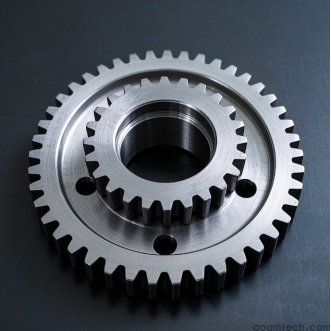
This is especially important in systems like gearboxes, where even small deviations can affect power transmission efficiency and noise levels.
Complex Geometry Machining
CNC machining allows manufacturers to produce complex steel parts that would be difficult or impossible to create manually. Multi-axis machines can move cutting tools in several directions, enabling advanced shaping.
Examples include turbine components, engine brackets, and precision molds with detailed internal structures.
Cost-effectiveness in Production
Although CNC machining requires initial investment in programming and tooling, it becomes highly cost-effective in mass production. Once the process is set up, it reduces labor costs, improves speed, and minimizes material waste.
This makes CNC machining a preferred solution for large-scale production of precision steel components across global industries.
Quality Control in CNC Machining of Precision Steel Parts
In-process Inspection
In-process inspection is essential to ensure machining accuracy during production. Measurements are taken at different stages using tools such as calipers, micrometers, and surface roughness testers.
Typical inspection points include:
Shaft diameter during turning
Slot width during milling
Hole diameter during drilling or boring
If deviations are detected, adjustments are made immediately by modifying cutting parameters, replacing worn tools, or correcting tool paths.
Final Inspection and Testing
Final inspection ensures the finished part meets all design and functional requirements. This includes dimensional accuracy, surface quality, and mechanical performance testing.
Inspection methods may include:
Precision gauges for dimensional checks
Coordinate Measuring Machines (CMM)
Functional testing under real operating conditions
Parts that fail inspection may be reworked if possible or rejected if they do not meet critical standards.
Conclusion
Modern industries depend heavily on reliable CNC Machining Solutions for Precision Steel Parts to ensure high performance, safety, and efficiency. From milling and turning to drilling and boring, each process plays a key role in producing accurate and durable components.
By understanding material properties, tolerance requirements, and surface finish needs, manufacturers can optimize production and reduce errors. Combined with strict quality control systems, CNC machining delivers consistent and high-quality steel parts for demanding industrial applications worldwide.
 Process of Custom High-Precisi
 CNC Machining Parameter Settin
 5 Key Tips for CNC Machining o
 Small-batch Precision Parts 5-