


CNC Machining Technology for Long Shaft Parts
In modern manufacturing, CNC Machining Technology for Long Shaft Parts plays an essential role in producing high-precision rotating components used in demanding industrial environments. Long shaft parts are widely applied in automotive systems, aerospace assemblies, energy equipment, and heavy machinery. Their performance directly affects the stability, efficiency, and safety of entire mechanical systems.
This article explains the main CNC machining processes, key technical challenges, and quality control methods used in long shaft production. It is designed to help engineers, buyers, and students understand real-world manufacturing practices in a clear and practical way.
Importance of Long Shaft Parts in Industry
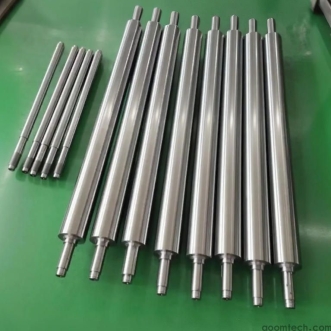
Long shaft parts are mechanical components designed to transmit torque, support rotating elements, and maintain alignment between connected systems. Because of their length and precision requirements, they must maintain strict tolerances and structural stability.
In automotive systems, a driveshaft transfers engine power to the wheels, ensuring smooth vehicle movement. In aerospace applications, shaft components are used in propulsion systems and auxiliary power units. In industrial machinery, long shafts connect motors to pumps, compressors, and gear systems, enabling continuous production processes.
Without precise machining, even small deviations in straightness or diameter can cause vibration, energy loss, or system failure. This is why manufacturers rely heavily on CNC-controlled processes for consistent quality.
CNC Machining Processes for Long Shaft Parts
Turning Technology for Long Shaft CNC Machining
Turning is the most fundamental process in long shaft manufacturing. In this operation, the workpiece rotates while a cutting tool removes material to form a precise cylindrical shape. High-precision CNC lathes are commonly used, often equipped with carbide-tipped inserts due to their hardness and wear resistance.
Key machining parameters include spindle speed, feed rate, and depth of cut. These parameters must be carefully balanced to ensure dimensional accuracy while avoiding excessive cutting forces.
Spindle speed: Adjusted based on material type and diameter to control surface quality
Feed rate: Optimized to maintain cutting stability and prevent tool overload
Depth of cut: Controlled to reduce deflection in long workpieces
One of the most critical aspects of turning long shafts is maintaining straightness. Because of the extended length, the workpiece is prone to bending under cutting forces. To solve this, manufacturers use steady rests, tailstocks, and follower supports. Proper clamping and alignment are essential to prevent runout and ensure consistent diameter along the entire shaft.
Milling Process for Functional Features
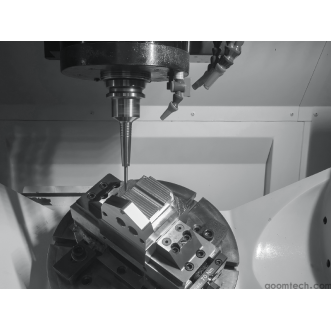
When long shaft parts include additional features such as flats, keyways, splines, or grooves, milling operations are required. Milling machines or multi-axis CNC systems are used to create these non-cylindrical geometries.
End mills with suitable coatings and geometries are selected depending on material hardness and feature complexity. For example, carbide end mills are commonly used for hardened steel shafts due to their heat resistance and durability.
Toolpath programming plays a key role in accuracy. CAM software is used to define cutting paths, ensuring smooth transitions and precise feature placement. When machining a keyway, for instance, both width and depth must be tightly controlled to guarantee proper assembly with mating components.
The turning technology for long shaft CNC machining is often combined with milling in a single setup to reduce repositioning errors and improve concentricity between features.
Drilling and Boring Operations
Some long shaft parts require axial or radial holes for lubrication channels, fastening, or assembly purposes. Drilling is used for initial hole creation, while boring refines the hole to achieve tight tolerances and smooth surface finishes.
High-speed steel (HSS) or carbide drill bits are selected depending on the material being machined. Proper drill geometry, especially point angle, helps improve chip evacuation and reduces heat buildup.
Boring operations are especially important when high concentricity is required between the hole and the shaft axis. Precision boring heads allow fine adjustments to achieve exact diameters and alignment. This step is critical in applications where rotating balance and load distribution must be maintained.
Challenges in CNC Machining of Long Shaft Parts
Deflection and Vibration Control
One of the most significant challenges in long shaft part CNC machining is deflection caused by cutting forces. Because long shafts have a high length-to-diameter ratio, they are more flexible and prone to bending during machining.
Vibration can lead to poor surface finish, dimensional errors, and premature tool wear. To reduce these effects, manufacturers use multiple support points such as steady rests and follower rests. Cutting parameters are also optimized to minimize force impact, often by reducing depth of cut or feed rate during finishing operations.
Heat Generation and Thermal Expansion
During continuous machining, heat is generated at the cutting zone. This heat can cause thermal expansion of both the tool and the workpiece, leading to dimensional inaccuracies.
To manage this issue, coolant systems are widely used to dissipate heat and maintain stable cutting conditions. In addition, selecting heat-resistant cutting tools and adjusting cutting speed helps reduce excessive temperature buildup. Proper thermal control is essential for maintaining precision in long shaft manufacturing.
Tool Wear Management
Tool wear is another major concern in long shaft machining due to extended cutting time and continuous load. As tools wear, dimensional accuracy and surface quality gradually decline.
Manufacturers monitor tool condition using visual inspection, machine feedback systems, and sometimes acoustic emission sensors. Tool coatings such as TiAlN or TiN are often used to extend tool life and reduce friction.
Regular tool replacement schedules and preventive maintenance strategies are essential to ensure consistent production quality and avoid unexpected failures.
Quality Control in CNC Machining of Long Shaft Parts
In-Process Inspection Methods
In-process inspection is a critical step in quality control in long shaft CNC manufacturing. It ensures that deviations are detected early before they affect the entire workpiece.
Common inspection tools include micrometers, calipers, dial indicators, and straightness gauges. Measurements are taken at multiple positions along the shaft to ensure uniform diameter and alignment.
If deviations are detected, operators may adjust cutting parameters, realign the workpiece, or modify tool conditions. This real-time correction helps reduce scrap rates and improves production efficiency.
Final Inspection and Verification
After machining is completed, a comprehensive final inspection is performed to ensure all specifications are met. This includes dimensional accuracy, surface roughness, straightness, and functional performance.
Coordinate Measuring Machines (CMMs) are widely used for high-precision dimensional verification. Surface roughness testers evaluate finish quality, ensuring the part meets required standards for friction and wear resistance.
In some cases, functional testing is performed to simulate real operating conditions. If defects are identified, parts may be reworked or rejected depending on severity and tolerance requirements.
Conclusion
CNC Machining Technology for Long Shaft Parts is a highly precise and controlled manufacturing process that requires careful planning, advanced equipment, and strict quality management. From turning and milling to drilling and boring, each step must be optimized to maintain accuracy and stability.
Understanding the challenges in long shaft part CNC machining, such as deflection, heat generation, and tool wear, allows manufacturers to apply effective solutions and improve production reliability. At the same time, strong inspection systems ensure that every shaft meets functional and dimensional requirements.
As industrial demands continue to increase, advanced CNC technologies will play an even greater role in producing high-performance long shaft components with superior precision and consistency.
CNC Machining Technology for Long Shaft Parts
In modern manufacturing, CNC Machining Technology for Long Shaft Parts plays an essential role in producing high-precision rotating components used in demanding industrial environments. Long shaft parts are widely applied in automotive systems, aerospace assemblies, energy equipment, and heavy machinery. Their performance directly affects the stability, efficiency, and safety of entire mechanical systems.
This article explains the main CNC machining processes, key technical challenges, and quality control methods used in long shaft production. It is designed to help engineers, buyers, and students understand real-world manufacturing practices in a clear and practical way.
Importance of Long Shaft Parts in Industry
Long shaft parts are mechanical components designed to transmit torque, support rotating elements, and maintain alignment between connected systems. Because of their length and precision requirements, they must maintain strict tolerances and structural stability.
In automotive systems, a driveshaft transfers engine power to the wheels, ensuring smooth vehicle movement. In aerospace applications, shaft components are used in propulsion systems and auxiliary power units. In industrial machinery, long shafts connect motors to pumps, compressors, and gear systems, enabling continuous production processes.
Without precise machining, even small deviations in straightness or diameter can cause vibration, energy loss, or system failure. This is why manufacturers rely heavily on CNC-controlled processes for consistent quality.
CNC Machining Processes for Long Shaft Parts
Turning Technology for Long Shaft CNC Machining
Turning is the most fundamental process in long shaft manufacturing. In this operation, the workpiece rotates while a cutting tool removes material to form a precise cylindrical shape. High-precision CNC lathes are commonly used, often equipped with carbide-tipped inserts due to their hardness and wear resistance.
Key machining parameters include spindle speed, feed rate, and depth of cut. These parameters must be carefully balanced to ensure dimensional accuracy while avoiding excessive cutting forces.
Spindle speed: Adjusted based on material type and diameter to control surface quality
Feed rate: Optimized to maintain cutting stability and prevent tool overload
Depth of cut: Controlled to reduce deflection in long workpieces
One of the most critical aspects of turning long shafts is maintaining straightness. Because of the extended length, the workpiece is prone to bending under cutting forces. To solve this, manufacturers use steady rests, tailstocks, and follower supports. Proper clamping and alignment are essential to prevent runout and ensure consistent diameter along the entire shaft.
Milling Process for Functional Features
When long shaft parts include additional features such as flats, keyways, splines, or grooves, milling operations are required. Milling machines or multi-axis CNC systems are used to create these non-cylindrical geometries.
End mills with suitable coatings and geometries are selected depending on material hardness and feature complexity. For example, carbide end mills are commonly used for hardened steel shafts due to their heat resistance and durability.
Toolpath programming plays a key role in accuracy. CAM software is used to define cutting paths, ensuring smooth transitions and precise feature placement. When machining a keyway, for instance, both width and depth must be tightly controlled to guarantee proper assembly with mating components.
The turning technology for long shaft CNC machining is often combined with milling in a single setup to reduce repositioning errors and improve concentricity between features.
Drilling and Boring Operations
Some long shaft parts require axial or radial holes for lubrication channels, fastening, or assembly purposes. Drilling is used for initial hole creation, while boring refines the hole to achieve tight tolerances and smooth surface finishes.
High-speed steel (HSS) or carbide drill bits are selected depending on the material being machined. Proper drill geometry, especially point angle, helps improve chip evacuation and reduces heat buildup.
Boring operations are especially important when high concentricity is required between the hole and the shaft axis. Precision boring heads allow fine adjustments to achieve exact diameters and alignment. This step is critical in applications where rotating balance and load distribution must be maintained.
Challenges in CNC Machining of Long Shaft Parts
Deflection and Vibration Control
One of the most significant challenges in long shaft part CNC machining is deflection caused by cutting forces. Because long shafts have a high length-to-diameter ratio, they are more flexible and prone to bending during machining.
Vibration can lead to poor surface finish, dimensional errors, and premature tool wear. To reduce these effects, manufacturers use multiple support points such as steady rests and follower rests. Cutting parameters are also optimized to minimize force impact, often by reducing depth of cut or feed rate during finishing operations.
Heat Generation and Thermal Expansion
During continuous machining, heat is generated at the cutting zone. This heat can cause thermal expansion of both the tool and the workpiece, leading to dimensional inaccuracies.
To manage this issue, coolant systems are widely used to dissipate heat and maintain stable cutting conditions. In addition, selecting heat-resistant cutting tools and adjusting cutting speed helps reduce excessive temperature buildup. Proper thermal control is essential for maintaining precision in long shaft manufacturing.
Tool Wear Management
Tool wear is another major concern in long shaft machining due to extended cutting time and continuous load. As tools wear, dimensional accuracy and surface quality gradually decline.
Manufacturers monitor tool condition using visual inspection, machine feedback systems, and sometimes acoustic emission sensors. Tool coatings such as TiAlN or TiN are often used to extend tool life and reduce friction.
Regular tool replacement schedules and preventive maintenance strategies are essential to ensure consistent production quality and avoid unexpected failures.
Quality Control in CNC Machining of Long Shaft Parts
In-Process Inspection Methods
In-process inspection is a critical step in quality control in long shaft CNC manufacturing. It ensures that deviations are detected early before they affect the entire workpiece.
Common inspection tools include micrometers, calipers, dial indicators, and straightness gauges. Measurements are taken at multiple positions along the shaft to ensure uniform diameter and alignment.
If deviations are detected, operators may adjust cutting parameters, realign the workpiece, or modify tool conditions. This real-time correction helps reduce scrap rates and improves production efficiency.
Final Inspection and Verification
After machining is completed, a comprehensive final inspection is performed to ensure all specifications are met. This includes dimensional accuracy, surface roughness, straightness, and functional performance.
Coordinate Measuring Machines (CMMs) are widely used for high-precision dimensional verification. Surface roughness testers evaluate finish quality, ensuring the part meets required standards for friction and wear resistance.
In some cases, functional testing is performed to simulate real operating conditions. If defects are identified, parts may be reworked or rejected depending on severity and tolerance requirements.
Conclusion
CNC Machining Technology for Long Shaft Parts is a highly precise and controlled manufacturing process that requires careful planning, advanced equipment, and strict quality management. From turning and milling to drilling and boring, each step must be optimized to maintain accuracy and stability.
Understanding the challenges in long shaft part CNC machining, such as deflection, heat generation, and tool wear, allows manufacturers to apply effective solutions and improve production reliability. At the same time, strong inspection systems ensure that every shaft meets functional and dimensional requirements.
As industrial demands continue to increase, advanced CNC technologies will play an even greater role in producing high-performance long shaft components with superior precision and consistency.
 Process of Custom High-Precisi
 CNC Machining Parameter Settin
 5 Key Tips for CNC Machining o
 Small-batch Precision Parts 5-