


CNC Machining Technology for Precision Automotive Molds
Modern automotive manufacturing depends heavily on high-quality molds. These molds are the foundation for producing consistent, accurate, and durable vehicle components. CNC Machining Technology for Precision Automotive Molds plays a central role in achieving the required precision, efficiency, and repeatability in mold production.
Introduction to CNC Machining in Precision Automotive Molds
Significance of Precision Automotive Molds
Precision automotive molds are essential tools used to produce a wide range of vehicle parts, including body panels, engine components, interior trims, and structural elements. These molds ensure that every part is replicated with high accuracy.
When molds are manufactured with high precision, automotive parts fit together correctly during assembly. This reduces assembly time, improves production efficiency, and enhances overall vehicle safety and appearance. For example, a well-machined injection mold for a dashboard panel ensures perfect alignment of clips, buttons, and surface textures, reducing post-processing work and assembly errors.
In short, the quality of a mold directly determines the quality of the final automotive product.
Pre-Machining Considerations for Precision Automotive Molds
Design Optimization
One of the most important pre-machining considerations for automotive mold CNC is design optimization. A mold must be designed not only for functionality but also for manufacturability using CNC machines.
Key design factors include:
Material flow: Ensuring smooth flow of molten material during injection or die casting.
Draft angles: Adding angles to help easy part ejection from the mold.
Tool accessibility: Designing cavities so CNC tools can reach all machining areas.
Simplified geometry: Avoiding unnecessary complexity that increases machining time and cost.
Using CAD/CAM software, engineers can simulate machining operations before actual production. This helps identify collisions, tool access issues, and design weaknesses early in the process.
Collaboration between designers and CNC programmers is essential to ensure that the mold design is both functional and manufacturable.
Material Selection
Choosing the correct material is critical in automotive mold production. Common materials include P20 steel, H13 steel, and aluminum alloys.
P20 steel: Widely used for general-purpose molds due to good machinability and moderate strength.
H13 steel: Known for high heat resistance and toughness, ideal for die-casting and high-temperature applications.
Aluminum alloys: Lightweight and easy to machine, suitable for prototypes and low-volume production molds.
Material properties such as hardness, wear resistance, and heat treatment response directly affect machining performance. Harder materials may require slower cutting speeds and specialized tooling, while softer materials allow faster machining but may wear out sooner in production use.
CNC Machining Operations for Precision Automotive Molds
Milling Operations
Milling in precision automotive mold CNC machining is one of the most important processes. High-speed CNC milling is used to create complex surfaces, cavities, and fine details with high accuracy.
Different cutting tools are used depending on the feature:
End mills: Used for general cutting and slotting operations.
Ball-nose mills: Ideal for 3D curved surfaces and smooth finishing.
Face mills: Used for flattening large surfaces efficiently.
Proper machining parameters such as spindle speed, feed rate, and depth of cut must be carefully selected. Incorrect settings can lead to tool wear, poor surface finish, or dimensional errors.
Advanced toolpath strategies, such as spiral machining and adaptive clearing, help improve efficiency and reduce machining time while maintaining accuracy.
EDM (Electrical Discharge Machining)
EDM is widely used in mold manufacturing for features that are difficult to machine using traditional cutting tools. These include deep cavities, sharp internal corners, and fine textures.
EDM works by using controlled electrical sparks to erode material from a workpiece. Since there is no direct contact between tool and material, EDM can achieve extremely high precision without mechanical stress.
Key factors in EDM include:
Electrode design and material selection
Discharge energy control
Efficient flushing to remove debris
EDM is especially important for achieving tight tolerances in complex automotive mold components.
Drilling and Boring
Automotive molds often require cooling channels, ejector pin holes, and alignment features. Drilling and boring operations are used to create these precision holes.
Important considerations include:
Accurate hole positioning using CNC coordinates
Correct drill selection based on material hardness
Use of coolant to reduce heat and improve tool life
Post-process inspection to ensure dimensional accuracy
Precision measuring tools such as micrometers and coordinate measuring machines (CMM) are used to verify hole size and alignment.
Tooling and Fixturing for Precision Automotive Molds
Tool Selection
Tool selection is a critical part of CNC machining technology for precision automotive molds. High-quality carbide tools are commonly used because they offer excellent hardness and wear resistance.
Tool geometry also affects performance:
Rake angle influences cutting efficiency
Clearance angle reduces friction
Helix angle improves chip removal
Choosing the right tool helps extend tool life, improve surface finish, and reduce machining time.
Fixturing Design
A stable fixturing system ensures that the mold remains securely fixed during machining. Even small movements can cause serious dimensional errors.
Common fixturing solutions include:
Hydraulic clamps for strong and consistent holding force
Magnetic chucks for flat steel workpieces
Custom fixtures designed for complex mold shapes
Proper alignment between the fixture and CNC machine axes is essential for maintaining accuracy throughout the machining process.
Quality Control in CNC Machining of Precision Automotive Molds
In-Process Inspection
Quality control in CNC-machined automotive molds begins during machining. In-process inspection ensures that errors are detected early before they become costly problems.
Common inspection tools include calipers, micrometers, and CMM systems. Key checkpoints include cavity depth, surface flatness, and hole dimensions.
By monitoring quality during production, manufacturers can reduce scrap rates and improve overall efficiency.
Final Inspection and Testing
After machining is complete, a full inspection is required. This includes dimensional verification, surface finish evaluation, and functional testing.
Functional testing may simulate real molding conditions to ensure:
Proper material flow
Smooth part ejection
No deformation or defects in molded parts
If issues are found, corrective actions may include re-machining, process adjustment, or redesign improvements.
Advanced Technologies and Trends in CNC Machining for Precision Automotive Molds
Five-Axis Machining
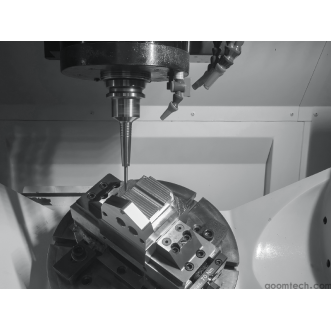
Five-axis CNC machines allow tools to move across multiple directions simultaneously. This capability is especially useful for complex mold geometries.
Benefits include:
Reduced setup time
Improved surface accuracy
Ability to machine complex free-form surfaces
Five-axis machining significantly improves both efficiency and precision in automotive mold production.
Automation and Robotics
Automation is transforming modern mold manufacturing. Robotic systems are increasingly used for loading, unloading, and tool changing operations.
Advantages include:
Higher production efficiency
Reduced labor costs
Consistent machining quality
Automated CNC machining cells can operate continuously with minimal human intervention, making them ideal for large-scale automotive mold production.
Conclusion
CNC Machining Technology for Precision Automotive Molds is a combination of advanced processes, careful planning, and strict quality control. From design optimization and material selection to milling, EDM, and final inspection, each stage plays a vital role in ensuring mold accuracy and performance.
By applying modern machining strategies such as five-axis machining, automation, and advanced tooling systems, manufacturers can achieve higher efficiency, lower production costs, and superior mold quality. As automotive designs continue to evolve, CNC machining will remain at the core of precision mold manufacturing.
 Process of Custom High-Precisi
 CNC Machining Parameter Settin
 5 Key Tips for CNC Machining o
 Small-batch Precision Parts 5-