


Custom CNC Machining Service for Precision Aluminum Parts
Custom CNC Machining Service for Precision Aluminum Parts
In modern manufacturing, demand for high-quality aluminum components continues to grow across industries such as aerospace, automotive, electronics, medical devices, and robotics. Choosing the right Custom CNC Machining Service for Precision Aluminum Parts is essential for ensuring performance, durability, and cost efficiency. This article explains key factors you should understand before selecting a supplier and how to evaluate machining capabilities effectively.
Introduction to Custom CNC Machining of Precision Aluminum Parts
Benefits of Aluminum for Precision Parts
Aluminum is one of the most widely used materials in CNC machining due to its excellent balance of strength, weight, and machinability. Its low density makes it ideal for industries where reducing weight is critical, such as aerospace structures and automotive components. Lighter parts help improve fuel efficiency and overall system performance.
Aluminum also has high thermal conductivity, making it suitable for heat-dissipating applications like electronic heat sinks and LED housings. In addition, its good malleability allows manufacturers to create complex shapes with high precision and smooth finishing.
For example, aluminum is commonly used in:
Heat sinks in electronic devices to improve cooling efficiency
Lightweight aircraft structural brackets
Automotive engine components requiring reduced mass
Understanding Precision Requirements
Tight Tolerances
Precision aluminum parts often require extremely tight tolerances to ensure proper assembly and performance. For example, in electronic connectors, a tolerance of ±0.05mm may be necessary to guarantee correct fit and electrical reliability.
These precision requirements for custom CNC machining of aluminum parts directly influence machine selection, programming accuracy, tool condition, and operator skill. Even small deviations can lead to assembly failure or reduced product performance.
Surface Finish
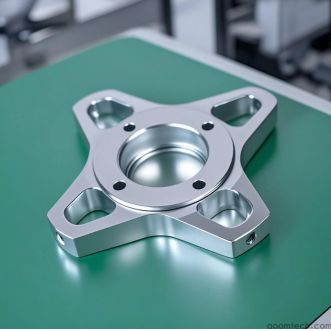
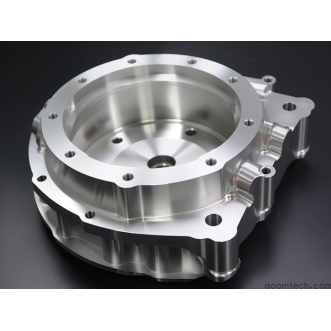
Surface finish is another critical factor in precision machining. Depending on the application, parts may require a mirror-like polish, a matte finish, or a controlled roughness level.
A smooth surface can improve corrosion resistance, reduce friction in moving assemblies, and enhance appearance. However, achieving higher-quality finishes often increases machining time and cost due to additional polishing or fine tool passes.
Choosing the Right CNC Machining Service
Machine Capabilities
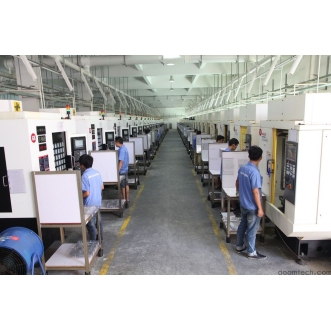
A reliable CNC service should offer advanced machining equipment suitable for aluminum processing. High-speed machining centers are especially effective because aluminum allows fast cutting speeds and efficient material removal.
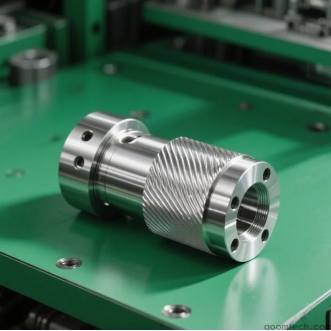
Multi-axis machines, such as 4-axis and 5-axis CNC systems, are essential for producing complex geometries. For instance:
3-axis machines are suitable for simple brackets and flat components
4-axis machines are ideal for cylindrical parts requiring side features
5-axis machines are best for aerospace and medical-grade complex structures
Tooling Expertise
Tool selection plays a vital role in machining aluminum parts. Carbide tools with a positive rake angle are commonly used to prevent chip buildup and ensure smooth cutting.
Coated tools such as titanium nitride (TiN) can extend tool life and improve cutting stability. A professional machining service should also maintain a structured tool management system to ensure consistency across production batches.
Poor tooling choices may result in surface defects, dimensional inaccuracies, or increased production costs due to tool wear.
Customization Options
Part Design Assistance
A high-quality CNC provider should offer engineering support during the design stage. This includes optimizing parts for manufacturability, reducing unnecessary complexity, and improving structural performance.
For example, replacing sharp corners with fillets can reduce stress concentration and improve machining efficiency. This type of guidance helps lower production costs while improving durability.
This is especially important when working with a choosing a CNC service for precision aluminum parts approach, as early design optimization directly impacts final product quality.
Material and Finish Choices
Different aluminum alloys offer different mechanical properties. Common choices include 6061 for general-purpose applications and 7075 for high-strength requirements.
Surface treatment options such as anodizing, powder coating, and polishing can enhance corrosion resistance, wear resistance, and visual appearance. The right combination of material and finish can significantly improve product performance and lifespan.
Quality Assurance in Custom CNC Machining
In-Process Quality Control
Continuous inspection during machining is essential for maintaining accuracy. Manufacturers typically use tools such as calipers, micrometers, and surface roughness testers to monitor part quality in real time.
This quality assurance in custom CNC machining of precision aluminum parts helps detect errors early, reducing waste and avoiding costly rework. For example, identifying a dimensional deviation during machining allows immediate correction before mass production continues.
Final Inspection and Testing
Before delivery, all parts should undergo final inspection to ensure they meet design specifications. This may include dimensional verification, hardness testing, corrosion resistance checks, and functional performance testing.
For example, aluminum parts used in high-load environments may require hardness testing to confirm strength consistency, while electronic housings may be tested for thermal performance or fit accuracy.
Cost-Effectiveness and Delivery
Cost Transparency
A trustworthy CNC machining service should provide clear and detailed pricing. This includes material costs, machining time, tooling expenses, and any surface finishing fees.
Clear cost breakdowns help customers compare suppliers and make informed decisions. When requesting a quote, always ask for itemized pricing to understand where costs are allocated.
Delivery Time and Reliability
On-time delivery is critical in manufacturing workflows. Delays in receiving precision aluminum parts can interrupt assembly lines and delay product launches.
A reliable provider should offer realistic lead times and demonstrate stable production capacity. It is also useful to check customer feedback or references to evaluate delivery performance and consistency.
Conclusion
Selecting the right Custom CNC Machining Service for Precision Aluminum Parts requires careful evaluation of machining capabilities, tooling expertise, quality control systems, and production reliability. By understanding material properties, precision requirements, and supplier capabilities, businesses can ensure high-quality results while optimizing cost and delivery performance.
With the right partner, manufacturers can achieve consistent precision, improved product performance, and long-term production stability in today’s competitive global market.
 How to Ensure Precision in CNC
 Small Batch Precision CNC Mach
 What surface finish can CNC ma
 CNC Machining Tolerance Settin