


Custom CNC Machining of Non-Standard Brass Parts
Introduction to Custom CNC Machining of Non-Standard Brass Parts
Unique Appeal of Non-Standard Brass Parts
Non-standard brass parts are specially designed components made to meet unique technical or functional requirements. Unlike standard off-the-shelf parts, they are customized for specific applications in different industries.
Brass is a popular engineering material because it offers excellent corrosion resistance, good electrical and thermal conductivity, and strong machinability. These properties make it highly suitable for precision components used in demanding environments.
In real-world applications, non-standard brass parts are widely used in electronics, plumbing, and musical instruments. For example, custom brass connectors are used in electronic devices to ensure stable electrical performance. In plumbing systems, specially designed brass fittings help create leak-proof and durable connections. In musical instruments such as trumpets or saxophones, precision-machined brass components directly influence sound quality and tonal accuracy.
Understanding the Requirements for Non-Standard Brass Parts
Client-Specific Needs
The first and most important step in Custom CNC Machining of Non-Standard Brass Parts is understanding the client’s requirements in detail. This includes part dimensions, tolerances, surface finish requirements, assembly conditions, and functional expectations.
For example, in musical instrument manufacturing, even a small variation in the internal geometry of a brass valve can change airflow and affect sound quality. That is why precision communication between engineers and clients is essential.
To improve communication, manufacturers should:
Use detailed engineering drawings or 3D CAD models
Confirm tolerance requirements clearly before production
Discuss surface finish expectations (e.g., polished, brushed, or raw machined)
Validate functional use cases before machining begins
Industry Standards and Regulations
Different industries require compliance with specific technical and safety standards. These regulations ensure that brass parts are safe, reliable, and suitable for their intended use.
For example, plumbing brass parts must often comply with low-lead or lead-free requirements to ensure drinking water safety. In electronics, components may need to meet conductivity and electromagnetic compatibility standards.
Manufacturers should always verify applicable standards before production begins. This includes reviewing material compliance documents and performing traceability checks to ensure regulatory approval.
Material Considerations for Non-Standard Brass Parts
Brass Alloys Selection
Choosing the right alloy is a key factor in material selection for custom non-standard brass parts. Different brass grades have different machining behavior and mechanical properties.
Common brass alloys include:
C26000 (Cartridge Brass): Good formability and corrosion resistance, suitable for flexible components.
C36000 (Free-Machining Brass):
C46400 (Naval Brass): High corrosion resistance, suitable for marine applications.
Selecting the correct alloy depends on strength requirements, corrosion exposure, machining complexity, and cost considerations.
Material Quality Assurance
High-quality raw material is essential for producing reliable non-standard brass parts. Poor material quality can lead to machining defects, reduced durability, or product failure.
Quality assurance methods include:
Checking material certification documents (chemical composition reports)
Inspecting surface defects such as cracks, porosity, or inclusions
Performing sample hardness and composition testing
Ensuring proper storage to prevent oxidation or contamination
CNC Machining Processes for Non-Standard Brass Parts
Milling Operations
Milling is commonly used in CNC machining processes for non-standard brass components to create flat surfaces, grooves, pockets, and complex 3D shapes.
Different tools are used depending on geometry:
End mills for slots and cavities
Face mills for flat surface finishing
Ball nose mills for curved surfaces and contours
To achieve high-quality results, machining parameters must be carefully controlled. Brass typically allows higher cutting speeds, but feed rate and depth of cut must still be optimized to avoid tool wear and ensure a smooth surface finish.
Turning Operations
Turning is used for cylindrical brass parts such as fittings, bushings, and connectors. In CNC turning, the workpiece rotates while the cutting tool removes material.
Key considerations include:
Using sharp carbide tools for clean cutting
Setting appropriate spindle speed for brass alloys
Maintaining stable feed rates for dimensional accuracy
Using coolant to reduce heat buildup and improve surface finish
Drilling and Boring
Drilling and boring operations are essential for creating precise holes in non-standard brass parts. Drilling forms the initial hole, while boring refines its accuracy and surface quality.
To prevent common problems such as drill breakage or misalignment:
Use sharp, high-quality drill bits designed for brass
Apply correct feed rate and spindle speed
Ensure proper workpiece clamping to avoid vibration
Use peck drilling for deep holes to improve chip removal
Tooling and Fixturing for Non-Standard Brass Parts
Tool Selection
Tool selection plays a critical role in machining efficiency and quality. For brass machining, both high-speed steel (HSS) and carbide tools are commonly used.
Carbide tools are preferred for high-volume or high-precision production because they offer better wear resistance and can handle higher cutting speeds.
Proper tool geometry, including rake angle and clearance angle, also improves chip removal and surface finish quality.
Fixturing Design
A stable fixturing system is essential to ensure accuracy during machining. Since non-standard brass parts often have irregular shapes, custom fixtures are frequently required.
Good fixture design should:
Secure the workpiece firmly without deformation
Allow easy loading and unloading of parts
Provide stable support during high-speed machining
Reduce vibration and movement during cutting
Custom clamps, soft jaws, and modular fixtures are commonly used in CNC machining setups for complex brass components.
Quality Control in Custom CNC Machining of Non-Standard Brass Parts
In-Process Inspection
Quality control in custom non-standard brass part machining begins during production. In-process inspection ensures that errors are detected early before they affect the entire batch.
Common inspection methods include:
Using calipers and micrometers to measure dimensions
Checking hole diameters and thread accuracy
Measuring surface roughness using specialized testers
Verifying alignment and geometric tolerances
Final Inspection and Testing
After machining is complete, final inspection ensures the part meets all design requirements.
Depending on the application, testing may include:
Dimensional inspection using coordinate measuring machines (CMM)
Surface finish verification
Leak testing for plumbing components
Electrical conductivity testing for electronic parts
If a part fails inspection, it is either reworked or rejected depending on severity and customer requirements.
Benefits of Custom CNC Machining for Non-Standard Brass Parts
Precision and Accuracy
CNC machining provides extremely high precision, often achieving tolerances within ±0.01 mm or better depending on machine capability. This ensures that non-standard brass parts fit perfectly in complex assemblies.
Customization Capability
One of the biggest advantages of Custom CNC Machining of Non-Standard Brass Parts is the ability to produce highly customized geometries. Engineers can design parts that meet very specific functional requirements that standard components cannot achieve.
Cost-Effectiveness in Small-Batch Production
For small and medium production runs, CNC machining is highly cost-effective. Once programming and setup are complete, manufacturers can produce consistent parts with minimal waste and reduced labor costs.
This makes CNC machining an ideal solution for prototypes, custom industrial equipment, and low-volume specialized applications.
Conclusion
Custom CNC machining of non-standard brass parts plays a vital role in modern manufacturing. By combining the right material selection, precise machining processes, proper tooling, and strict quality control, manufacturers can produce highly reliable and accurate components.
Whether used in electronics, plumbing, or precision instruments, these custom parts deliver performance, durability, and flexibility that standard components cannot match.
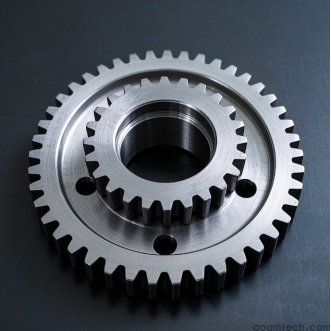 Process of Custom High-Precisi
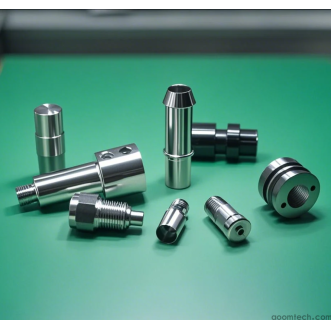 CNC Machining Parameter Settin
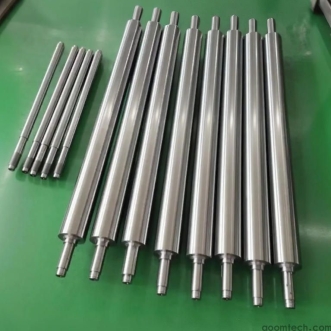 5 Key Tips for CNC Machining o
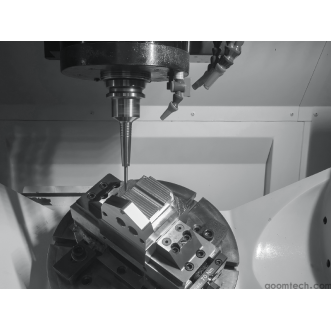 Small-batch Precision Parts 5-