


Custom CNC Machining of Non-standard Parts
Custom CNC Machining of Non-standard Parts is a key manufacturing solution for industries that require unique, highly precise components that cannot be produced using standard designs. These parts are often developed for special functions, prototypes, or advanced engineering systems where accuracy and customization are critical.
The Significance of Custom CNC Machining of Non-standard Parts
Non-standard parts are components designed outside of standard specifications. They are created to meet specific performance, structural, or environmental requirements. This makes them essential in industries where innovation and precision matter most.
For example, in aerospace, companies like : rely on custom-machined parts to improve aircraft safety, reduce weight, and enhance performance. In the automotive industry, companies such as : use custom components to support electric vehicle innovation and efficiency.
In medical technology, organizations like :depend on precision-machined non-standard parts to ensure the safety and accuracy of surgical and diagnostic devices.
These examples show how Custom CNC Machining of Non-standard Parts supports innovation, reliability, and product development across multiple industries.
The Process of Custom CNC Machining of Non-standard Parts
Design and Engineering
The process of custom CNC machining non-standard parts begins with design and engineering. Engineers work closely with clients to understand functional requirements, operating conditions, and performance expectations.
Using CAD (Computer-Aided Design) software, a detailed 3D model is created. This model may go through multiple revisions to improve manufacturability, reduce cost, and enhance performance. For example, in aerospace applications, engineers carefully optimize weight, strength, and aerodynamics before production begins.
Material Selection
Choosing materials for custom non-standard CNC parts is a critical step. Material selection directly affects durability, cost, and performance.
Aluminum alloys: Lightweight and easy to machine, widely used in automotive and electronics.
Stainless steel: High strength and corrosion resistance, suitable for medical and industrial applications.
Titanium alloys: Excellent strength-to-weight ratio, commonly used in aerospace and medical implants.
Engineering plastics: Used in electronics and lightweight structural components.
Proper material selection ensures the part performs reliably in its working environment.
CNC Machining Operations
Milling
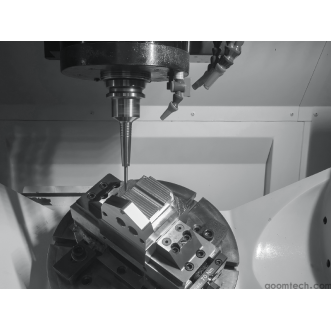
Milling uses a rotating cutting tool to remove material and create complex shapes, slots, and surfaces. Carbide end mills are often used for efficiency and durability.
Cutting parameters such as spindle speed, feed rate, and depth of cut must be adjusted based on material type. For example, aluminum allows higher speeds, while stainless steel requires slower, more controlled machining.
Turning
Turning is used to produce cylindrical parts such as shafts and bushings. Maintaining concentricity and surface finish is essential. Proper tool selection and stable cutting conditions help avoid vibration and defects.
Drilling and Boring
Drilling creates holes, while boring refines and enlarges them to precise dimensions. These operations are critical for assembly accuracy, especially in electronics and mechanical systems.
Quality Control
Quality control ensures every part meets strict design requirements. Measurement tools such as calipers, micrometers, and optical comparators are used to verify dimensions and tolerances.
Surface roughness testers check finish quality, while material inspections confirm structural integrity. Any deviation is corrected through process adjustments.
Finishing Operations
Finishing improves both performance and appearance. Common processes include:
Deburring for safety and smooth edges
Anodizing or plating for corrosion resistance
Heat treatment for improved strength
Surface polishing for better aesthetics
Challenges in Custom CNC Machining of Non-standard Parts
Complex Design Requirements
Non-standard parts often have complex geometries that are difficult to program and machine. Advanced CAD/CAM systems and skilled engineers are needed to create efficient toolpaths and avoid production errors.
Material-specific Challenges
Some materials, such as titanium alloys, are difficult to machine due to heat resistance and tool wear. Specialized tools, coolant systems, and optimized cutting parameters are required to maintain efficiency and accuracy.
Cost and Time Management
Custom manufacturing can be expensive due to design complexity and material costs. Careful planning, design optimization, and efficient production scheduling help reduce both cost and lead time.
This is especially important in large-scale industries such as electronics, where companies like : require fast and precise production cycles for advanced devices.
How to Choose a Service Provider for Custom CNC Machining of Non-standard Parts
Experience and Technical Expertise
When selecting a provider, experience is one of the most important factors. Companies with a strong track record in non-standard machining are more likely to deliver reliable results.
Check case studies, industry experience, and engineering capabilities. A skilled technical team ensures better problem-solving and higher precision.
Quality Assurance Systems
A reliable provider should have strict quality control systems, including in-process inspections and final product testing. High-precision measuring instruments and standardized procedures ensure consistent quality.
Cost-effectiveness and Flexibility
Cost should always be balanced with quality. Comparing multiple quotes helps identify fair pricing.
Flexibility is also important. A good provider should be able to adapt to design changes, urgent orders, and customized production requirements without compromising quality.
Conclusion
Custom CNC Machining of Non-standard Parts plays a vital role in modern manufacturing by enabling innovation, precision, and customization. From aerospace and automotive to medical and electronics industries, these parts support advanced technologies and complex systems.
Understanding the process of custom CNC machining non-standard parts, the importance of choosing materials for custom non-standard CNC parts, and the challenges in custom CNC non-standard part machining helps businesses make better decisions when selecting manufacturing partners.
By choosing an experienced and well-equipped service provider, companies can ensure high-quality results, improved efficiency, and long-term reliability in their production processes.
 Process of Custom High-Precisi
 CNC Machining Parameter Settin
 5 Key Tips for CNC Machining o
 Small-batch Precision Parts 5-