


High-Precision CNC Machining Customization Services for Industrial Excellence
Introduction to High - Precision CNC Machining Customization Services
In modern manufacturing, industries need parts that are accurate, reliable, and made exactly for their specific use. This is where High - Precision CNC Machining Customization Services for Industrial Excellence play an important role. CNC (Computer Numerical Control) machining uses computer-controlled machines to produce highly accurate parts from different materials.
These services help industries create customized components that match exact technical requirements. By combining digital design and advanced machining technology, companies can improve product performance, reduce errors, and achieve higher competitiveness in global markets.
The role of these services is not only about making parts, but also about supporting innovation, improving industrial efficiency, and ensuring long-term product reliability.
The Role of High - Precision CNC Machining Customization in Industrial Excellence
In today’s industrial landscape, precision and consistency are key. High - precision CNC machining allows manufacturers to produce complex and accurate components with minimal error. This is essential for industries where even a small deviation can cause serious performance or safety issues.
By using custom CNC machining services, companies can develop parts that are tailored exactly to their machines or systems. This leads to better product quality, improved performance, and stronger industrial competitiveness across sectors such as aerospace, automotive, electronics, and medical equipment.
Importance of High - Precision CNC Customization in Industry
Meeting Stringent Industrial Requirements
Many industries require extremely strict tolerances and high-quality standards. For example, in the aerospace industry, a jet engine turbine blade must be manufactured with very high precision. Even a tiny error can affect engine performance and safety.
High - precision CNC machining customization ensures that these parts are produced with exact measurements and consistent quality. This helps industries meet safety regulations and performance standards without compromise.
Enabling Product Innovation
Another key advantage is innovation. Custom CNC machining allows engineers to design and produce parts that are not available in standard catalogs. This opens the door to new product designs and improved performance.
For example, in the automotive industry, customized high-precision components can be used to improve engine efficiency, reduce weight, or enhance vehicle aerodynamics. Some high-performance racing vehicles rely on CNC-customized parts to achieve better speed and control.
Process of High - Precision CNC Machining Customization Services
Initial Consultation and Design Review
The process begins with communication between the client and the service provider. The client shares design files, sketches, or ideas. Engineers then review the design to ensure it can be manufactured with high precision.
For example, if a part design has extremely thin walls or complex shapes, the provider may suggest adjustments to improve manufacturability and reduce risk during production.
CAD/CAM Design and Programming
After the design is approved, engineers use CAD (Computer-Aided Design) software to build a 3D model. Then CAM (Computer-Aided Manufacturing) software converts the model into machine instructions.
These instructions define toolpaths, cutting speeds, feed rates, and machining depth. For complex geometries, such as curved surfaces or micro-scale structures, programming must be highly detailed to ensure accuracy.
Material Selection and Procurement
Material selection is a critical step. Different industries require different materials, such as aluminum alloys, stainless steel, titanium, or engineering plastics.
For example, aerospace parts often use titanium because of its strength and low weight, while medical parts may require biocompatible materials. The hardness and properties of the material directly affect tool selection and machining strategy.
Machining and Quality Control
Machining Operations
During machining, CNC machines perform operations such as milling, turning, drilling, and grinding. Each process is controlled by computer programs to ensure high accuracy.
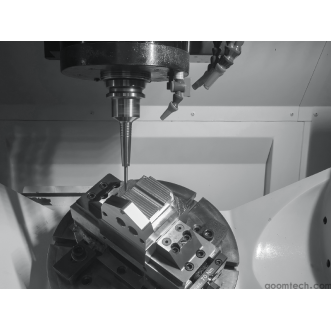
For parts with complex curves, advanced multi-axis CNC machines are often used. Operators adjust cutting speed and tool paths to maintain surface quality and dimensional precision.
Quality Control
Quality control ensures that every part meets design requirements. Tools such as calipers, micrometers, and coordinate measuring machines (CMM) are used to check dimensions and tolerances.
If any deviation is found, engineers adjust the machining process to correct the issue. This ensures consistency across production batches.
Benefits of High - Precision CNC Machining Customization for Industrial Products
Enhanced Product Performance
Custom CNC-machined parts improve product performance by ensuring perfect fit and function. When components are precisely made, machines run more efficiently and with less wear.
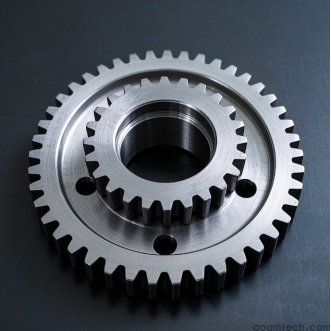
For example, a customized gear in an industrial machine can reduce energy loss and increase production speed, improving overall system efficiency.
Product Differentiation
Companies can stand out in the market by using custom high-precision parts. These components allow products to offer better performance, durability, or design compared to competitors.
In the medical industry, for instance, precision-machined diagnostic device parts can improve accuracy, helping doctors make better decisions.
Cost-Effectiveness for Small-Batch Production
For small or medium production runs, CNC machining is often more cost-effective than traditional mass production methods. It does not require expensive molds or tooling.
This flexibility allows companies to test new designs or produce limited quantities without high initial investment.
Challenges in High - Precision CNC Machining Customization Services
Complex Design Interpretation
One common challenge is understanding complex designs. If communication between the client and manufacturer is unclear, errors may occur in production.
For example, incorrect interpretation of a technical drawing may lead to wrong dimensions. To avoid this, engineers often confirm details with clients before machining begins.
Limited Material Options and Costs
Some specialized materials can be expensive or difficult to machine. High-strength alloys, for example, may require special cutting tools and slower machining speeds.
This can increase production cost and time, so engineers must balance performance requirements with budget limitations.
Meeting Tight Deadlines
Industries often require fast delivery of custom parts. However, high-precision machining involves careful setup, programming, and inspection, which can take time.
Service providers must optimize production schedules and resources to meet urgent delivery requirements without compromising quality.
How to Choose High - Precision CNC Machining Customization Services for Industrial Needs
Experience and Expertise
Choosing an experienced provider is essential. Companies with strong technical backgrounds are better at handling complex designs and strict tolerances.
Checking past projects, case studies, or client reviews can help evaluate their capability in high-precision machining.
Advanced Equipment and Technology
Modern CNC machines, especially multi-axis systems, allow for greater precision and flexibility. Advanced software also improves design accuracy and production efficiency.
A provider with updated technology is more likely to deliver consistent and high-quality results.
Quality Assurance Measures
Strong quality control systems are essential for industrial applications. Certifications and inspection processes show that a company follows strict manufacturing standards.
This reduces the risk of defects and ensures that every part meets technical requirements.
Conclusion: Achieving Industrial Excellence through Precision Manufacturing
High - precision CNC machining plays a key role in modern industrial development. It supports innovation, improves product quality, and ensures reliable performance across many industries.
The High - Precision CNC Machining Customization Services for Industrial Excellence process includes careful design, precise programming, material selection, machining, and strict quality control. Each step is important for achieving accurate and reliable results.
Key long-tail topics such as importance of high - precision CNC customization in industry, process of high - precision CNC machining customization services, benefits of high - precision CNC machining customization for industrial products, challenges in high - precision CNC machining customization services, and how to choose high - precision CNC machining customization services for industrial needs all highlight the value of this manufacturing approach.
For companies aiming to improve performance and competitiveness, exploring high-precision CNC machining services is a practical step toward industrial excellence.
 Process of Custom High-Precisi
 CNC Machining Parameter Settin
 5 Key Tips for CNC Machining o
 Small-batch Precision Parts 5-