


High Precision CNC Machining Customization
High Precision CNC Machining Customization is a modern manufacturing approach that produces parts with extremely tight accuracy based on specific customer needs. CNC (Computer Numerical Control) machines follow digital instructions to create complex shapes with high consistency and precision.
In today’s global manufacturing world, this technology is widely used in aerospace, medical, automotive, electronics, and industrial equipment industries. It helps companies build high-performance products that standard parts cannot achieve.
The Significance of High Precision CNC Machining Customization
Modern industries require parts that are not only strong but also extremely accurate. Even a small error can cause system failure in critical applications. That is why High Precision CNC Machining Customization plays an important role in production today.
Importance of high precision CNC machining customization can be seen in its ability to deliver reliable, repeatable, and tailor-made solutions for complex engineering needs.
For example, aerospace turbine components must fit perfectly to ensure engine safety and efficiency. In medical applications, custom implants must match a patient’s body structure exactly to improve comfort and healing results.
Importance of High Precision CNC Machining Customization
Meeting Specialized Industry Needs
Different industries have strict technical requirements. Aerospace parts must withstand extreme temperature and pressure conditions, while medical parts must be biocompatible and highly accurate.
For example, a titanium knee implant must be customized to fit a patient’s bone structure. High precision CNC machining ensures smooth surfaces, exact dimensions, and safe performance.
Enabling Product Innovation
High precision machining allows engineers to create designs that are not possible with standard manufacturing methods.
In the automotive industry, custom lightweight engine components can improve speed and fuel efficiency. Some electric vehicle manufacturers also use CNC-customized battery housings to improve thermal control and safety.
Process of High Precision CNC Machining Customization
Design and Consultation
The process of high precision CNC machining customization begins with customer requirements. Clients may provide sketches, CAD files, or simple ideas.
Engineers then review the design and suggest improvements for better manufacturability. For example, a thin-walled aluminum part may be adjusted to prevent deformation during machining.
CAD/CAM Design and Programming
After finalizing the design, engineers use CAD software to create a 3D model. Then CAM software converts the model into machine instructions.
Parameters such as tool path, cutting speed, and feed rate are carefully set. For complex parts with deep cavities or tight tolerances, advanced programming techniques are required to avoid vibration and maintain accuracy.
Material Selection and Procurement
Material selection is critical. Different materials affect strength, cost, and machining difficulty.
For example, stainless steel is strong but harder to machine, requiring specialized cutting tools. Aluminum is easier to process and often used for lightweight structures. Aerospace-grade titanium is expensive but offers excellent strength-to-weight ratio.
Machining and Quality Control
Machining operations include milling, turning, drilling, and grinding. CNC machines follow programmed instructions to shape the material precisely.
During production, operators adjust cutting conditions based on material behavior to ensure accuracy and surface quality.
Quality control is performed using tools like calipers, micrometers, and coordinate measuring machines (CMM). If any deviation is found, the process is corrected immediately to maintain standards.
Benefits of High Precision CNC Customized Parts
Unique Functionality
Benefits of high precision CNC - customized parts include the ability to create unique components designed for specific applications.
For example, a specialized industrial robot may require a custom joint component that improves movement accuracy and reduces wear.
Enhanced Product Differentiation
Companies can stand out in the market by using customized high-precision parts.
For example, premium consumer electronics often use CNC-machined aluminum housings to improve durability and appearance, making products more attractive to customers.
Cost-Effectiveness for Small Production
For small batches, CNC machining is more cost-effective than mass production methods that require expensive molds.
A startup producing smart devices may only need a few hundred custom enclosures. CNC machining allows flexible production without large upfront tooling costs.
Challenges in High Precision CNC Machining Customization
Complex Design Interpretation
Challenges in high precision CNC machining customization often start with understanding complex designs correctly.
If a design is misinterpreted, the final part may not meet requirements. For example, incorrect tolerance reading can lead to assembly failure. Clear communication between customer and manufacturer is essential.
Limited Material Options and Costs
Some projects require special materials that are expensive or difficult to source.
For instance, aerospace-grade Inconel is highly heat-resistant but costly and difficult to machine, increasing production time and budget.
Meeting Tight Deadlines
High precision production takes time due to careful programming, machining, and inspection. However, customers often need fast delivery.
Manufacturers must optimize scheduling and machine usage to meet urgent orders without reducing quality.
How to Choose a High Precision CNC Machining Customization Service
Experience in High Precision Customization
How to choose a high precision CNC machining customization service starts with evaluating experience.
Providers with proven experience in aerospace, medical, or automotive projects are more reliable for complex work. Case studies and past projects can help verify capability.
Advanced Equipment and Technology
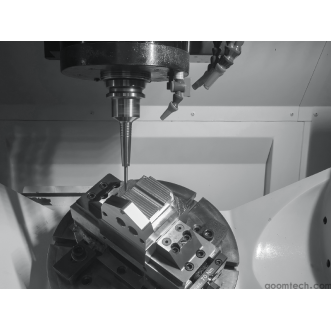
Modern CNC machines, especially 5-axis systems, can produce highly complex geometries with better accuracy.
Advanced CAD/CAM software also improves efficiency and reduces programming errors. A well-equipped manufacturer is more likely to deliver stable quality.
Quality Assurance Measures
Strong quality systems such as ISO 9001 or AS9100 certification show commitment to consistent production standards.
Reliable suppliers use strict inspection processes at every stage, from raw material checking to final measurement, ensuring each part meets specifications.
Conclusion: Harnessing the Power of High Precision CNC Machining Customization
High Precision CNC Machining Customization is essential in modern manufacturing. It supports innovation, improves product quality, and enables industries to meet strict technical requirements.
From design and material selection to machining and inspection, every step plays an important role in ensuring accuracy and performance.
When selecting a service provider, businesses should consider experience, equipment, and quality control systems carefully.
By understanding these factors, companies can fully benefit from high-performance custom parts and improve their competitive advantage in global markets.
Call to action: If you are developing a product that requires high accuracy and reliable performance, exploring professional CNC machining customization services is a strong next step for your project success.
 Process of Custom High-Precisi
 CNC Machining Parameter Settin
 5 Key Tips for CNC Machining o
 Small-batch Precision Parts 5-