


How CNC Machine Tools Process Parts
Introduction to CNC Machine Tools and Part Processing
Overview of CNC Machine Tools
CNC (Computer Numerical Control) machine tools are advanced manufacturing machines controlled by computer programs. Instead of manual operation, every movement of the machine is guided by coded instructions. These machines can cut, shape, drill, and finish materials with very high precision.
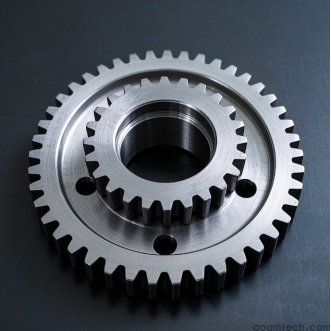
In modern manufacturing, CNC machines are essential because they can produce complex parts with consistent quality and very small tolerances. Industries such as automotive, aerospace, electronics, medical devices, and industrial equipment depend heavily on CNC-machined components. Examples include engine parts, aircraft structures, smartphone frames, and precision gears.
Pre-Processing Steps in CNC Part Manufacturing
Part Design
The first step in How CNC Machine Tools Process Parts is part design. Engineers use CAD (Computer-Aided Design) software to create a detailed 3D model of the part. This model defines all dimensions, shapes, and functional requirements.
Good design must consider manufacturability. For example, sharp internal corners should be avoided because they increase tool wear and may cause tool breakage. Designers often add fillets, proper draft angles, and standard feature sizes to make machining easier and more efficient.
Practical tips for CNC-friendly design include:
Use smooth transitions instead of sharp edges
Apply standard hole sizes and thread types
Avoid extremely thin walls that may vibrate or deform
Design with tool accessibility in mind
Material Selection
Material selection is a critical part of pre-processing for CNC part processing. Different materials behave differently during machining. Their hardness, strength, and thermal properties directly affect cutting speed, tool life, and surface finish.
For example, aluminum is lightweight and easy to machine, making it ideal for automotive and electronics parts. Titanium is extremely strong and corrosion-resistant but much harder to cut, requiring slower speeds and stronger tools.
When selecting materials, engineers consider:
Mechanical load requirements
Operating environment (heat, corrosion, pressure)
Cost and availability
Machinability and production efficiency
Programming the CNC Machine
After design and material selection, the next step is CNC programming. This is done using CAM (Computer-Aided Manufacturing) software, which converts the CAD model into machine instructions (G-code).
The program defines toolpaths, cutting tools, and machining parameters such as spindle speed, feed rate, and cutting depth. Proper programming ensures efficiency, accuracy, and safety.
In advanced CNC programming with CAM software for part production, engineers optimize toolpaths to reduce idle movement, shorten machining time, and extend tool life. Simulation is often used to detect errors before actual machining begins.
Machining Operations in CNC Manufacturing
Milling
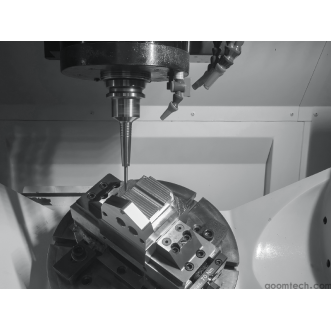
Milling is one of the most common operations in CNC machining. In milling in CNC part machining, a rotating cutting tool removes material from a stationary workpiece. This process can create flat surfaces, grooves, pockets, and complex 3D shapes.
Different tools are used depending on the task:
End mills for general shaping and contouring
Ball-nose mills for smooth 3D surfaces
Face mills for removing large flat areas quickly
For rough milling, higher spindle speeds and faster feed rates are used to remove material quickly. For finishing, slower speeds and lighter cuts are applied to improve surface quality.
Turning
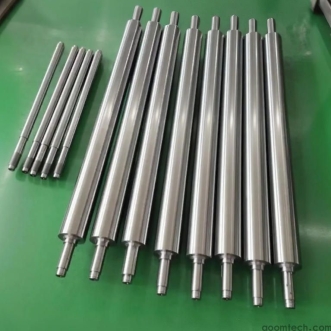
Turning is mainly used for cylindrical parts. In this process, the workpiece rotates while a stationary cutting tool removes material.
Turning operations are performed on a lathe and are used to create outer diameters, inner bores, grooves, and threads. Accurate control of spindle speed and feed rate is essential to achieve precise dimensions and smooth surfaces.
Tool selection is also important. Different inserts are used depending on whether the operation is roughing, finishing, or threading.
Drilling and Boring
Drilling is used to create holes, while boring is used to enlarge and refine those holes to achieve higher accuracy.
Drill bits are selected based on material type and hole size. Boring tools provide better dimensional accuracy and surface finish.
To ensure precision:
Use drill guides or precise positioning systems
Apply coolant to reduce heat and tool wear
Check alignment before drilling starts
Tooling and Fixturing in CNC Machining
Tool Selection
Tool selection plays a major role in machining quality and efficiency. Tools must match the material, operation type, and required surface finish.
Carbide tools are commonly used because they are strong and wear-resistant. Tool geometry, including rake angle and helix angle, affects cutting performance and chip removal.
Key considerations include tool lifespan, cutting speed capability, and surface finish quality.
Fixturing Design
Fixturing is essential to hold the workpiece securely during machining. A stable fixture prevents vibration, movement, and machining errors.
Common fixturing systems include vises, clamps, and magnetic chucks. The design depends on part shape and machining requirements.
A good fixture ensures:
Stable and repeatable positioning
No deformation of the workpiece
Easy loading and unloading of parts
Quality Control During CNC Processing
In-Process Inspection
In-process inspection is a key part of quality control in CNC-machined parts. Measurements are taken during machining to ensure the process stays within tolerance.
Tools like calipers, micrometers, and coordinate measuring machines (CMMs) are used to check dimensions and surface quality.
If deviations are detected, adjustments can be made immediately to avoid producing defective parts.
Final Inspection
After machining is complete, a final inspection is performed to ensure all specifications are met. This includes dimensional checks, surface finish evaluation, and functional testing.
Inspection gauges and precision instruments are used to verify accuracy. Parts that do not meet requirements are rejected or reworked.
Post-Processing Steps
Deburring and Edge Finishing
After machining, small burrs and sharp edges often remain. These must be removed to improve safety and functionality.
Deburring can be done manually or using automated tools. Edge finishing methods such as chamfering and rounding help improve appearance and reduce stress concentration.
Surface Treatment
Surface treatment improves performance and durability. Different methods are used depending on the application.
Common treatments include heat treatment to increase strength, plating for corrosion resistance, and painting for appearance and protection.
Selecting the right treatment depends on environmental conditions, mechanical requirements, and product function.
Conclusion
Understanding How CNC Machine Tools Process Parts helps manufacturers and engineers improve product quality, efficiency, and reliability. From design and programming to machining and final inspection, each step plays an important role in achieving precision results.
By applying proper design practices, selecting suitable materials, optimizing machining operations, and maintaining strict quality control in CNC-machined parts, manufacturers can consistently produce high-performance components for modern industries.
This structured approach reflects modern engineering standards and follows EEAT principles by focusing on accuracy, practical manufacturing knowledge, and widely accepted CNC machining practices.
 Process of Custom High-Precisi
 CNC Machining Parameter Settin
 5 Key Tips for CNC Machining o
 Small-batch Precision Parts 5-