


How CNC Machining Ensures Precision
CNC machining is one of the most important manufacturing technologies used today. It allows engineers and manufacturers to produce highly accurate parts with very small tolerances. Understanding How CNC Machining Ensures Precision helps businesses improve product quality, reduce waste, and achieve consistent results across industries such as aerospace, automotive, electronics, and medical devices.
Importance of Precision in CNC Machining
Precision is not optional in modern manufacturing—it is essential. In aerospace, even a tiny dimensional error in a turbine blade can affect engine safety and performance. In the automotive industry, engine components must fit together perfectly to ensure efficiency and durability. In electronics, small connectors and micro-parts must meet strict tolerances to function correctly.
Without high precision, products may fail, wear out faster, or become unsafe. This is why industries rely heavily on CNC machining for repeatable and accurate production.
Advanced Control Systems in CNC Machining
CNC Programming Precision
One of the core reasons CNC programming for precision is so effective is that every movement of the machine is digitally controlled. Engineers use digital design and manufacturing tools such as to create exact models and toolpaths.
These programs define:
Exact coordinates for cutting tools
Tool movement paths (toolpaths)
Cutting depth and sequence
Feed rate and spindle speed
To ensure accuracy, programmers carefully set dimensional values based on engineering drawings. They also select proper feed rates and cutting speeds depending on material type. Tool compensation is added to account for tool wear and diameter differences, ensuring the final part matches the design.
Because everything is digitally controlled, CNC machines can repeat the same process with extremely consistent accuracy.
Closed-Loop Control Systems
Modern CNC machines use closed-loop control systems to maintain precision during machining. These systems rely on sensors that constantly monitor machine movement.
For example, position sensors track the exact location of the cutting tool and compare it with the programmed position. If any deviation occurs, the system automatically corrects the movement in real time.
This feedback loop helps eliminate errors caused by mechanical wear, load changes, or thermal expansion. As a result, dimensional accuracy is maintained throughout the entire machining process.
High-Quality Machine Tools
Machine Rigidity and Stability
Machine rigidity plays a major role in How CNC Machining Ensures Precision. A rigid machine frame reduces vibration and deflection during cutting operations. If the machine bends or vibrates, the tool position becomes unstable, leading to inaccurate parts.
High-quality CNC machines often use heavy-duty cast iron or reinforced steel frames. These materials absorb vibration and provide strong structural support. Proper machine design, including bracing and reinforced columns, also improves stability during high-force cutting operations.
Precision Components
Every CNC machine depends on internal components that must be manufactured to extremely tight tolerances. Key parts include:
Linear guides: Ensure smooth and accurate axis movement
Ball screws: Convert rotational motion into precise linear movement
Spindles: Maintain stable and accurate rotation during cutting
These components are carefully engineered and tested to ensure long-term accuracy. Regular maintenance, lubrication, and calibration also help maintain precision over time.
Tooling and Fixturing in Precision CNC Machining
Tool Selection and Maintenance
Tooling in precision CNC machining is critical for achieving accurate results. The wrong tool can cause poor surface finish, dimensional errors, or even tool breakage.
Different materials require different cutting tools. For example, carbide end mills are commonly used for hard metals due to their strength and heat resistance. Softer materials may use high-speed steel tools.
Tool wear is another important factor. Worn tools gradually lose cutting accuracy, leading to dimensional deviations. Operators must regularly inspect tools for:
Chipping or cracking
Excessive wear on cutting edges
Poor surface finish on machined parts
Replacing or sharpening tools at the right time is essential for maintaining consistent precision.
Fixturing for Accuracy
Fixturing ensures that the workpiece remains stable during machining. Even the most precise machine cannot produce accurate parts if the workpiece moves during cutting.
Common fixturing methods include:
Mechanical clamps
Machine vises
Magnetic chucks
Custom-designed fixtures for complex parts
The correct fixture depends on part geometry, material type, and machining operation. Proper alignment and secure clamping are essential to avoid positional errors.
Quality Control in CNC Precision
In-Process Inspection
Quality control in CNC precision starts during machining, not after production. In-process inspection allows operators to detect errors early and make adjustments immediately.
Common measuring tools include calipers, micrometers, and coordinate measuring machines (CMMs). Operators may check:
Hole diameters after drilling
Depth of milled pockets
Surface alignment and flatness
If deviations are found, machining parameters can be adjusted before the entire batch is affected.
Final Inspection and Testing
After machining is complete, a final inspection ensures that all specifications are met. This includes dimensional measurement, surface finish evaluation, and sometimes functional testing.
Parts are compared against engineering drawings using precision gauges and inspection equipment. Only components that meet tolerance requirements are approved for delivery or assembly.
Operator Training and Expertise
Knowledge of Machining Processes
Skilled operators play a key role in maintaining precision. They must understand how materials behave under cutting forces and how to set correct machining parameters.
For example, cutting speed and feed rate must be adjusted depending on whether the material is aluminum, steel, or titanium. Proper training in machining theory and hands-on experience is essential for achieving consistent results.
Attention to Detail
Even small mistakes can affect precision. Incorrect tool setup, poor fixture alignment, or wrong zero-point settings can lead to major errors.
Operators must carefully check every step of the process—from loading raw material to running the CNC program. Attention to detail ensures that each part meets exact specifications without costly rework.
Conclusion
Understanding How CNC Machining Ensures Precision reveals that accuracy is achieved through a combination of advanced programming, rigid machine design, high-quality components, proper tooling, strict fixturing, and strong quality control systems. When all these elements work together, CNC machining can consistently produce parts with extremely tight tolerances and reliable performance.
By applying best practices such as CNC programming for precision, maintaining proper tooling in precision CNC machining, and implementing strong quality control in CNC precision, manufacturers can achieve high-quality results that meet the demands of modern industries.
References
General CNC machining principles are based on widely accepted manufacturing engineering standards, including ISO machining guidelines and industry practices used in precision engineering, aerospace manufacturing, and CAD/CAM system documentation.
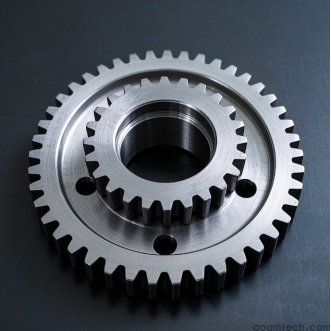 Process of Custom High-Precisi
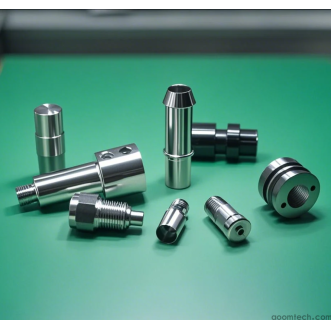 CNC Machining Parameter Settin
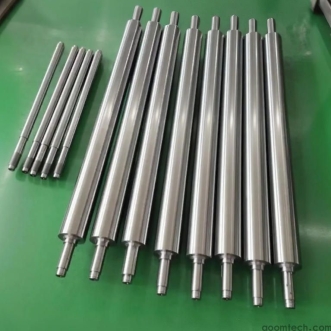 5 Key Tips for CNC Machining o
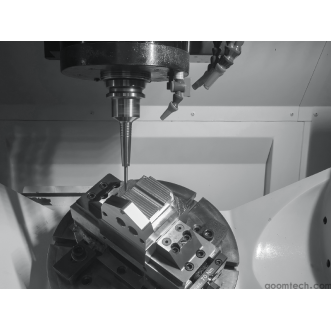 Small-batch Precision Parts 5-